Transmitter and receiver circuits for the 2m band
Not only among amateur radio operators did a particular interest in ultra-shortwave radio technology, considered state-of-the-art at the time, develop at the beginning of the second half of the 20th century. This led to the construction of many simple, home-built devices in which a VHF oscillator, used as a transmitter, functioned as a superregenerative receiver with over-regeneration during reception. Due to the small antenna dimensions, the 2-meter amateur radio band was best suited for portable systems of this type. If both sides used elevated locations such as mountain peaks, ranges of several tens of kilometers, even into the hundreds, could easily be achieved with such minimalist devices.
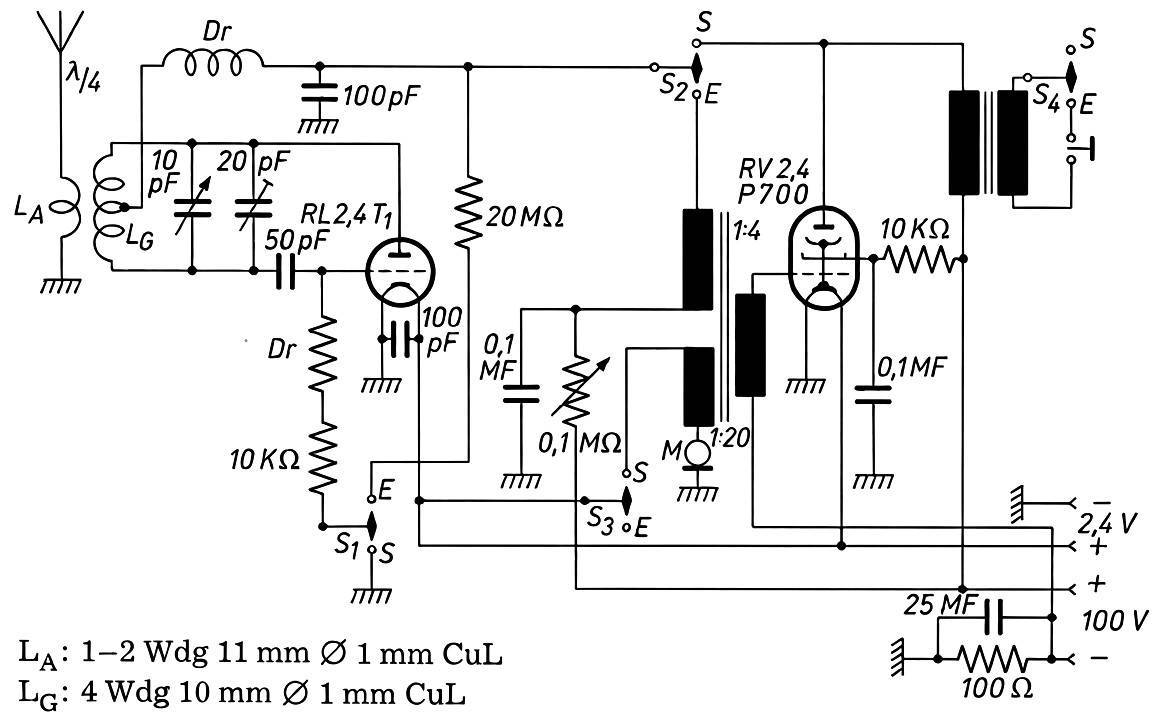
Disadvantages of such simple devices, however, were a lack of selectivity during reception, insufficient frequency-stability, and the fact that regenerative-receivers emit quite strong interference-radiation. Nevertheless, such devices proved to be useful helpers during the flood-disaster of 1962 in Northern Germany. Because the power-station in Hamburg-Rothenburgsort had flooded, the power-supply collapsed in many places. This resulted in failures of the telephone-network and the police-radio. Radio-amateurs used mobile and provisionally set-up, mains-independent shortwave-stations to ensure that messages could once again be exchanged with particularly affected districts, such as Finkenwerder. There was a primary need for voice-communications using portable, battery-operated devices. To organize help, it was often only a matter of bridging short distances on-site. Compared to the QRM-heavy shortwave-frequencies, this worked significantly better even with such simple equipment. In retrospect, the conclusion was drawn that significantly more battery-powered devices would have been needed. In April 1962, a self-build-competition for transistorized and more powerful VHF-radio-units was therefore launched.

Further circuits and articles regarding VHF/UHF amateur radio:
- A frequency-stable tone call generator for keying relay stations
- Suppression of disturbances caused by subaudio tones using a CTCSS blocker
- The FM transmitter module Josty-Kit HF-65 plus Sanaphantastron Internet radio
- Simple UHF transceiver (70cm) with only two tubes
- Radio history: A parametric amplifier for the 70cm band
Transistor transmitters for the 2m band
In order to achieve a power of about 1 watt with a crystal-controlled 2m transistor transmitter, a three-stage arrangement is sufficient. The prerequisite for this is that a crystal oscillator in the 48 MHz or 72 MHz range is used. So a single frequency multiplier stage is sufficient to be able to drive the PA on the transmission frequency in the 144 MHz range. So the oscillator is followed by a doubler or tripler and behind that directly follows the output stage. While the circuitry is much more complex, as for a tube transmitter of this power class, the transistor transmitter simplifies the effort in the power supply. A DC voltage of 12 volts is sufficient, so that such a transmitter is ideal for mobile and portable use.
Such transmitters were offered around 1970 by various manufacturers such as Semcoset / Lausen KG, CTR (Conrad) und HAEL (Hanschke Elektronik) as ready-made and pre-adjusted assemblies for self-build of VHF amateur radio devices. Initially, these were only designed for the amplitude modulation that was predominantly used in the 2m band at the time. With the increasing spread of frequency modulation and the advent of relay radio operation, models came onto the market that were designed for both AM and FM. In terms of circuitry, these transmitters differ only slightly from one another. The circuit of a typical HAEL transmitter shows an overtone crystal oscillator (48MHz), a frequency tripler in a basic circuit, an RF output stage, a two-stage microphone amplifier and a collector current modulator for AM.
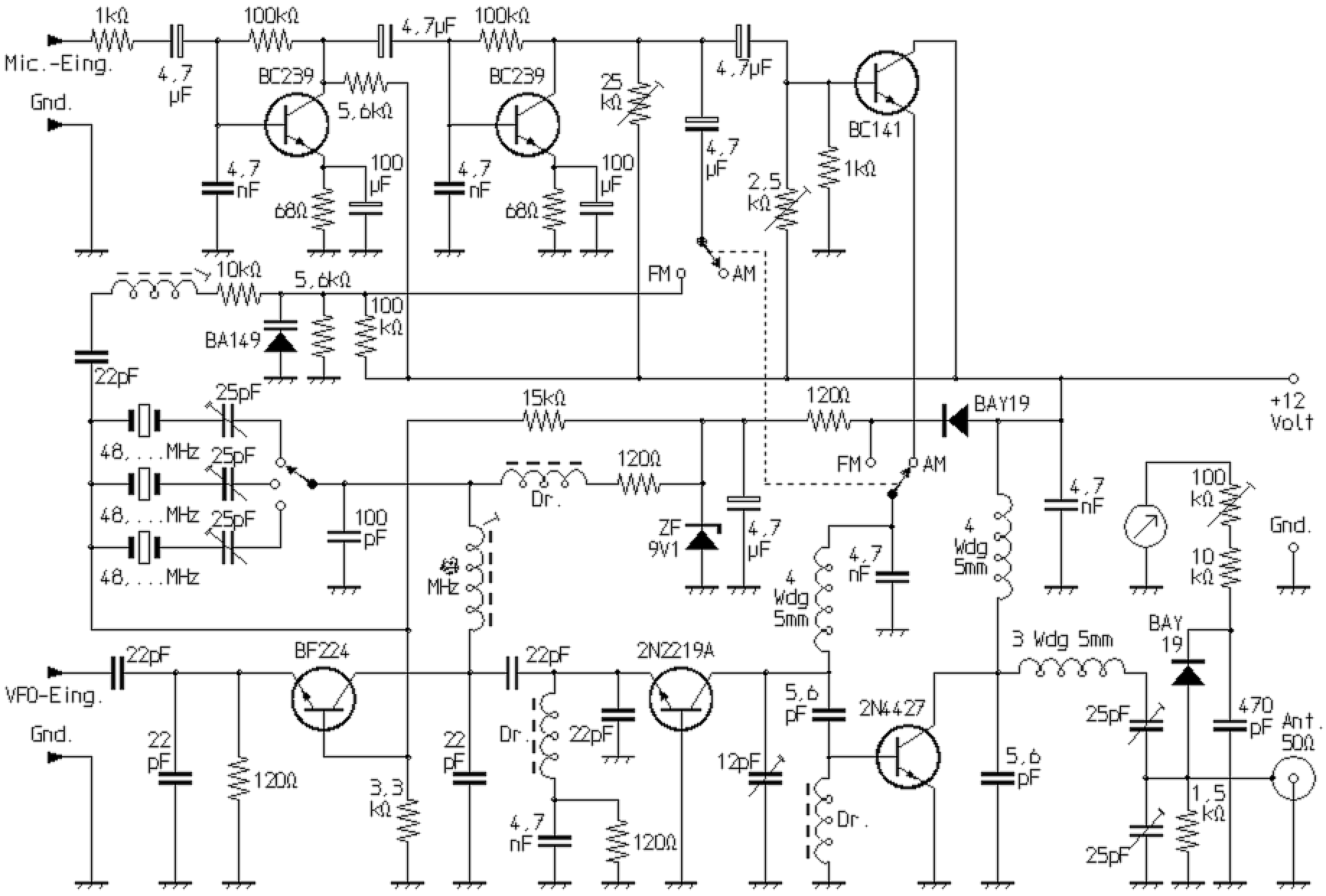
For FM, the modulation is done by a capacitance diode with which the crystal frequency is pulled back and forth by the microphone signal. With AM, the collector current modulation has the consequence that the carrier power with AM is reduced to around 300mW, while with FM it is around 1 watt. The method with collector voltage modulation by means of a modulation transformer used in many transmitter assemblies from Semco, however, enabled the full carrier power to be available with AM as well. But the transistor 2N4427 is unsuitable for this because of its lower voltage strength, since more than twice the supply voltage can occur at the collector in the modulation peaks. With a view to that, for example the 2N3866 or even better the 2N3553 could be used for this. Taking into account the increase in power when modulating, a more powerful version must be selected for 1 watt carrier power, since the power increases to up to 4 watts at 100% modulation in the peaks.
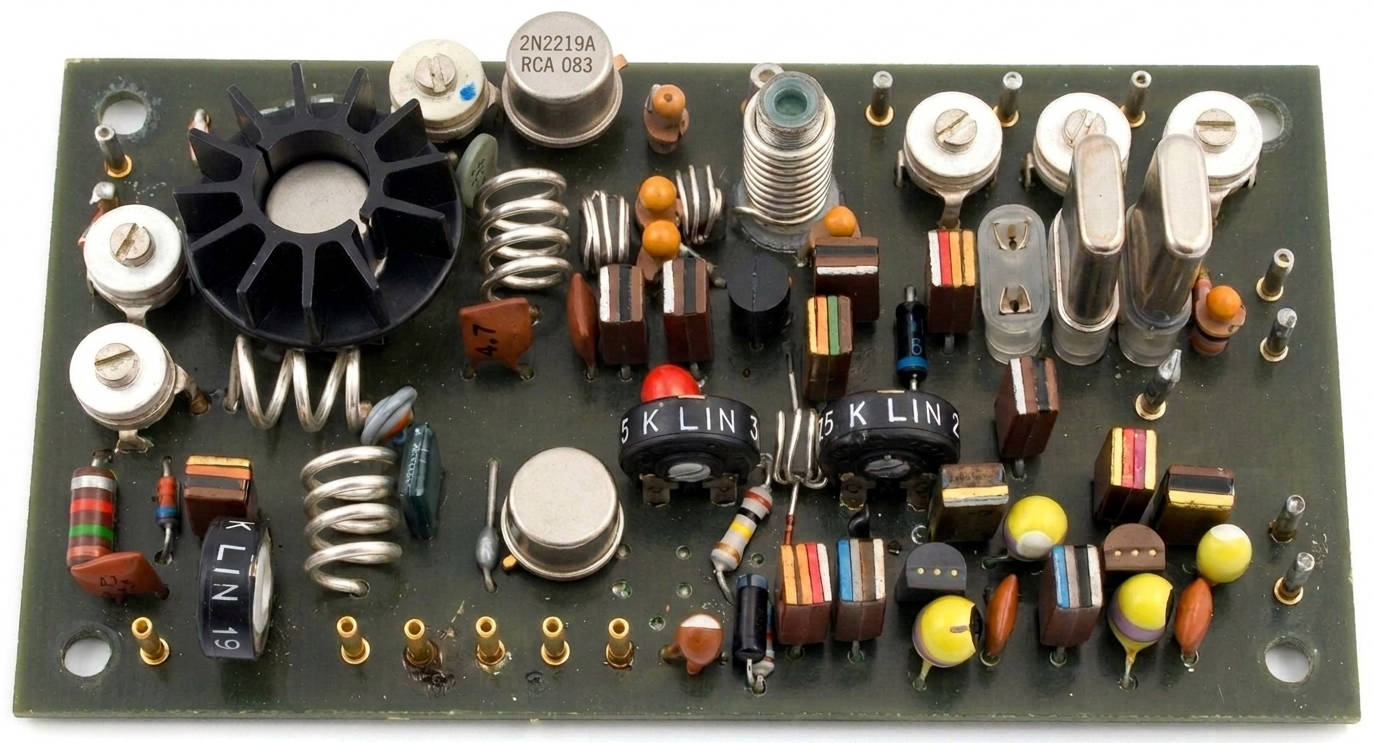
As a result of today's higher demands on the cleanness of the transmission signal, a combined bandpass and lowpass should be inserted at the transmitter output of such transistor transmitters. Otherwise, relatively strong harmonics and remnants of the 48 MHz signal respectively the 96 MHz harmonics will reach the antenna. Also it is advisable to provide reverse polarity protection. If plus and minus are interchanged, this can lead to the destruction of the as frequency tripler working driver stage. The base grounded circuit design in this case leads to a not inconsiderable current flows through the collector-base diode path of the transistor.
As can be seen, the transmitter is designed for three switchable crystal controlled channels. As with many models from other manufacturers, there is also a VFO connection, so that independent, frequency-variable operation is possible on any frequencies in the range from 144 to 146 MHz. A VFO suitable for this was again manufactured by the Semcoset company under the name Varios 48 as a ready-made module for self built devices. Instead of the otherwise used crystal frequency in the 48 MHz range, this circuit generates a tunable frequency in this range and feeds it to the oscillator transistor, which then only works as an amplifier. The amplitude modulation takes place in the same way as with crystal operation. For FM, on the other hand, the modulation should take place directly on the VFO. As the circuit of the VFO shows, the amplified modulation signal is fed to the here existing FM demodulator with the capacitance diode BA149. The modulation quality is much better with FM in VFO mode than with crystal mode.
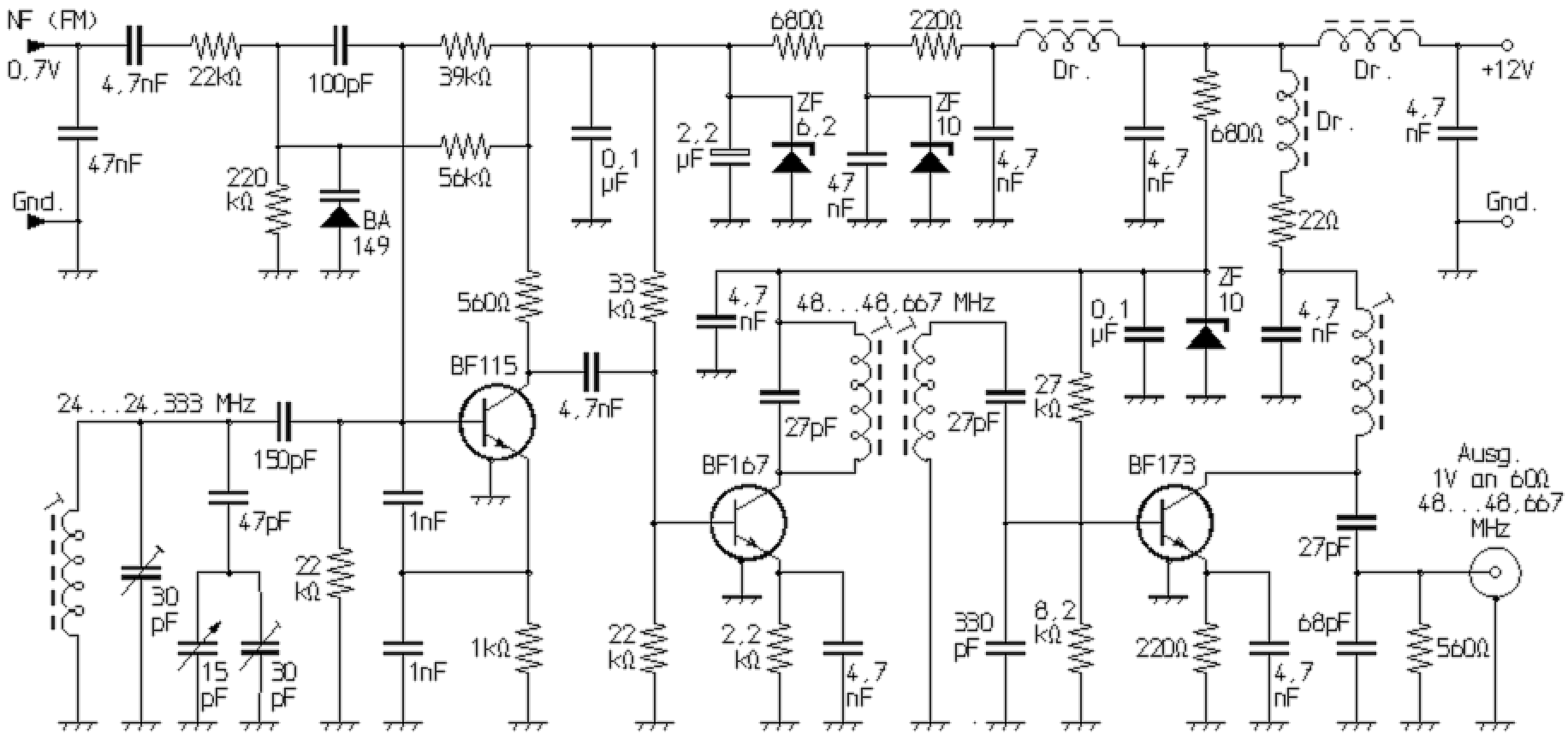
In the interests of greater frequency stability, the actual VFO, which is equipped with a BF115 transistor, operates at 24 MHz. This frequency is doubled in the subsequent stage with the BF167 and then selectively amplified in the subsequent amplifier stage with the BF173. In this way, a 48 MHz signal with low spurious waves and low harmonics is ensured.
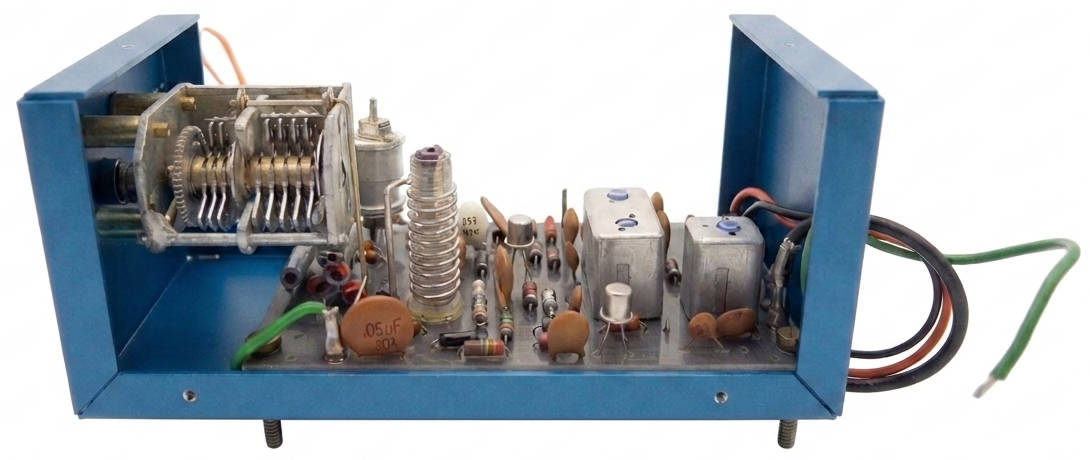
When, towards the end of the 1970s, FM operation had generally prevailed over AM on the 2m band, there was still a 6-channel transmitter module from HAEL, the SB-6/1, which was intended exclusively for frequency modulation. Apart from the larger number of quartz slots - now in the smaller size HC-25/U instead of the HC-6/U - it hardly offered anything new in terms of circuitry. By the way, suitable crystals for such transmitters can still be ordered today (e.g. from quartslab.com UK). These are custom-made products that are manufactured according to your own frequency requirements. You can get the crystals for any transmission frequency in the 2m amateur band.
Based on experiments with such a module, which was only designed for FM, I rebuilt the circuit several times with slight changes and in different constructive ways. Regardless of the construction, the resulting circuit shown below showed a surprisingly high level of replica security, provided that attention was paid to RF-compatible construction (f.e. short cable routing, sufficient spacing between the resonant circuits, arrangement of adjacent coils at 90 degrees). The transmitter worked best in a kind of chamber construction made of epoxy resin plates soldered together and coated on both sides with copper, such as are available as a raw material for the production of printed circuit boards. In one case I added an additional PA to the circuit so that about 4 watts of RF power could be achieved. This stage in principle was constructed the same as the last stage in the circuit shown. Only the resonant circuits had to be dimensioned a bit differently. In addition, to adapt the extremely low-resistance input, an air coil with one turn had to be inserted to the base connection of the output stage transistor. Type 2SC1971, for example, is suitable as a transistor for such an additional PA in the by that four-stage transmitter.
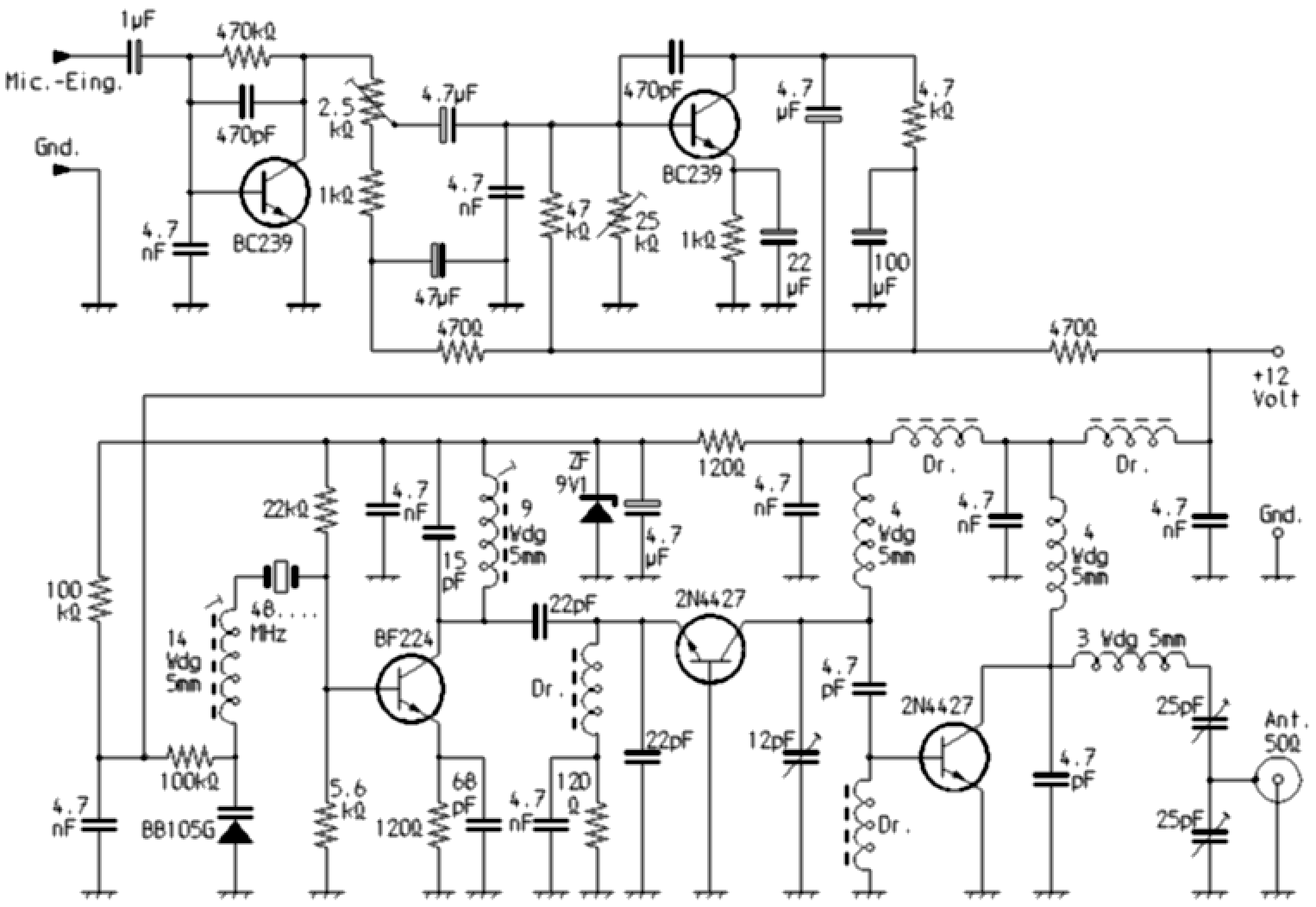
The modulation of all such transmitters with 48 or 72 MHz crystals was mostly somewhat distorted, since the frequency of the overtone oscillator can only be pulled very little. It should be noted, however, that a larger frequency deviation were used for FM in the 2m band at that time. At first they worked with a 50 kHz grid and then, very soon, for a long time with a 25 kHz grid. With today's 12.5 kHz grid and the frequency deviation adapted to it, significantly better results can be achieved with such transmitters. The modulation quality can be significantly improved if an limiter amplifier for the audio signal is inserted instead of the second stage of the microphone amplifier. It must be set in such a way that the limitation starts before the varactor modulator causes distortion.
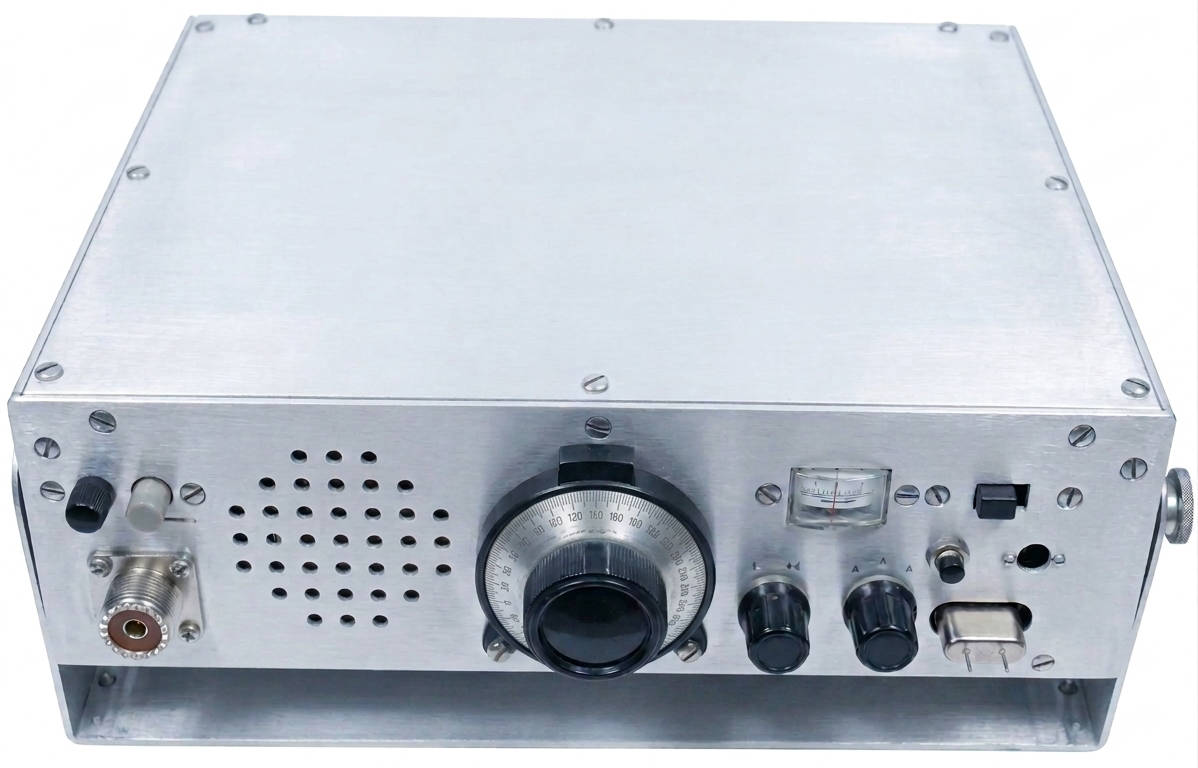
In general, with FM transmitters it should be ensured that the LF modulation signal is limited, since the maximum intended frequency deviation should not be exceeded regardless of the properties of the FM modulator. It must match to the characteristics of the receivers used by the other stations. The IF bandwidth at the receiver end is decisive. In order to limit the maximum modulation deviation to a suitable, fixed value, a control circuit like an ALC (Automatic Level Control) would have to work with practically no delay. Otherwise, the FM signal can leave the range of the IF bandwidth during the control time. As a result strong non-linear distortion occurs, which affects the intelligibility. For these reasons, you will almost always find a modulation limiter in more modern FM transmitters. Such circuits were often referred to as speech clipper in the amateur radio literature of the tube era. While they are suitable for increasing the signal density for SSB and are therefore only suitable for achieving DX or contest modulation, they are also ideal for the close range with FM with the overall better sound properties there.
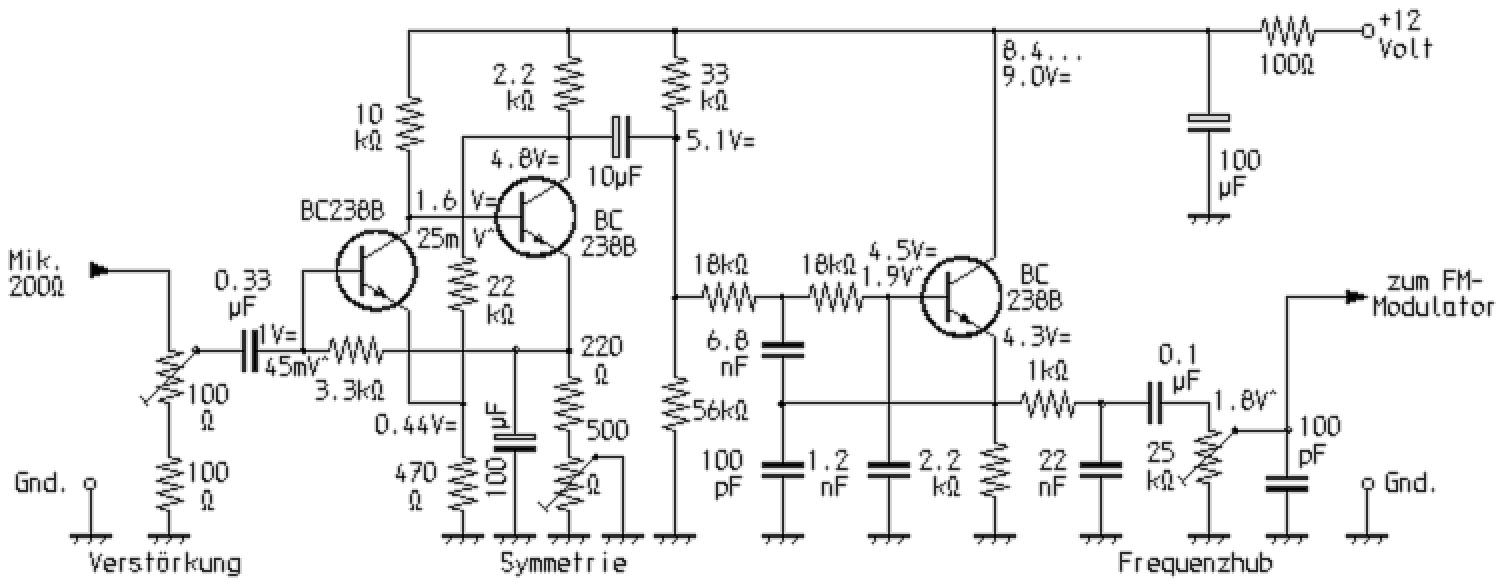
The circuit shows such a modulation limiter built up with separately transistors. With the two-stage, DC coupled preamplifier, the operating point is adjusted so that the signal is symmetrically limited for both half-waves in the event of overdrive. If the input sensitivity is not sufficient for the microphone used, there is no limit at all. In this case, an audio preamplifier should be inserted at the input. The limiter amplifier is followed by an active low-pass filter, which suppresses the harmonics of the audio signal caused by the limitation. This keeps the bandwidth of the modulated RF signal small. The microphone gain (Mike Gain) is set with the trimmer on the input side and the frequency deviation on the output side. Microphone sensitivity, frequency deviation and limiting symmetry can thus be set independently of one another.
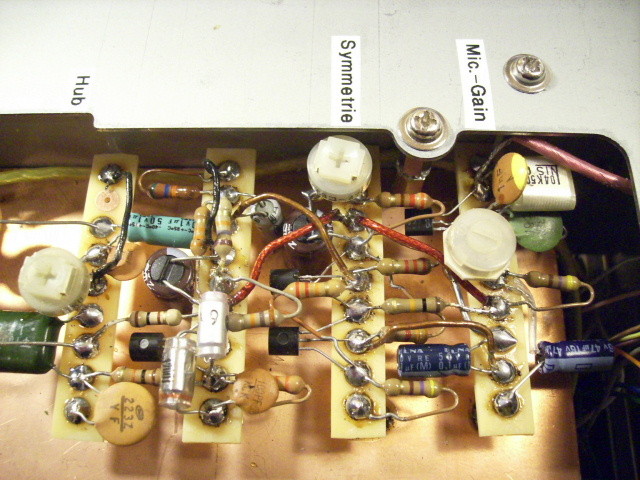
I took over the circuit mainly from a Lorenz VHF radio system of the type SEM-57 and used it with good success in other homemade transmitters or transceivers. A hand-wired assembly of such a circuit is shown here.
Homemade 2m FM transmitter with tubes
Transmitters for the 2-meter amateur band, designed for portable operation, often used crystal oscillators. In the days before commercially available VHF/UHF amateur radio equipment, 48 MHz harmonic crystals were the most popular choice. For example, a 48.333 MHz crystal, when tripled, produced a transmit frequency of 145.0 MHz. 72 MHz harmonic crystals were also quite common. For a 145.0 MHz transmit signal, doubling the oscillator signal required a 72.5 MHz crystal. The 48 MHz crystals typically oscillated at the third harmonic, while the 72 MHz crystals usually operated at the fifth harmonic.
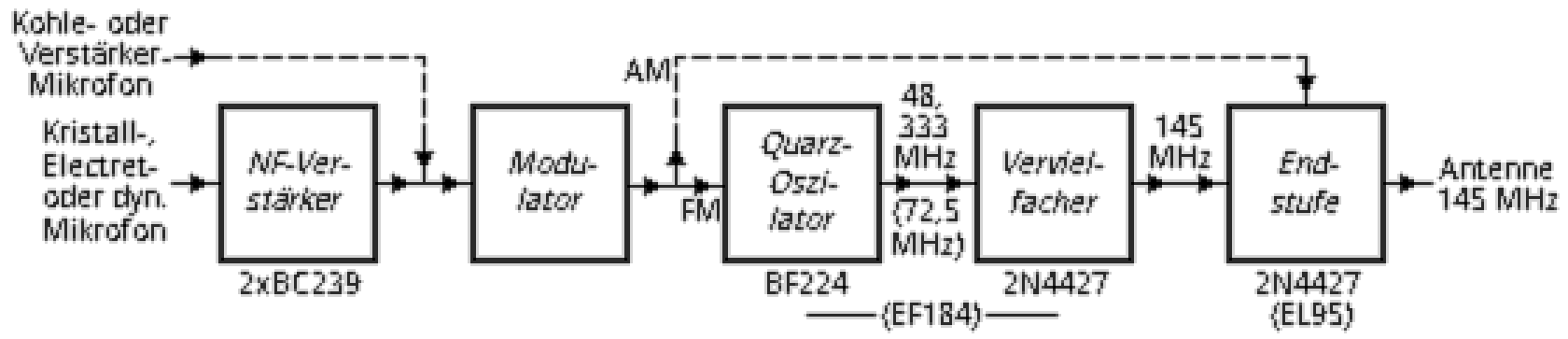
Such transmitter designs enabled the simple construction required for use in portable radio systems. Transmitters operating in this way were designed for AM, the most common mode of operation in the 2-meter band at the time. With the advent of repeater stations, such transmitters were also built for FM. However, achieving sufficient frequency deviation with 72 MHz crystals proved difficult. In this respect, control using 48 MHz crystals was significantly superior. Incidentally, such crystals are still available today as custom-made products for any channel frequency. Each channel crystal costs approximately €25, plus shipping.
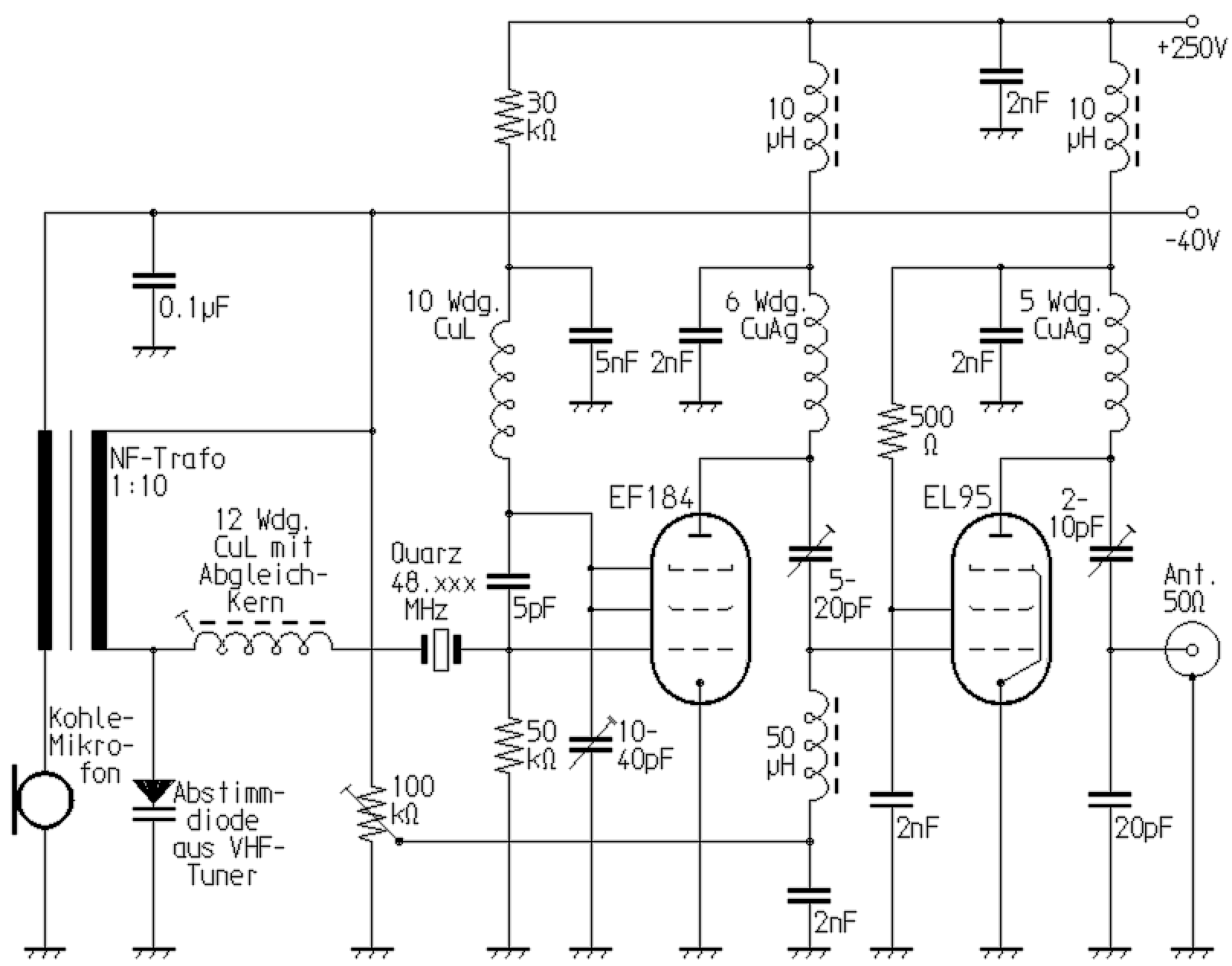
I conducted various experiments with transmitters constructed as shown in the circuit diagram. Depending on the coil characteristics, the achievable RF power ranged from 2 to 3 watts. For short-range operation, a single-stage configuration with an EF184 tube was sufficient. This already yielded several hundred milliwatts, enough for operation via the local 2-meter repeater. The configuration shown allowed for a frequency moduiation perfectly adequate for the 25 kHz grid, without any significant distortion. Transistor transmitters proved considerably more problematic in this respect. The high Q-factor required for maximum RF power and the low damping of the tubes result in a rather narrow RF bandwidth. Consequently, it must be expected that the resonant circuits will need to be readjusted when changing the crystal outside a range of approximately 500 kHz. Therefore, it is advantageous if the resonant capacitors can be adjusted on the front panel.
Since a higher purity of the transmitted signal is required nowadays, a filter should be inserted at the transmitter output. However, because tube transmitters already produce a fairly clean signal due to the lower damping of their resonant circuits, not much effort is needed here. A series circuit tuned to 145 MHz in the antenna line is already quite effective in this regard.
Further circuits and articles regarding VHF/UHF amateur radio:
- Retuning circuit for free running VHF transmitters
- Simple AM dual conversion IF module (5,5 MHz/ 455 kHz) for VHF receivers
- VHF transceiver Semco Terzo for AM, FM, SSB, and CW mode (2m band)
- VHF tube superhet module Nogoton UK12642 for the 2m amateur band (AM)
Simple FM double superheterodyne receiver for 144-146 MHz
With multiband radios of Japanese manufacture, such as those advertised from around 1970 onwards as control or monitoring receivers, including in electronics trade journals, it was usually possible to monitor the 2-meter band in FM mode. In this range, often designated PB2 (Police Band 2), frequencies between 136 and 174 MHz were typically adjustable. With the IF bandwidth of over 200 kHz designed for broadcasting, it was possible to tune in to FM amateur radio stations with sufficient sensitivity, but often difficult to separate them from one another.
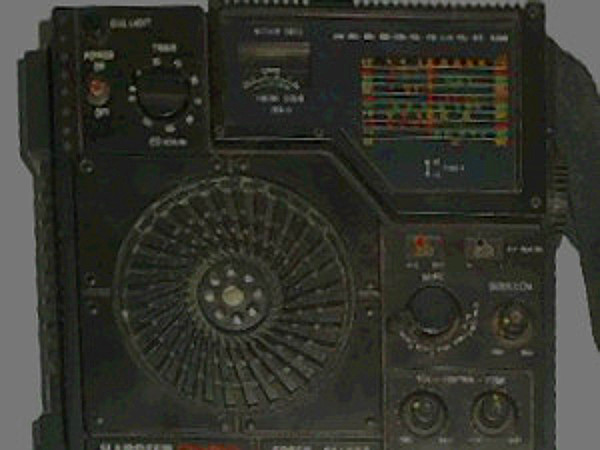
A device I owned at the time, like the one pictured, had a fairly usable input sensitivity, which could certainly have been improved significantly with a narrower IF bandwidth. Studying the circuit diagram revealed that there was a separate tuner for each VHF band. Band switching was achieved by switching between these tuners. The individual tuners were built like the input stages of somewhat better FM radio receivers, with an RF preamplifier, mixer, and separate oscillator. This prompted me to modify the resonant circuit elements and convert the FM section of a mechanically similar, inexpensive Japanese AM/FM portable radio for 2-meter FM.
That device, including the FM tuner, was built on a circuit board, similar to the one in the adjacent photo. Although the input circuit with RF preamplifier and self-oscillating mixer stage was considerably simpler, the reception results after replacing the RF preamplifier transistor with a good RF type were quite comparable to those of the multiband radio.
Motivated by this to further experiments, I modified a Japanese car radio with variometer tuning and a separate oscillator. Probably mainly due to its more RF-friendly design, the reception was noticeably better than with the multiband radio, especially regarding interference from FM broadcast stations and other sources of interference.
I achieved significantly better results with a tube radio, which, in its FM section, again featured a self-oscillating mixer with a standard ECC85 tube. These promising experiments encouraged me to build a complete transistorized 2-meter double superheterodyne receiver myself. This receiver was to have an input circuit with a self-oscillating mixer stage. For a transistorized FM input circuit with a self-oscillating mixer stage, as described in Hans Sutaner's coil book, a frequency stability of ±15 kHz achievable with temperature compensation was specified in the temperature range of -20°C to +50°C. Extrapolating to the conditions in the 2-meter band, this yields a value of approximately ±22.5 kHz for frequency stability. Such a circuit could therefore also be operated in combination with a narrowband FM intermediate frequency section, provided one accepts occasional retuning after switching on or after significant temperature changes.
To investigate the suitability of such minimal tuners for narrowband FM, I conducted some preliminary tests. For this purpose, I connected a double-conversion superheterodyne IF section from an old commercial 2-way radio to the IF output of a cheap VHF receiver with a self-oscillating mixer stage ("Aircontrol"). The receiver had an IF section for broadcast bandwidth, and its tuning mechanism was by no means suitable for this selectivity. Nevertheless, it turned out that the frequency stability itself was quite sufficient for narrowband FM reception, even without further compensation measures. More problematic, however, were instabilities across the antenna. For example, stations tuned in by hand almost completely disappeared.
Due to the proximity of Hamburg Airport, which at the time was about 15 km from my location, I frequently encountered problems with image frequency reception from the aviation radio bands during my radio modifications. To solve this problem, I added a two-circuit filter to my completely self-built input circuit between the RF preamplifier and the mixer. This also incidentally solved the instability problem via the antenna, resulting in significantly improved decoupling. Built with a large ground plane and optimized for RF performance, I even achieved overall stability comparable to that of a 2-meter receiver using Hael components (dual-gate MOSFET preamplifier and SO42P as mixer and oscillator). Even in VHF circuits, the mechanical design is considerably more important than the circuit technology itself!
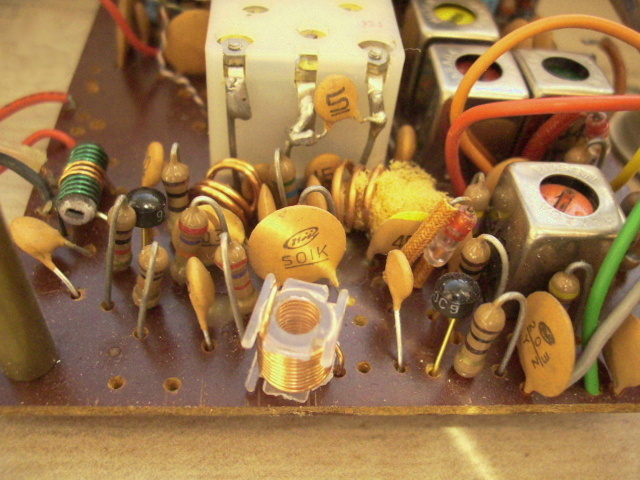
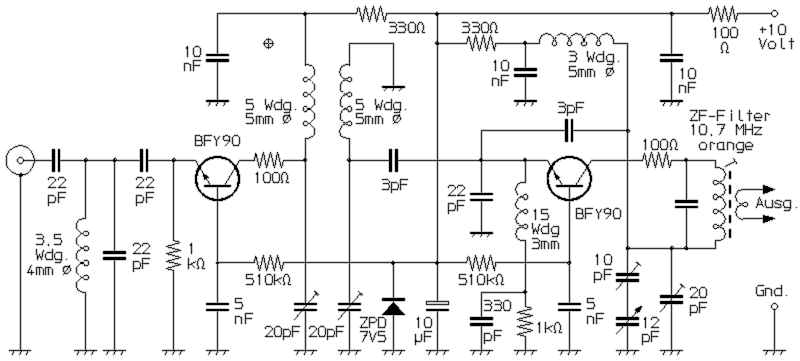
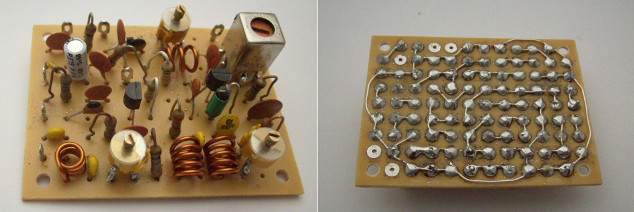
Ultimately, I arrived at the circuit shown for the input stage of my receiver by rebuilding the FM section from a cheap radio from the Far East, using better transistors, and redesigning it for the 2-meter band. As shown in the photos, I even managed to build another version (with 2x BF959 transistors) on a perforated circuit board (5.08mm grid spacing). Thanks to well-thought-out wiring and 90° angles between the coils, the circuit works quite well even on this basis. It exhibits no tendency to oscillate. Proper alignment of the intermediate circuits is possible with an AM IF stage by adjusting the two trimmers for maximum noise with the antenna connected. Beforehand, the oscillator circuit must be tuned so that frequencies between 133.3 and 135.3 MHz can be selected.
I added a self-oscillating mixer to the input stage, which converted the 10.7 MHz intermediate frequency (IF) signal to the lower IF of 455 kHz. This used a quartz-controlled circuit, redesigned for the lower frequency, as often found in simple 27 MHz handheld transceivers with superheterodyne receivers. The quartz control reliably prevented frequency instabilities from this stage. This was followed by two identically constructed 455 kHz IF stages in a cascode configuration, exhibiting characteristics similar to IF stages with a pentode. Unfortunately, the second stage tended to overshoot with strong signals, resulting in a critical alignment. A phase detector was initially used for demodulation. Below is the complete circuit diagram of the IF section, connected to the input stage via a 47 pF capacitor, at this stage of construction.
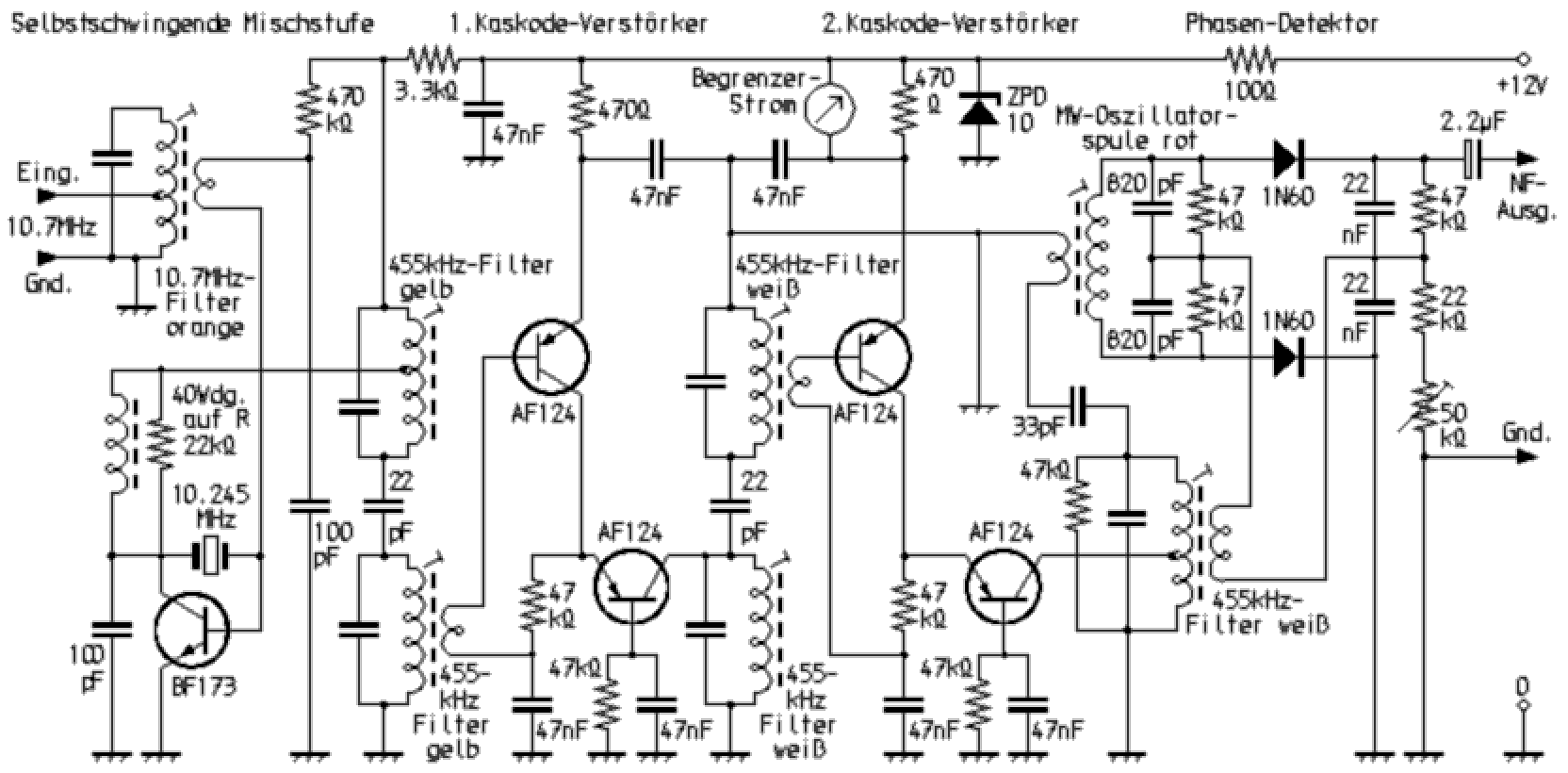
I later replaced the second cascode stage with an IF limiter with a differential amplifier, thus solving the problems of overshoot with strong signals. Additional AM suppression was achieved by later replacing the phase detector with a ratio detector. The IF section was followed by a push-pull audio amplifier with four transistors (AC187k and AC188k output stages). The receiver was equipped with an S-meter and a squelch. The device was thus ideally suited as a secondary receiver, but in conjunction with a crystal-controlled 2-meter FM transmitter, it was even quite suitable for two-way radio communication. To ensure the receiver remained tuned to the frequency, I only switched off the audio section during transmission. The antenna was switched from the receiver input to the transmitter via a relay.
Components for a crystal-controlled 2m FM receiver
I have repeatedly experimented with completely self-built receivers for the 2-meter band. Based on my experiments with vacuum tubes and my transistorized double superheterodyne receiver, my goal was to approach the quality of receivers found in higher-quality commercially available VHF radios of the 1970s. Even back then, it was possible to build receivers that achieved almost the maximum sensitivity and also quite good large-signal handling. As a particular challenge, I set myself the goal of using no integrated circuits or vacuum tubes in my circuits. For my experiments, my circuits preferably used crystal oscillators, because this allows for the generation of high-quality superheterodyne signals without significant effort in terms of purity and noise. This made it possible to extensively test the receiver characteristics under various practical conditions, especially by monitoring the repeater frequencies. The best of the resulting circuits are presented here.
High-quality input circuitry for a 2m receiver
The input stage initially presented here was used in a somewhat more elaborately designed 2-meter homebrew receiver. The four-stage filter between the RF preamplifier and mixer consists of standard LC circuits, with the coils housed in shielded cans. These were salvaged from a commercially manufactured transceiver that was beyond repair. This arrangement achieves excellent image frequency rejection. The bandwidth is sufficient for receiving the entire 2-meter amateur radio band without any significant drop in sensitivity at the band edges. The RF preamplifier operates, similar to earlier Semco devices, in a so-called intermediate-base circuit configuration. This is a combination of common-base and common-emitter circuits, where the signal is fed to the two control electrodes out of phase. This allows for particularly stable operation without any tendency to oscillate. Furthermore, with a carefully designed intermediate-base circuit configuration, the noise and power matching are perfectly matched. Therefore, adjusting the input circuit to the maximum signal voltage also achieves the best signal-to-noise ratio.
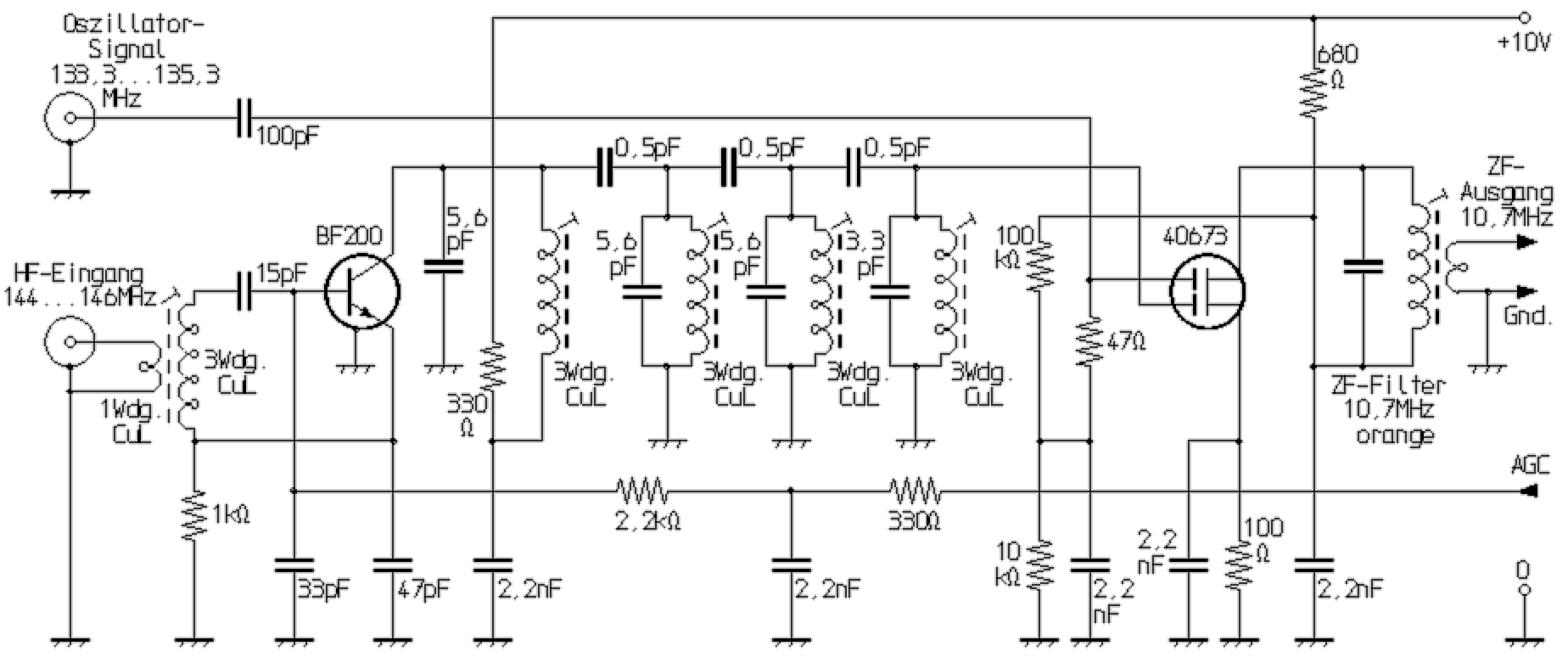
Older radios often use configurations where the RF preamplifier stage employs a dual-gate MOSFET, while the mixer uses a FET or even a standard bipolar transistor. FETs, due to their nearly quadratic characteristic curve, prove significantly superior, especially in the mixer stage. When used here, they achieve considerably better large-signal handling capability. However, depending on the transistor type chosen, an RF preamplifier stage with bipolar transistors can generally offer better sensitivity. Regarding large-signal handling, the RF preamplifier, designed for linear amplification and operating at a lower level, is only marginally more susceptible to intermodulation than a comparable stage using a single FET. In the RF preamplifier stage, the dual-gate MOSFET essentially functions as a cascode circuit, with a FET in source configuration and a FET in gate configuration connected in series. Due to the virtually power-free drive, the question of noise matching becomes less important in FET input stages. While a preamplifier with a dual-gate MOSFET offers higher gain with excellent stability, this is often unnecessary in the RF preamplifier. A FET mixer also eventually reaches its output limit, so the high-gain MOSFET preamplifier can even worsen the receiver's large-signal handling capability. The preamplifier should only boost the input signal just enough to make the mixer noise less noticeable. Furthermore, the MOSFET in the receiver input has the disadvantage of lower operational reliability. It is easily destroyed by static electricity buildup in the antenna or by strong interference pulses caused by thunderstorms.
In contrast, the dual-gate MOSFET truly demonstrates its strengths in the mixer. Designed as a multiplicative mixer, it is less prone to intermodulation. The so-called "blocking" effect caused by bias shift at high signal levels is also hardly an issue. Furthermore, this type of mixer operates with significantly less noise than one using a bipolar transistor, resulting in a considerably greater dynamic range overall. Practical comparisons showed that receivers with this type of input circuit, built using amateur equipment, could easily compete with the top-of-the-line devices of the time in terms of sensitivity and large-signal handling.
A simple converter for 144 - 146 MHz reception
Like the circuit presented previously, the converter shown here converts a signal in the range of 144 to 146 MHz to a fixed intermediate frequency of 10.7 MHz. At first glance, this circuit appears hardly less complex. However, it should be noted that it already includes the circuitry for generating the injection frequency. This is a crystal oscillator in which the output frequency of 135 MHz is synchronized via the crystal's overtone at 45 MHz. The crystal operates in series resonance, with its fundamental frequency at 15 MHz. This arrangement was formerly popular in 2-meter converters, which were designed to enable reception of the 2-meter band using a 10-meter receiver. The arrangement has the advantage that neither multiplier stages nor significant filtering effort are required to achieve good spectral purity. Some designers may have underestimated the capabilities of this circuit due to its simplicity. In any case, I've encountered several 2-meter receivers that, despite considerably greater effort being put into generating the injection frequency, exhibited significantly more spurious reception and whistling. The oscillator can, of course, also be used in conjunction with the first circuit.
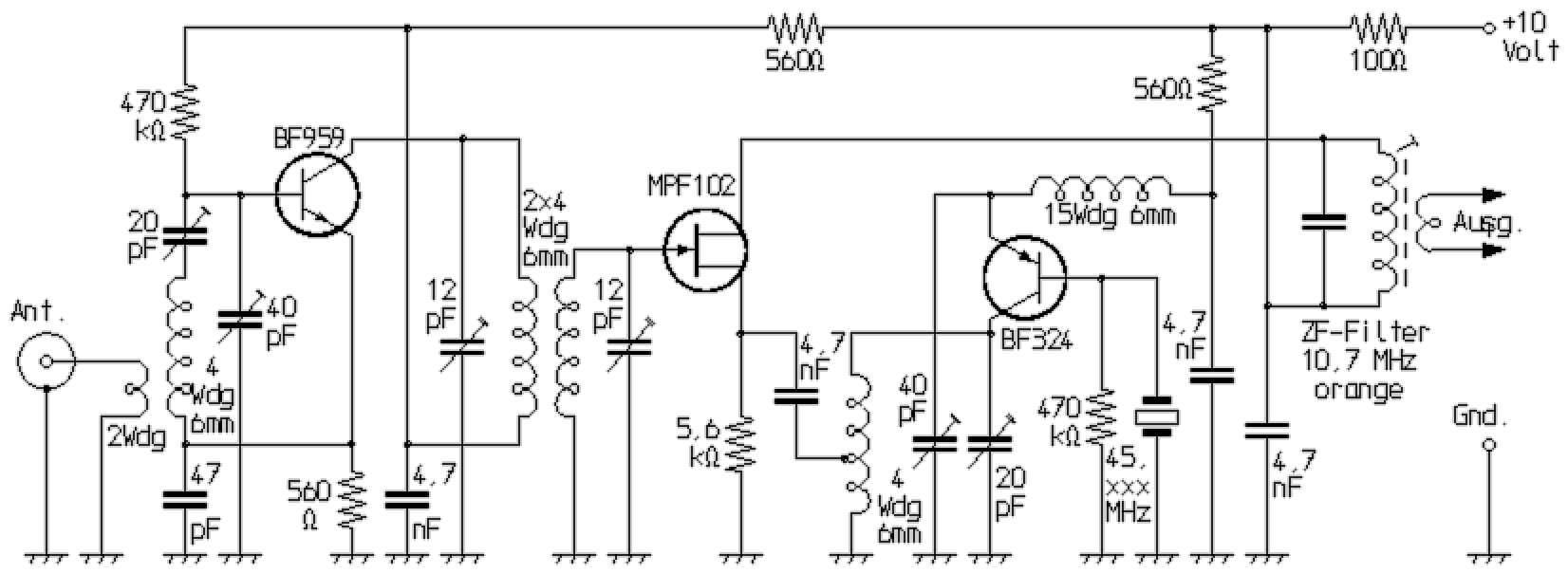
I designed this circuit to achieve maximum reception performance with minimal effort. The RF stage on the input side, which is now frequency- and impedance-adjustable and again operates in a intermediate-base configuration, ensures good input sensitivity and optimal signal-to-noise matching to the receiving antenna. Unlike the first circuit, an air-core inductor is now used in the input circuit. Furthermore, a more modern VHF transistor, originally developed for TV tuners, is now employed. The mixer stage, which here uses a simple junction FET instead of a dual-gate MOSFET, is, despite its reduced complexity, significantly superior to a mixer stage with a bipolar transistor, particularly in terms of large-signal handling capability. The same configuration was found, among other things, in the EKB-100 receiver module from HAEL (Hanschke-Elektronik). The other VHF resonant circuits also utilize air-core inductors. Even with an open design without a chambered enclosure, stable operation is ensured if the coils of the pre-circuit and intermediate circuits, as well as the two oscillator coils, are mounted at a 90-degree angle to each other. The two intermediate resonant circuits are, of course, arranged at a straight line. The RF bandwidth can be varied by changing the coupling via the distance between the two coils.
Series resonant crystals with a third harmonic at 45 MHz are suitable for the oscillator. Therefore, receiver crystals used in then-common channel radios such as the Trio TR-2200 or FDK Multi-7 can be employed. In this frequency scheme, the exact harmonic frequency of the crystal corresponds to the value calculated by subtracting the intermediate frequency (IF) of 10.7 MHz from the receiving frequency and then dividing by three. In principle, the receiving frequency could also be tuned using a variable intermediate frequency. Because a 2 MHz spectrum needs to be transmitted, however, the IF circuit must be sufficiently broadband then. This is achieved more effectively with a higher first IF. As mentioned above, a 38.667 MHz crystal, for example, allows conversion to the 10-meter band. For this, the number of turns in the two coils of the oscillator must be increased accordingly. To ensure the intermediate frequency (IF) circuit has sufficient bandwidth, the output transformation should be in the range of 1:2 to 1:3. The load down of the resonant circuit by the input of the downstream receiver as a result is sufficient to transmit the entire 28 to 30 MHz range, thus enabling tuning of the entire 2-meter band.
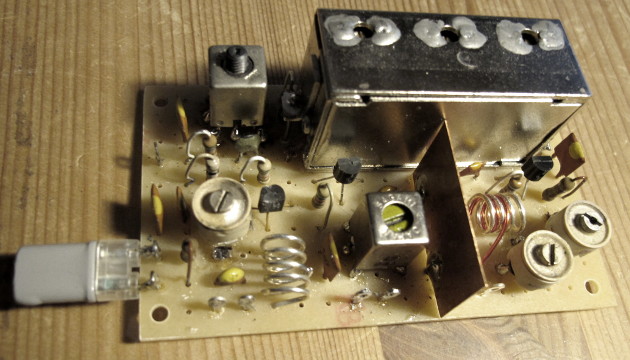
The 2m converter shown here, otherwise built according to this circuit diagram, operates particularly reliably. In this circuit, the two-stage filter between the RF preamplifier and mixer stage has been replaced by a three-stage helical filter in a shielded block design. This filter significantly reduces image frequency interference and other sources of signal interference outside the band, especially those caused by aironautical radio, when using an intermediate frequency of 10.7 MHz. Receivers built with this input stage can easily compete with many commercially available 2m radios. Despite its significantly simpler construction, sensitivity and large-signal handling are only marginally inferior to the first circuit. A test setup I designed as a converter for the 10m receiver also confirmed these excellent characteristics.
A simple IF converter for 10.7MHz/455kHz
The IF converter is designed for receivers operating on the double-conversion principle with a first IF of 10.7 MHz. It converts this to a second IF of 455 kHz. In devices built with single transistors, one typically found an arrangement with two transistors, one configured as a mixer and the other as an oscillator. In my double-conversion receiver, described elsewhere, I used a self-oscillating mixer arrangement with a bipolar transistor for the conversion from the first to the second IF. The circuit shown here is hardly more complex and, since only the input and output circuits need to be tuned, is considerably easier to align. Even compared to the circuit with two bipolar transistors, it is significantly superior, particularly in terms of gain and overload capacity, despite its considerably simpler construction. A similar arrangement was also found in Megaport brand VHF radios. Similar arrangements had already been used in military two-way radios since around the 1940s, using mixer heptodes (e.g. 6BE6).
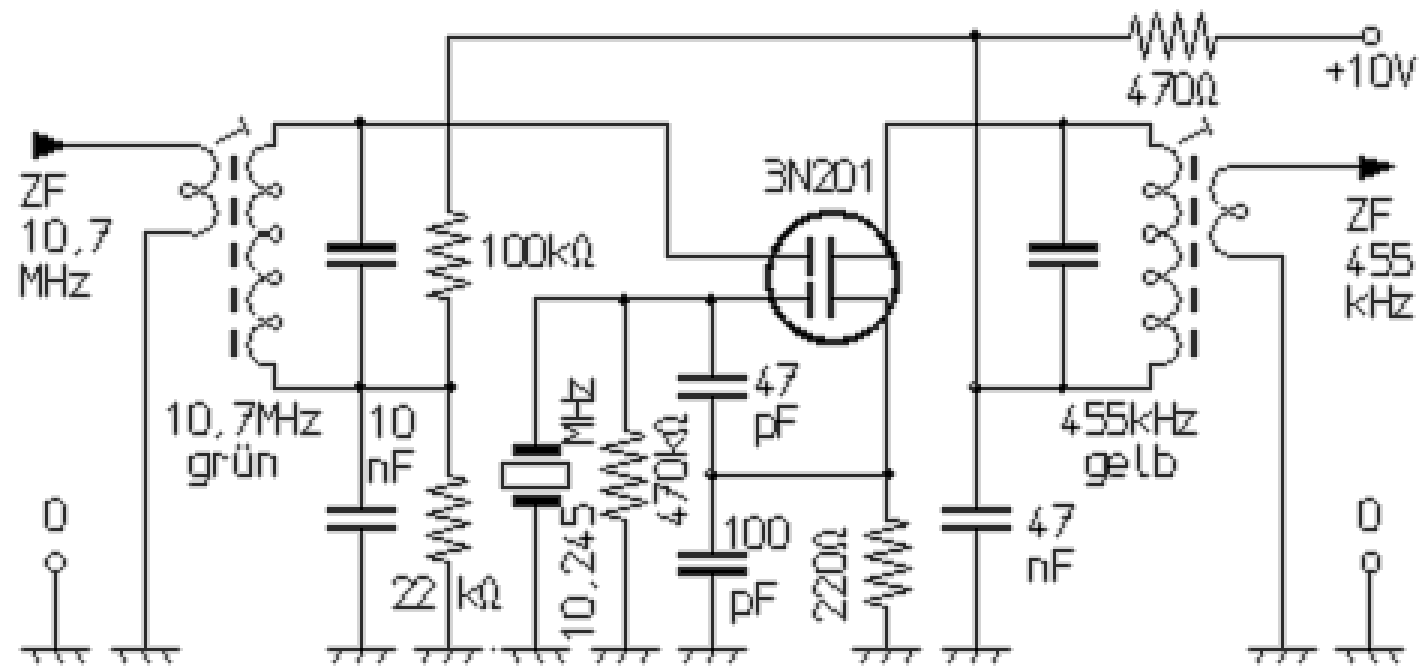
The crystal control guarantees high frequency stability. The circuit can, of course, also be designed for other input and output frequencies. With a 10.240 MHz crystal, the input frequency changes to 10.695 MHz, or, with an input frequency of 10.7 MHz, a second intermediate frequency (IF) of 460 kHz is achieved. Fine frequency adjustment is possible with a trimmer in series with the crystal. In general, a 10.24 MHz crystal can then also be used for an IF of 10.7 MHz.
Using a 9.455 MHz crystal and a capacitor (approx. 12 pF) in parallel with the input resonant circuit, this circuit could, for example, also be used to convert a first intermediate frequency (IF) from 9 MHz to 455 kHz. The parallel capacitors are not labeled with values in the circuit diagram, as they are already included in the individual IF filters (green, yellow).
Despite its remarkably small size, the circuit operates very reliably. It produces little self-noise and therefore exhibits good input sensitivity. Despite using discrete circuitry, the complexity is hardly greater than comparable circuits using integrated circuits (ICs) such as the SO42P or the NE602. Furthermore, it is significantly easier to wire, which is a major advantage for experimental setups without a circuit board.
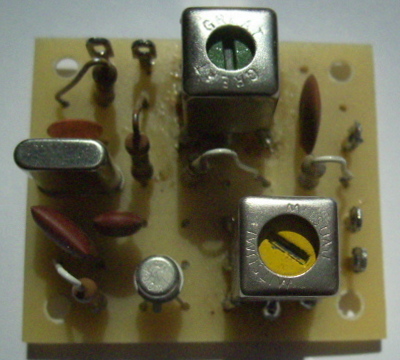
Particular attention must be paid to the filtering at the input and output. If a high-quality crystal filter (e.g., KVG XF107A) is used on the input side, additional filtering on the output side can be completely omitted; that is, the IF amplifier can, and indeed should, be driven directly via the coupling winding of the output circuit. However, if a 10.7 MHz ceramic filter for broadcast purposes (e.g., SFE10.7MA) is used on the input side, a narrower-band ceramic filter (e.g., CFW455F) should definitely be used on the output side. Due to the wider bandwidth of the 10.7 MHz filter, signals outside the IF bandwidth but within the bandwidth of the input-side filter can then overload the mixer stage. It is precisely in this respect that the circuit with a dual-gate MOSFET proves significantly superior to arrangements with bipolar transistors in the less expensive solution using ceramic filters.
IF module for 455kHz with NFM push-pull demodulator
In a self-built 10-meter transceiver, I successfully used the described IF section with a push-pull or double-edge detector. Although generally described as less than ideal in the technical literature, I nevertheless found a similar arrangement in a Telefunken commercial radio. Contrary to what is often claimed, I cannot confirm that the alignment is difficult. Quite the contrary: the circuit even offers the advantage that, within certain limits, adjustment to the modulation index is possible. Such circuits are simply aligned differently than usual. The resonant points lie far from the intermediate frequency for low distortion.
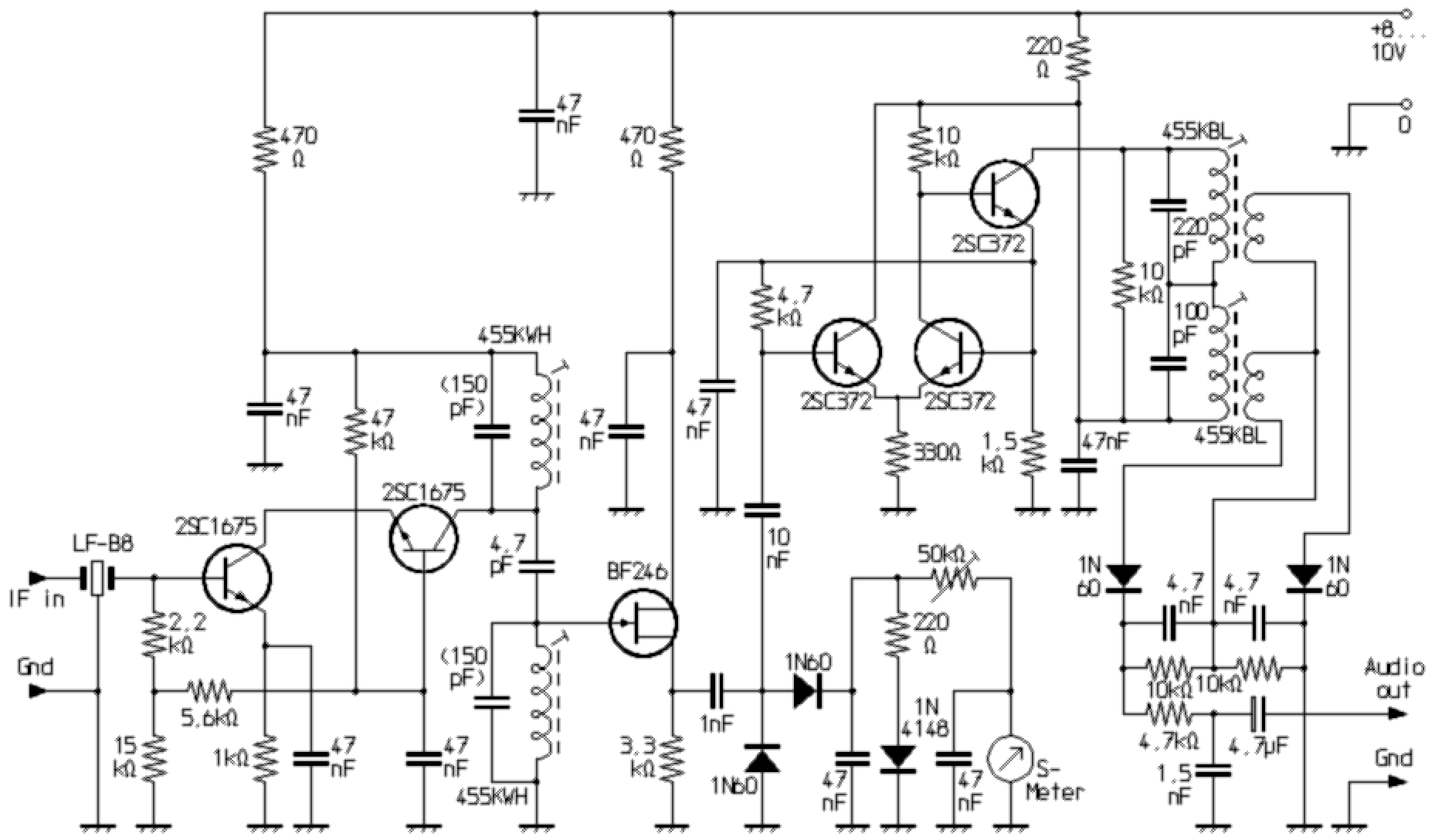
Unlike, for example, a ratio detector, the upstream IF amplifier must exhibit good limiting characteristics. This is the case with the circuit shown. Due to the high open-loop gain, careful, feedback-free construction is necessary. A chambered design is therefore best. In extreme cases, unwanted feedback can lead to self-excitation, i.e., the IF amplifier begins to oscillate. But even if this doesn't occur, feedback can compromise the proper functioning of the circuit. Similar to a regenerative receiver, it can lead to an increase in the Q factor of the IF circuits. This makes it impossible to achieve the bandwidth required for FM and results in severe distortion during demodulation.
FM coincidence demodulator with DG MOSFET
Even without an integrated circuit, a well-functioning narrowband FM demodulator can be constructed using a dual-gate MOSFET. Apart from the slightly lower input sensitivity due to the simple limiter amplifier, the circuit exhibits very similar characteristics to the FM demodulator using a TBA120, as it is also a coincidence demodulator. When coupled to the last IF stage of an AM receiver, the sensitivity is sufficient to produce a substantial amount of noise when no station is being received. The IF amplifier built with the two 2SC1675 transistors and the BF246 FET from the previous circuit can also be used. Both circuits then provide sufficient gain to be driven directly by the IF converter presented bevor.
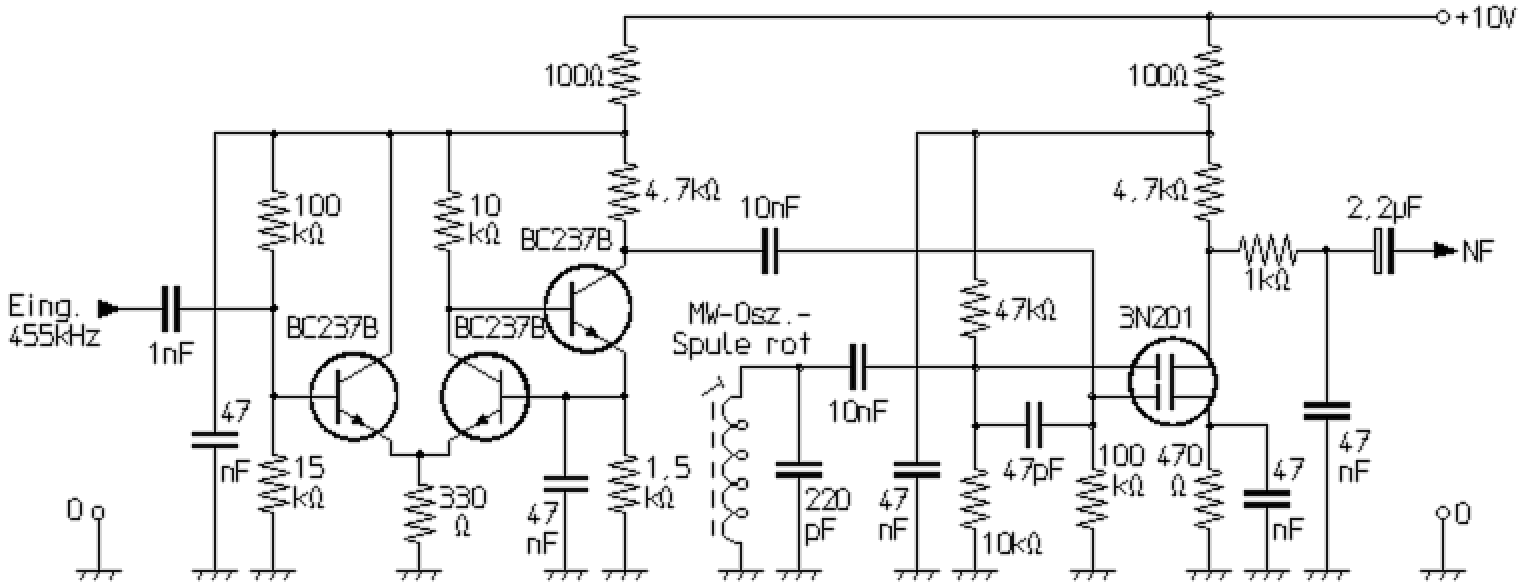
A major advantage for replication is that no special discriminator circuits are required. A simple RF coil with a tuning core is sufficient. If you want to avoid the work of winding the coil yourself, you can use an AM oscillator coil from an old Japanese transistor radio, which is usually marked with a red core. Another advantage compared to phase, ratio, and double-edge demodulators is the significantly simpler tuning process with this single coil. It needs to be adjusted for minimal distortion with a weak FM-modulated signal or for maximum noise floor.