Replacements for integrated circuits and tubes
The audio preamplifier IC LD3001
The LD3001 integrated circuit, manufactured using thin-film hybrid technology, is particularly suitable for audio preamplifiers and driver stages, but other low-frequency and DC applications are also conceivable. Above all, it was used as a pre- and driver stage in transformer-coupled AF push-pull amplifiers. A THD value of 3% is specified for the non-linear distortions.
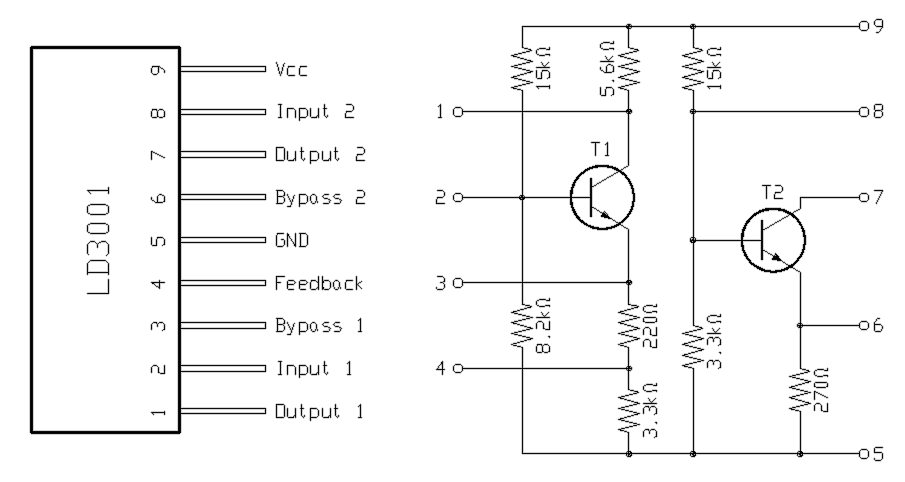
The internal circuit consists of a total of eight resistors and two NPN transistors. The permissible supply voltage range extends up to 15 volts. The housing is similar to the ZIP-9 design and has the dimensions 12 x 10 x 3 mm. The connections are brought out in the form of wires.
If the IC cannot be procured as a spare part in the event of a defect, it can easily be replaced with a replica of the specified internal circuit. Using SMD components, the circuit can be assembled almost as small as the original.
Replacement for the RF amplifier / mixer IC CA3028A
|
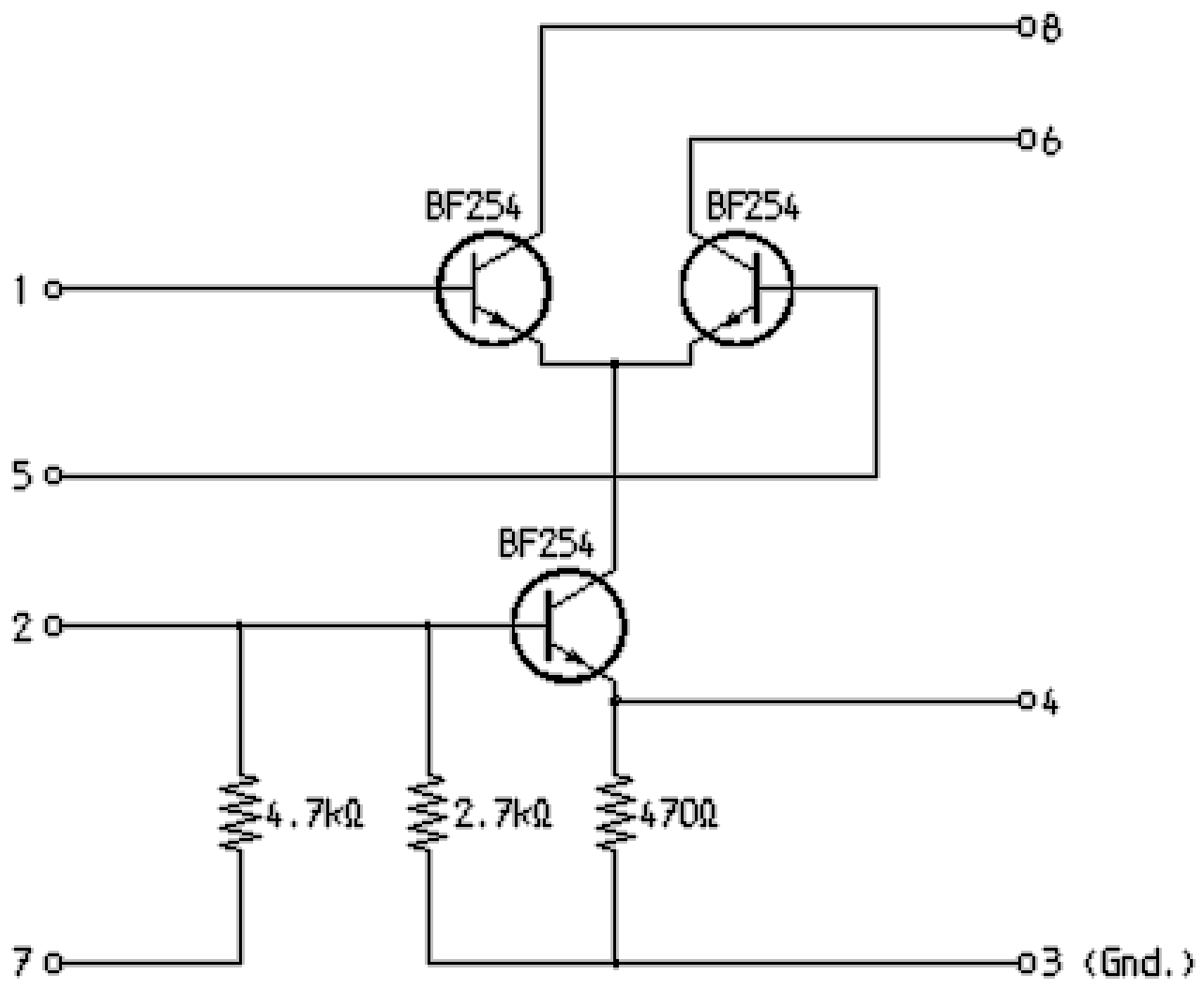
Many ICs stated in older receiver building instructions contain fairly simple internal circuits. The replica of such ICs with individual components is very interesting. But it do not reach the same characteristics in all circuits or sometimes it does not work at all. However, this opens up new possibilities for circuits that work with it: It is now possible to make measurements within the "IC" and carry out modifications that are not feasible with the original ICs. |
In addition, some older ICs are difficult to procure, e.g. the differential amplifier CA3028A. It is often found in old receiver circuits as mixers (e.g., Göttinger Baby II) or RF amplifiers. For this here an equivalent with common single components.
Discretely constructed RF amplifier LM703
|
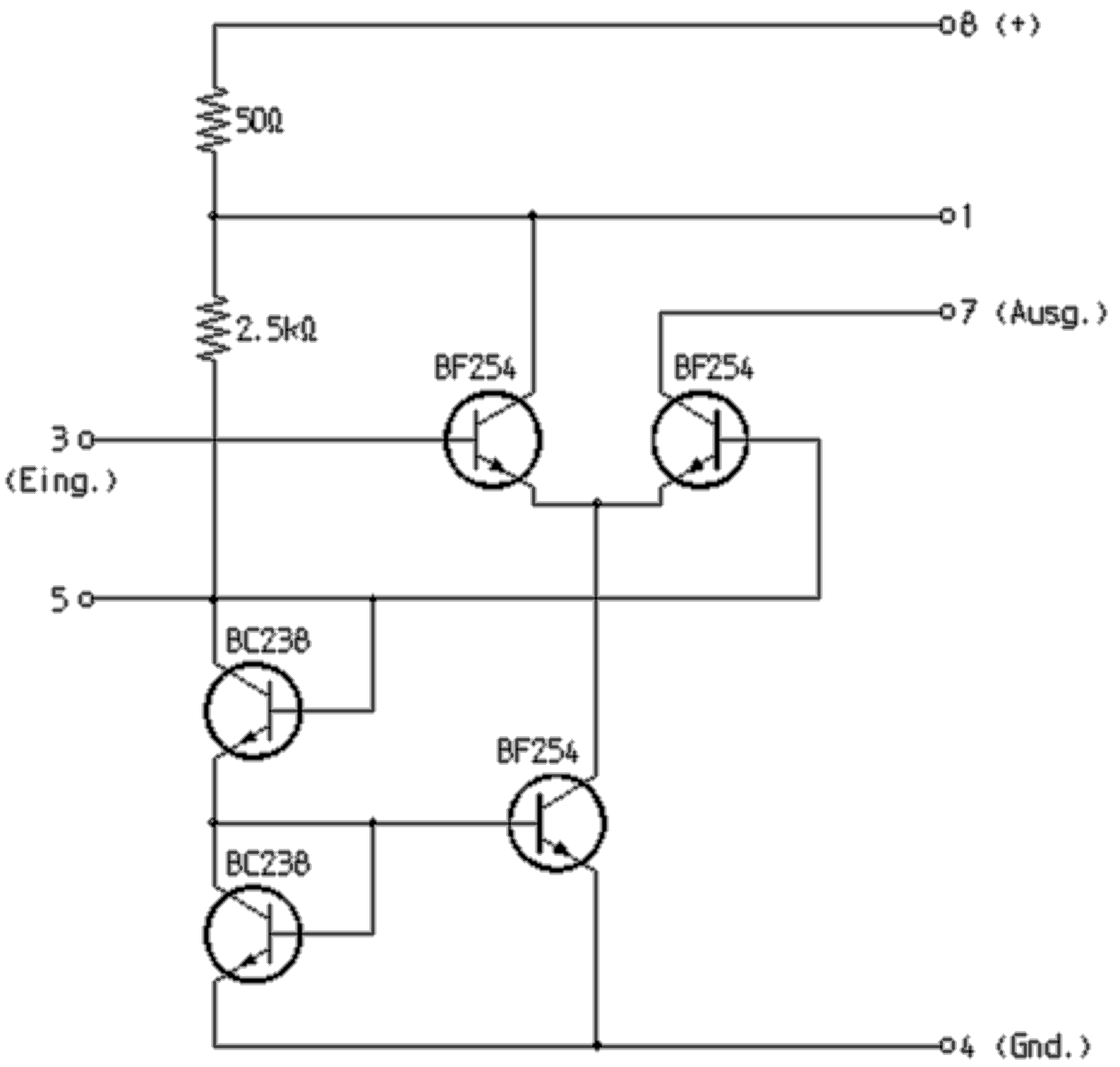
Like the CA3028A, the LM703 contains a differential amplifier, but it is slightly different. It was often used in receiver technology as an RF amplifier. In addition, it could be found in some commercially manufactured hi-fi radio receivers of the 1970s in the 10.7MHz IF stages of the VHF section. Here is the circuit of the recreated LM703. In order to achieve a higher cut-off frequency, RF transistors with a higher transit frequency can be used. However, it is also important that the structure is as compact as possible and with short lines. The component side of the board should have a conductive ground surface. |
Discreetly built RF mixer SO42P
|
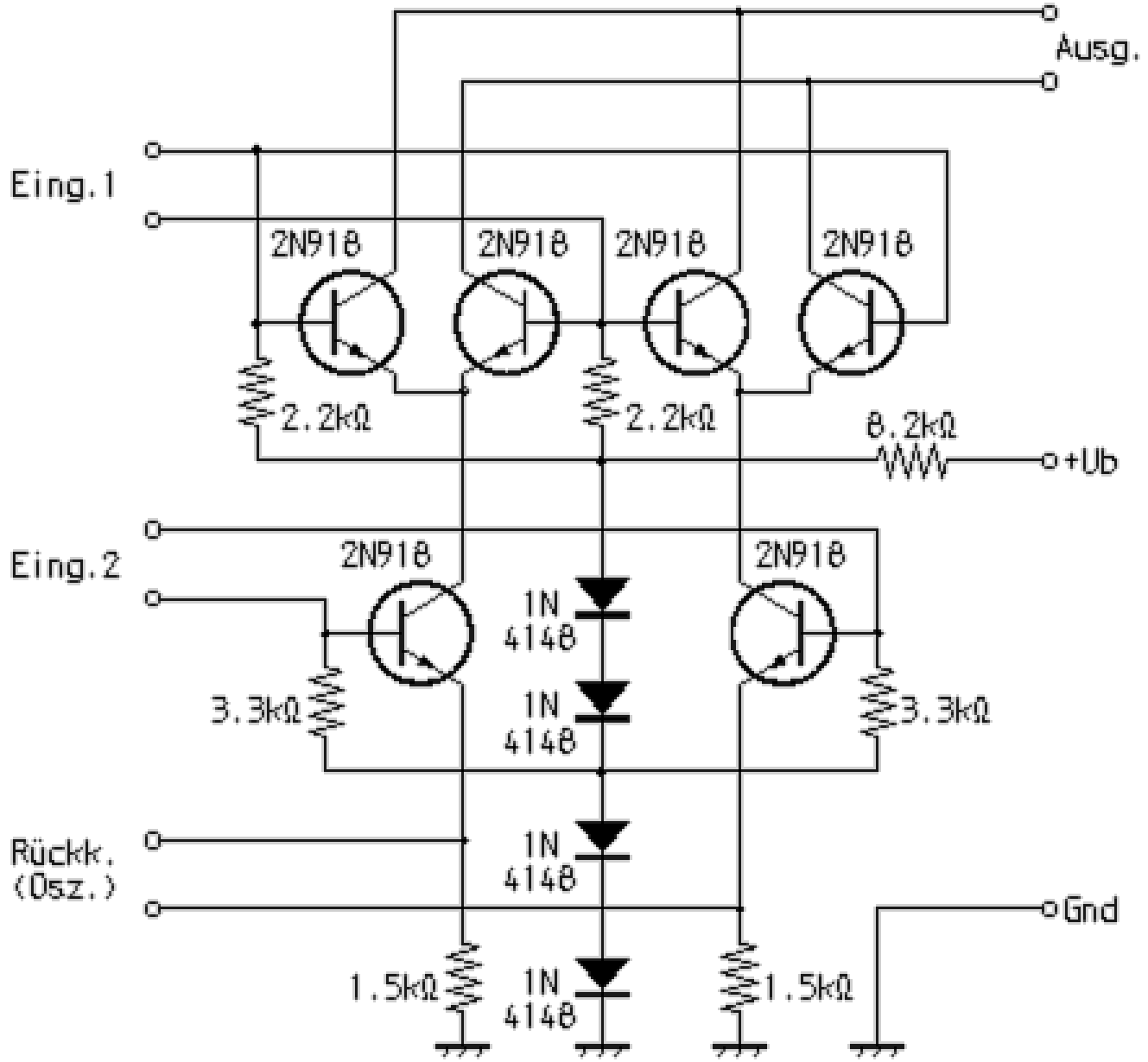
The Siemens circuit SO42P is a symmetrical mixer that works on the principle of the so-called Gilbert Cell. It can also be operated as a self-oscillating mixer with or without crystal control. Furthermore, the use as a balance modulator in SSB transmitters or as a phase comparator in PLL circuits is possible. Here the replacement circuit is shown. When replicating of RF ICs, the smallest possible cable lengths should be adhered to. Only in this way do the circuits come close to the integrated implementations in their properties. It is important to use low-induction resistors. Optionally, the characteristics of the circuits can be improved with different types as the specified transistors, if which have a higher transit respectively cutoff frequency. |
Discretely built operational amplifier
|
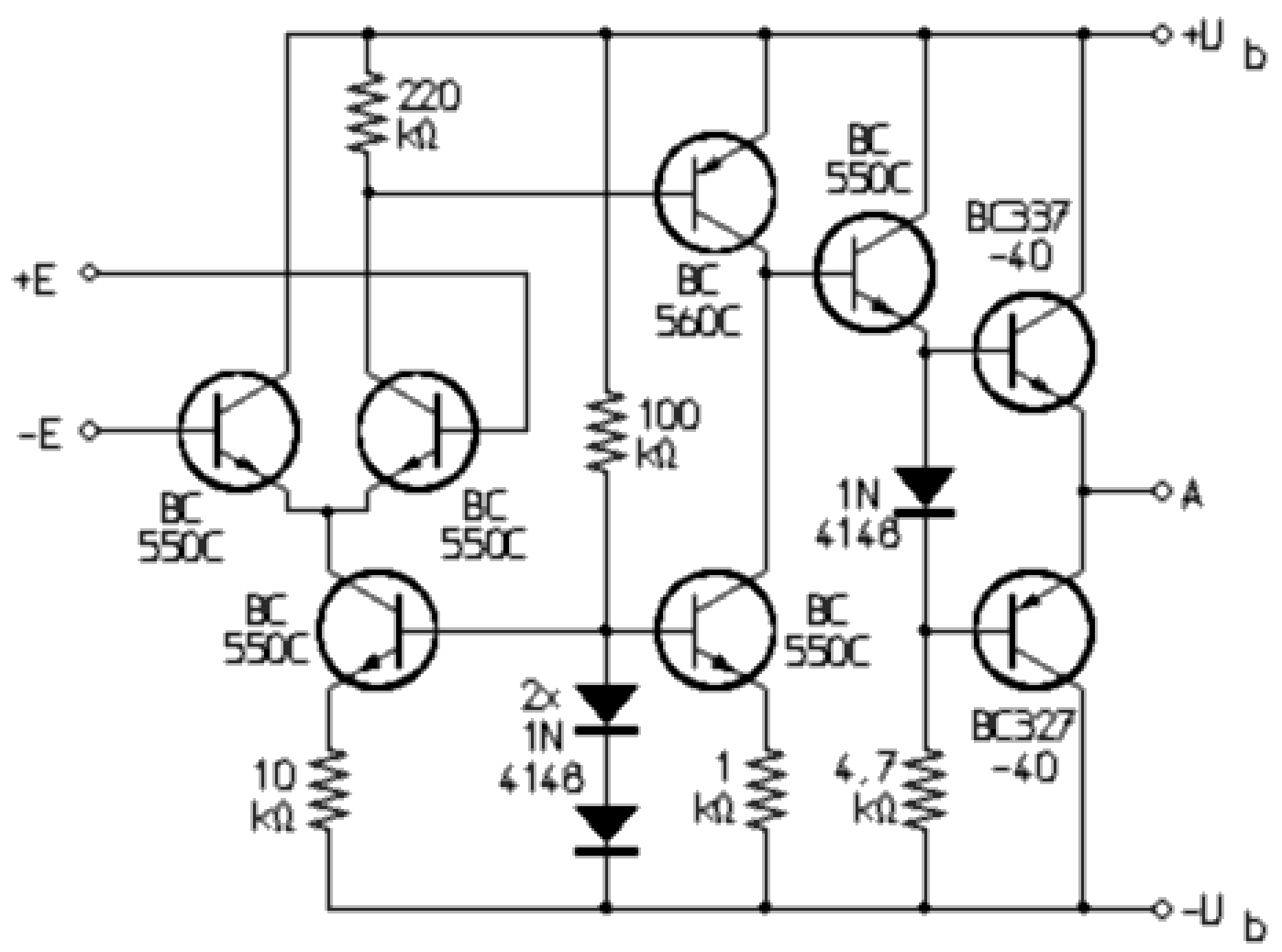
This is the schematic of a discrete, i.e. built from single components operational amplifier. The circuit can be used to build the basic usual OPV circuits, such as inverting amplifier, non-inverting amplifier, voltage followers, comparator, integrator, differentiator, etc. |
Transistor pseudo replacement for the PL81 tube
|
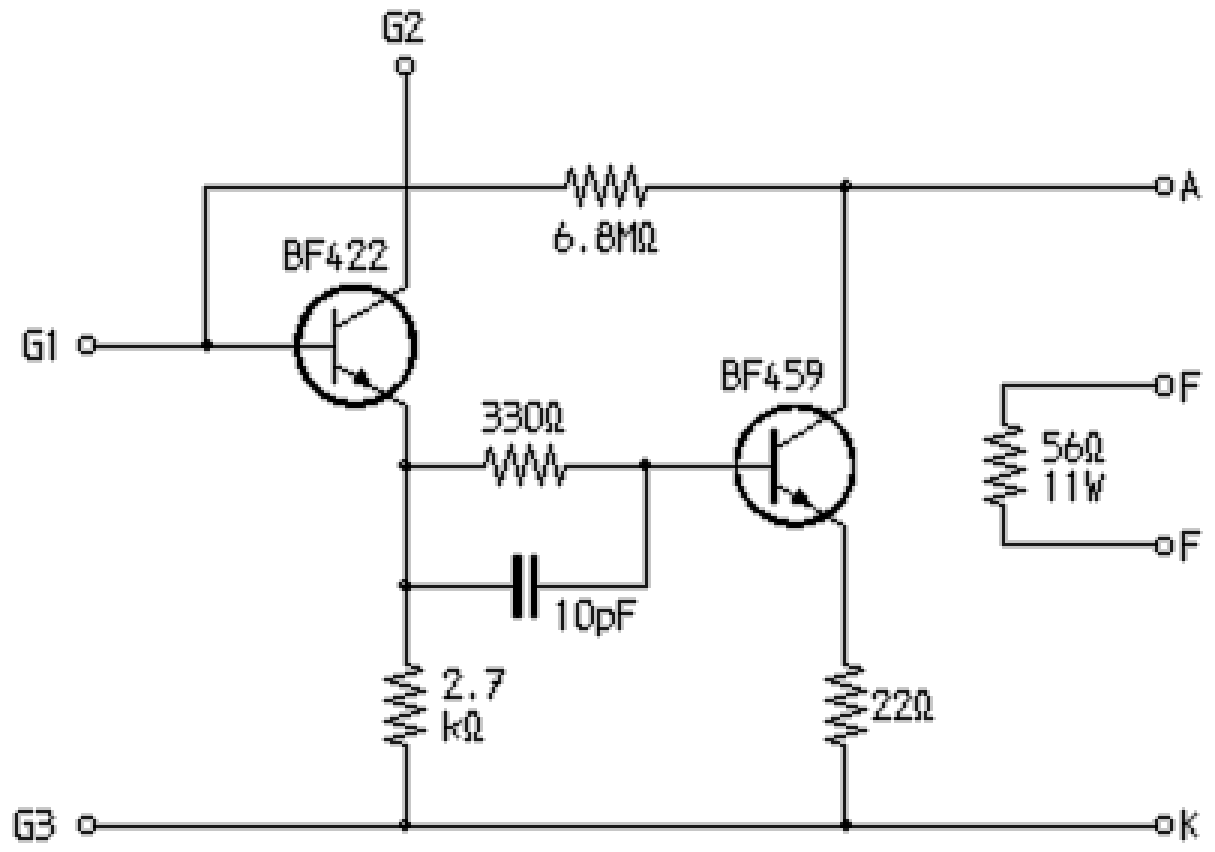
The circuit shown here could be used instead of the PL81 in its standard configuration according to the data sheet as a replacement in old TV receivers or video monitors. However, this was not a full replacement of the PL81. The circuit worked just in such standard applications and not in all possible with this tube circuits. The 56 ohm resistor useless converted heating power into heat so that the heater line of the TV receiver was not interrupted. Thus, the circuit, connected to a Noval plug, could be plugged into the tube socket for the PL81. Of course, the BF459 needs a heat sink. |
It would be interesting to investigate how such a circuit or a similar one behaves as a single-ended Class A amplifier or as a push-pull amplifier for audio applications. Since the vertical power amplifier is strictly speaking nothing else like an audio amplifier, it should actually work.