Allowed: Mobile Units, Home Stations, and "Handy-Talkies"
With the release of 12 CB radio channels in 1975, the use of three types of radio equipment was permitted for everyone: units for vehicle installation, portable units, and station units. A prerequisite for legal operation was that the equipment used had to be tested by the telecommunications authority and, in connection with this, receive a test number mechanically stamped into the housing. For the operation of station units, an additional permit had to be applied for at the Post Office, and a monthly fee of 15 DM had to be paid. They carried FTZ test numbers with the prefix KF, followed by a serial number and, after a slash, the last two digits of the year in which the type testing took place. The first CB radio base station permitted in Germany was the Handic 12305 with FTZ number KF001/75. Registration- and fee-free handheld and car radios had FTZ numbers with the prefix PR27. Here, too, a serial number followed after a hyphen. Then came the slash again, and before the last two digits of the year stood the letter "P" (= portable) for handheld radios or "M" (= mobile) for car radios. Such devices were accompanied by a general permit upon purchase, which summarized the most important regulations. This permit always had to be carried along when operating such equipment.
Radio Stations for the Home: The Base Station Units
For base station units, the transmitter's high-frequency output power was officially limited to 500 milliwatts. Upon issuance of the permit certificate, owners received an entered radio call sign, which had to be mentioned regularly during radio operation. Radio connections from base station to base station were actually not allowed, as one could have used the public telephone network for this purpose. However—at least in our region—hardly anyone adhered to these two requirements.
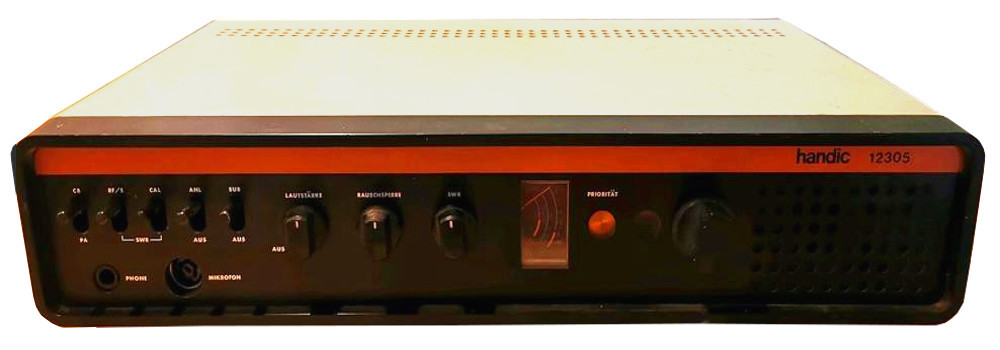
The Handic Model 12305 was the first base station unit permitted for CB radio in Germany. The design, which emerged from one for the US market, was originally intended as a 23-channel device for the Scandinavian market. Instead of channel 23, it featured emergency channel 11A, intended there for small watercraft. In the units permitted in Germany, the channel selector had a mechanical lock for 12 channels.
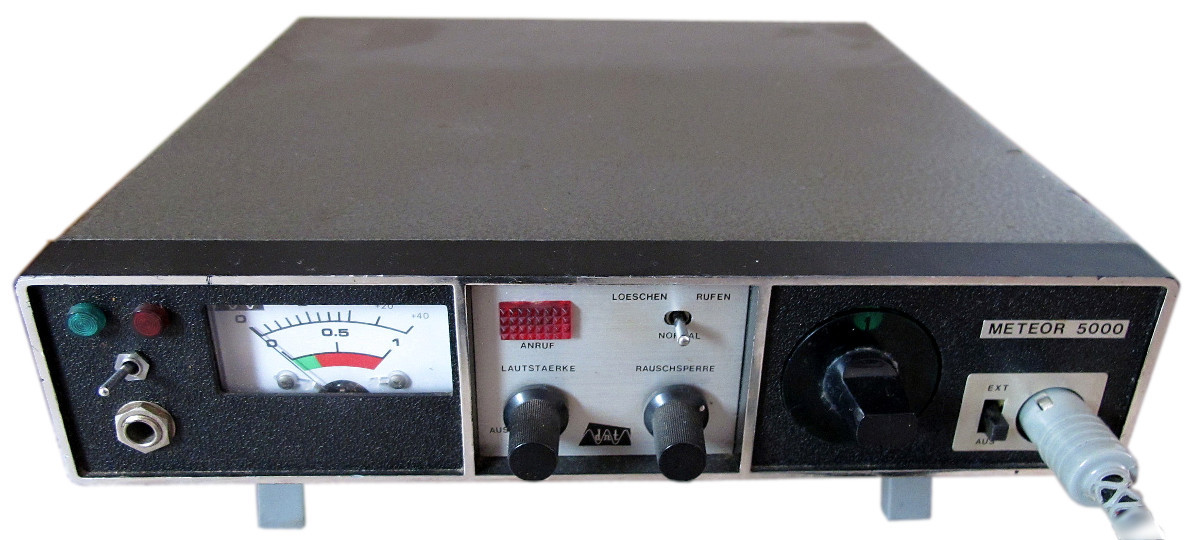
The DNT Meteor 5000 was the second unit approved here for stationary CB radio operation. The units, final-assembled in Germany, actually contained import chassis intended for car radios, which were also used in the DNT Kurier 5000 and Kaiser AF-5000 units. The devices operated with 12 individual crystals each for the transmitter and receiver. They featured a built-in two-tone simultaneous selective call, which had to be equipped with plug-in tuning forks.
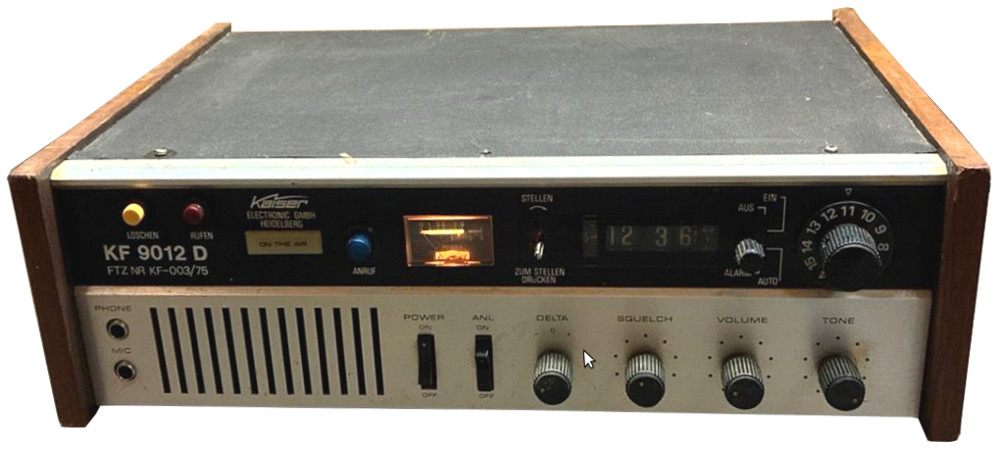
The Kaiser KF-9012D was the third base station unit permitted in Germany. Virtually unchanged, the device—with a reduced number of channels and transmitter power—was actually based on a US base station unit. Instead of the 23-channel switch of the US version, a channel selector with 12 switching positions was installed. A special feature was the flip-digit timer common in more expensive US base stations.
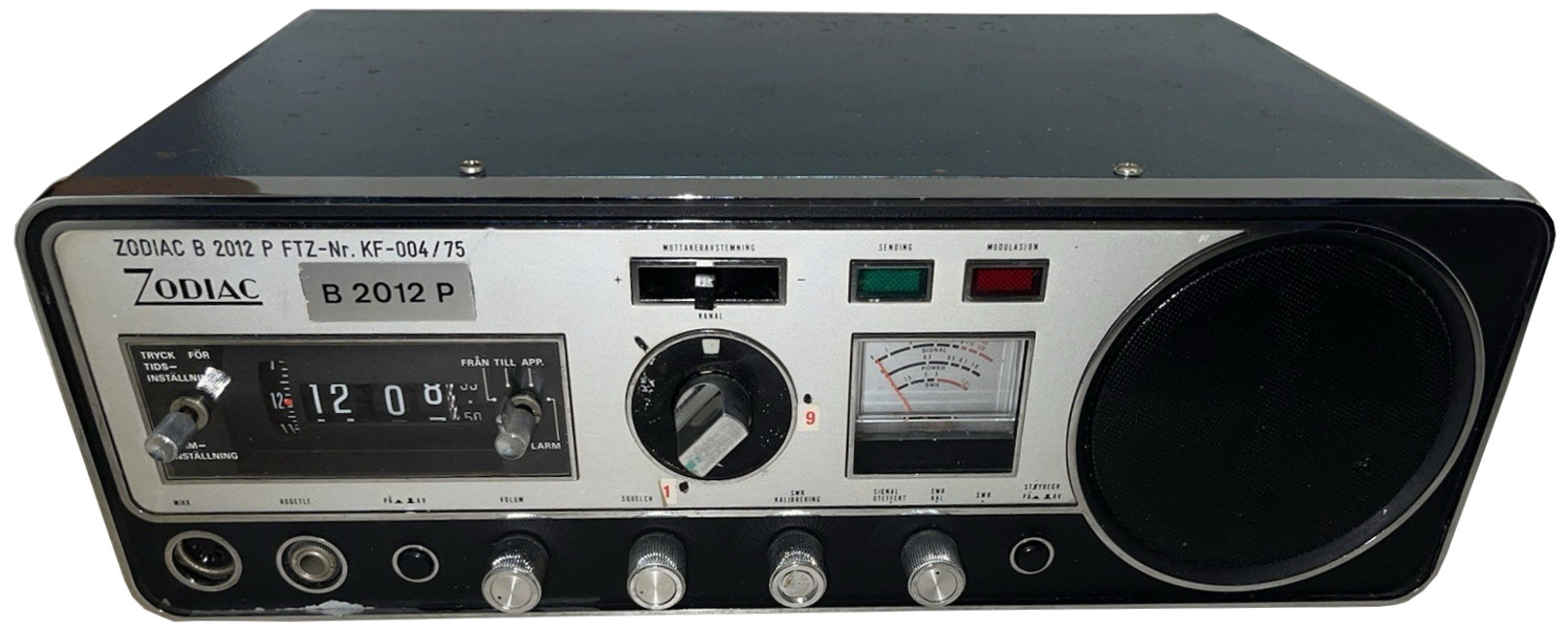
The Zodiac B-2012P was the fourth CB base station allowed in Germany. Also based on a US device, it was—like the Handic 12305—initially intended for the Scandinavian market in Europe, but differently labeled accordingly. A timer was also present here. The 23-channel selector had a mechanical limitation for 12 channels. The unit featured a very heavy and robust housing as well as a particularly large loudspeaker.
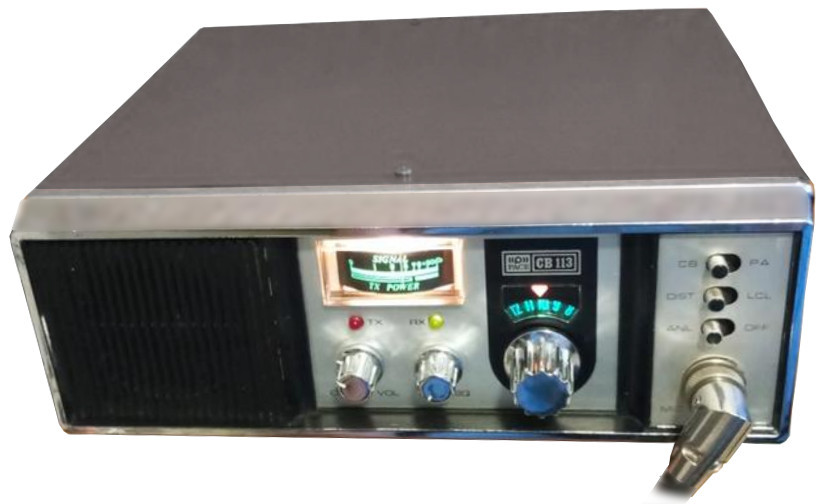
The Pace CB-113 base station, distributed in Germany by the Bowitz company, was also actually a unit intended for the American market, offered here in almost unchanged form. In units with a KF number, only the transmitter output power was throttled from 3.5 to 0.5 watts. Furthermore, the channel selector of the unit, which worked with a crystal-mix synthesizer, was limited to 12 channels by a mechanical lock, and the crystals required for channels 17 to 23 were not installed. Since the lock could be removed in a few simple steps, all crystal sockets for 23 channels were present, and the transmission power could be effortlessly brought to 3.5 watts by bridging a resistor, the manufacturer received orders for rectification.
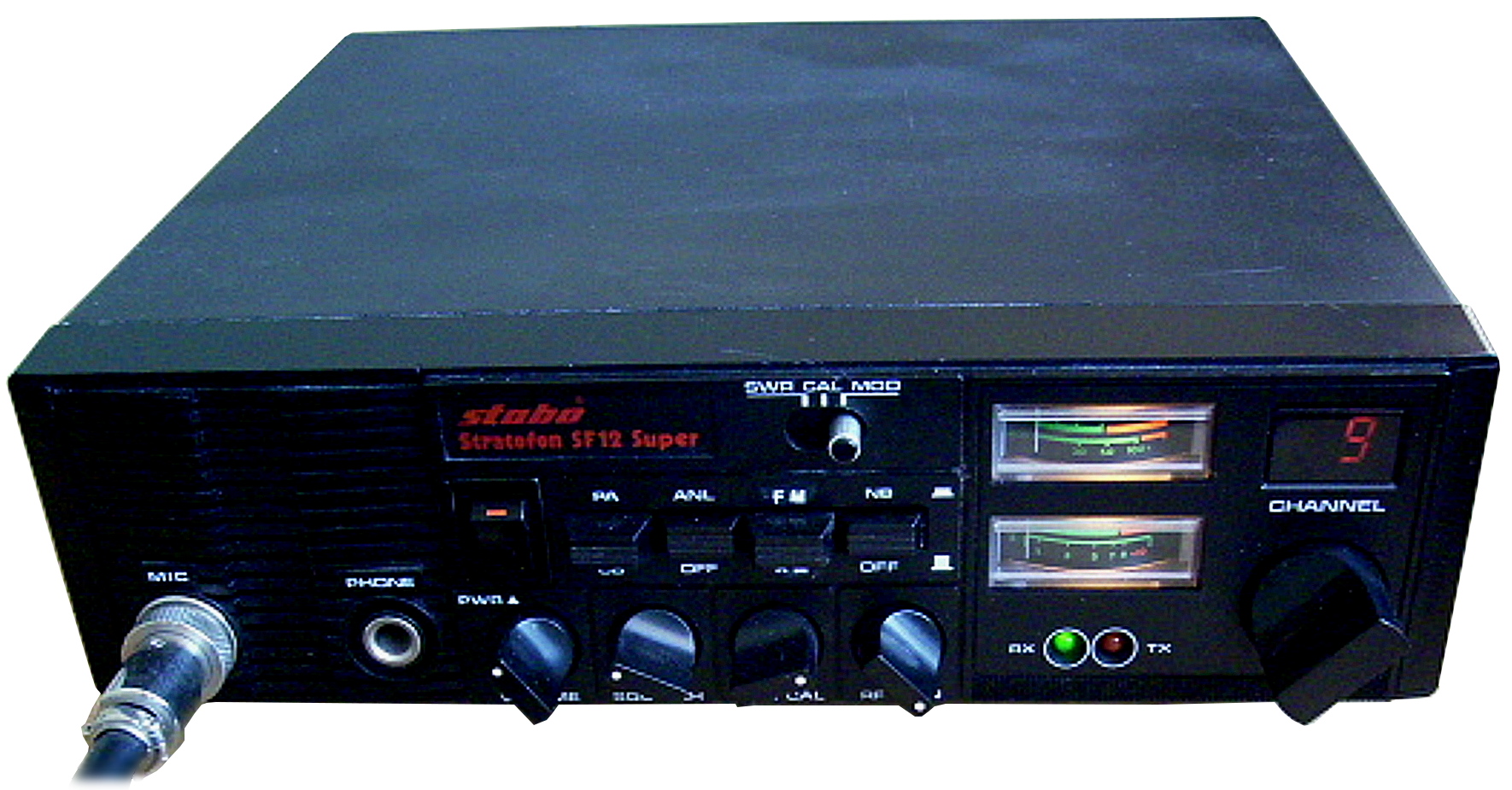
The Stabo Stratofon SF12 Super base station also worked with a crystal-mix synthesizer. The device, developed specifically for the German market, already featured a digital channel display and a channel selector with only 12 positions for channels 4 to 15. Nevertheless, the internal construction here was also based on a design actually intended for the US market.
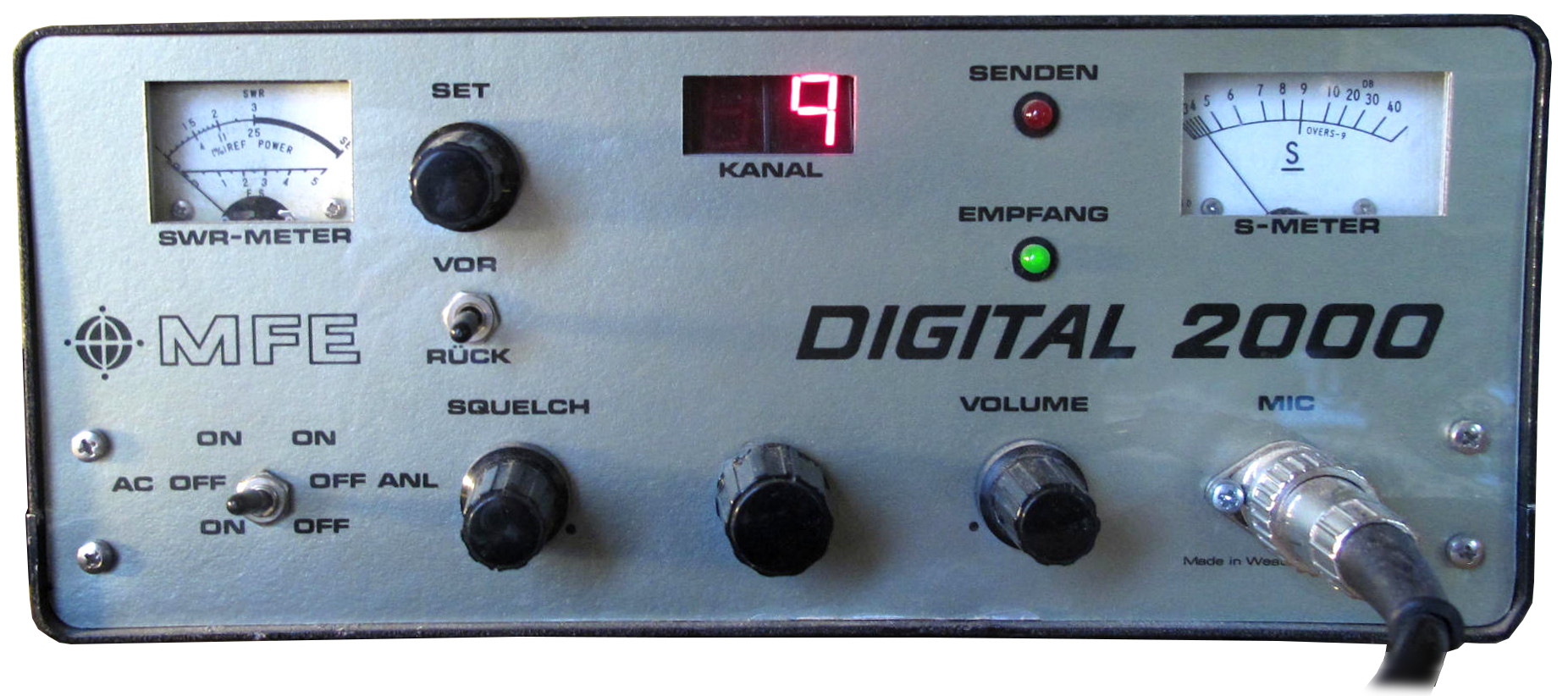
The MFE-2000 base station was produced only in small numbers. It was one of the few CB radio models fully developed and manufactured in Germany. The modular internal construction with epoxy circuit boards was very professional. Nevertheless, the device operated with individual crystals and a single-conversion superheterodyne receiver with an intermediate frequency of 455 kHz. The housing dimensions exactly matched those of the Semco Terzo 2m amateur radio, also manufactured in Germany. The mechanical chassis design also resembled this device.
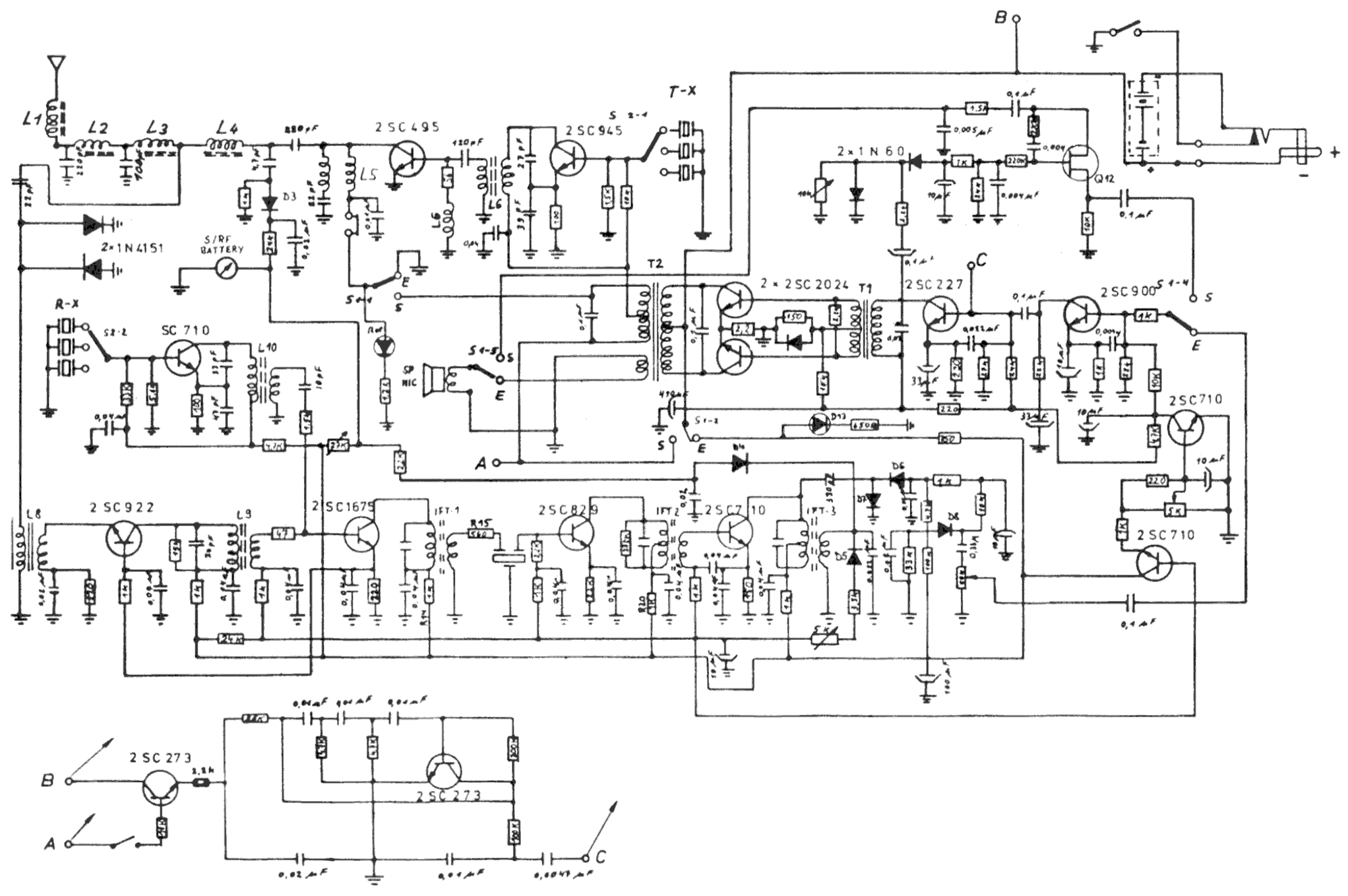
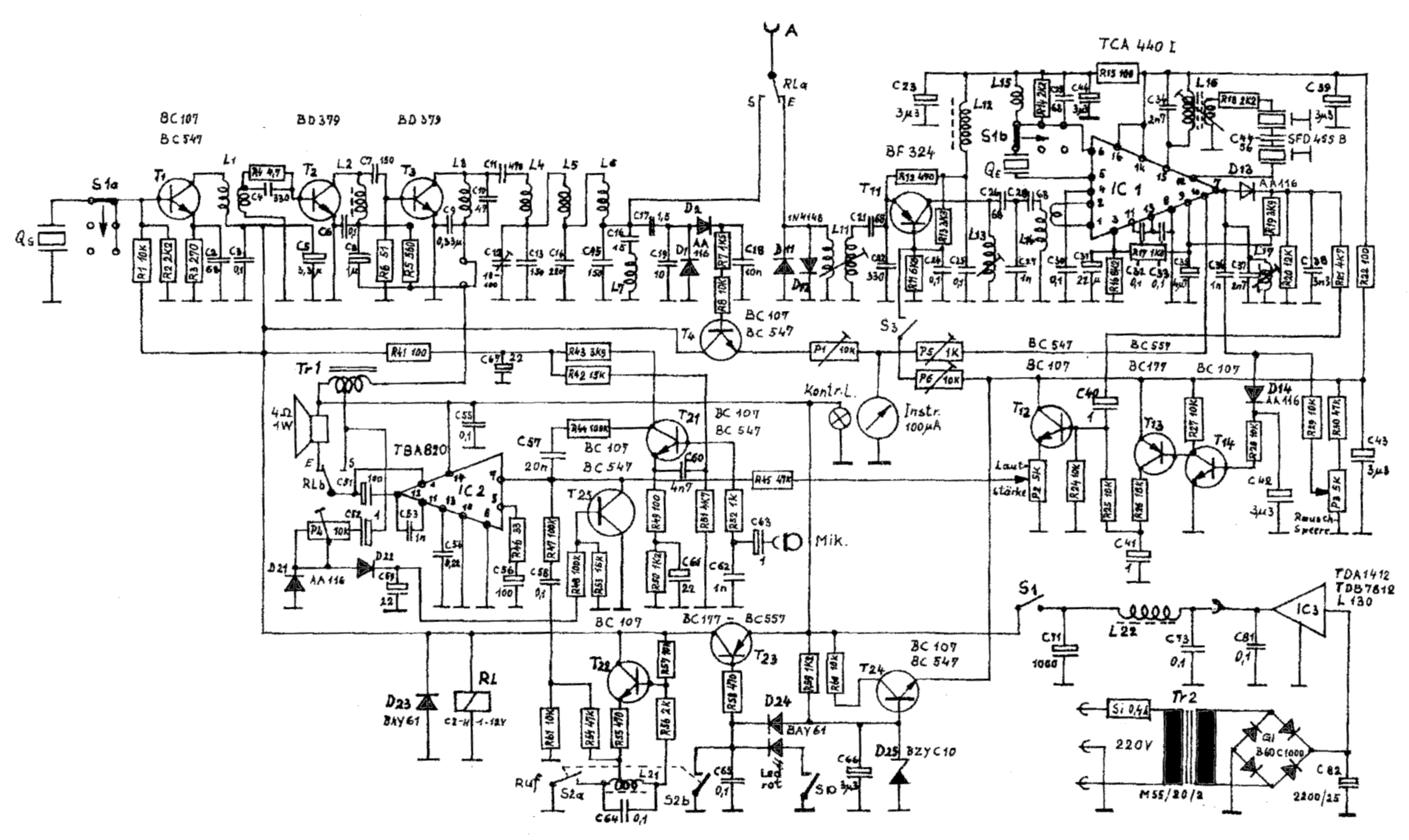
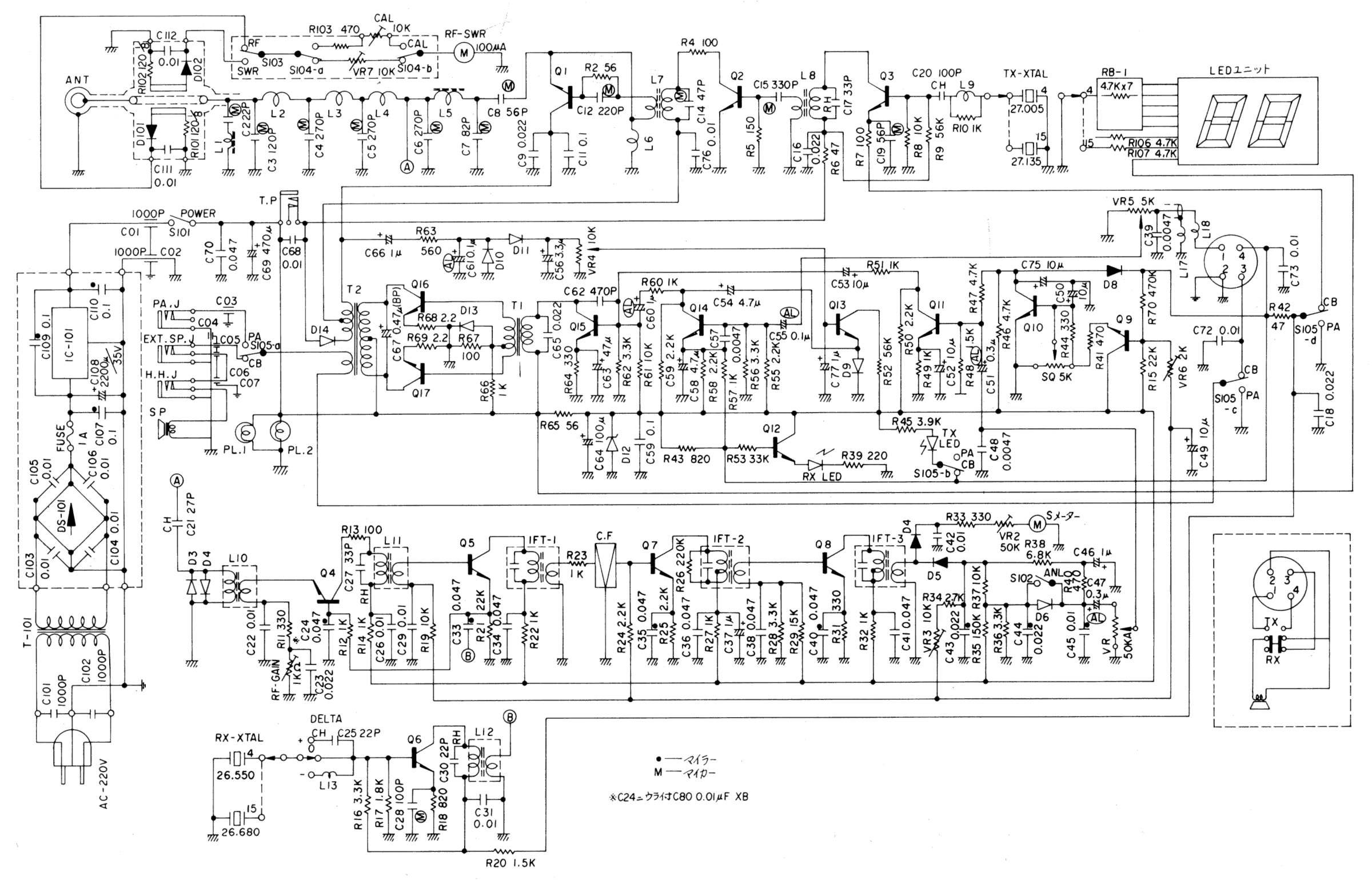
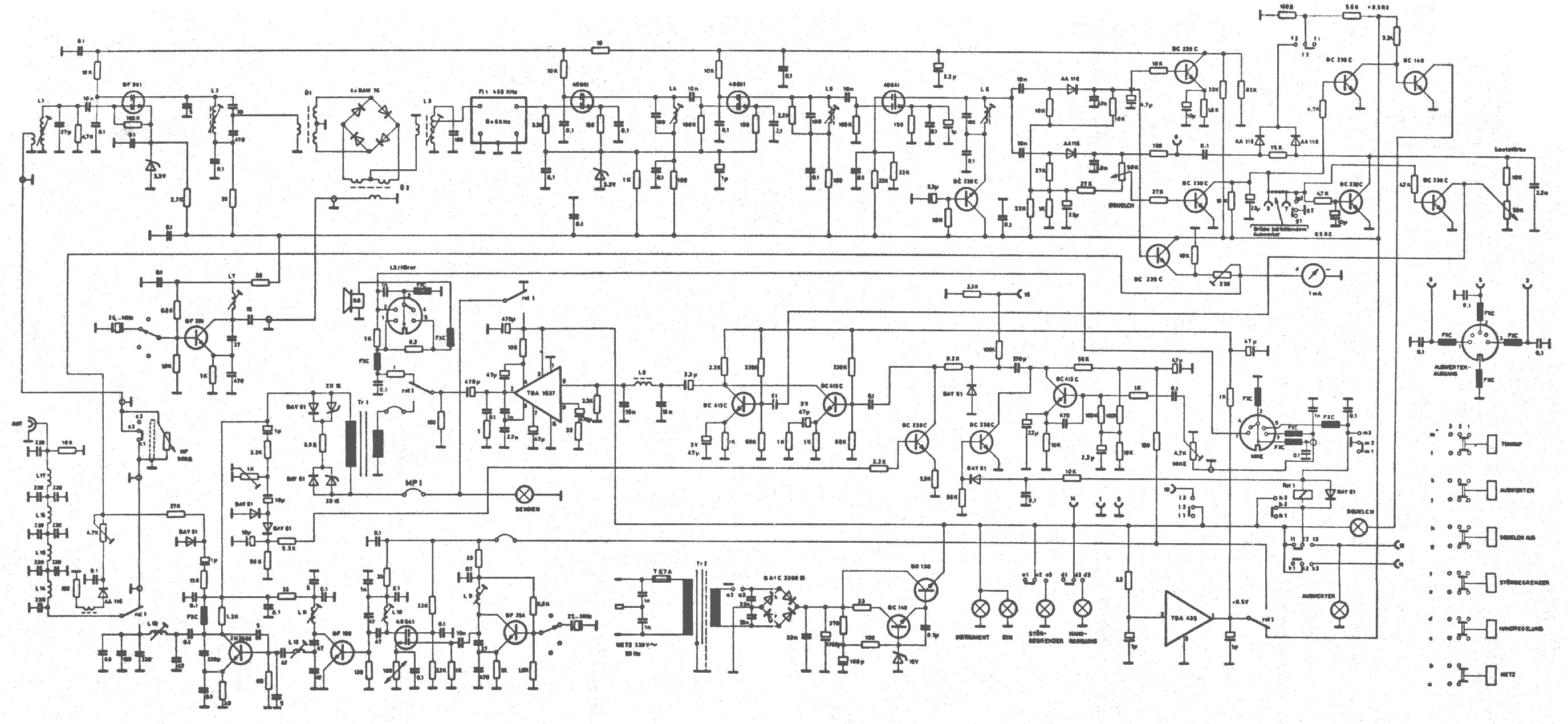
Circuit diagrams of permitted base station units with KF-FTZ numbers
- 12-channel base station Fieldmaster ASH-2012F
- 12-channel base station Lehnert HS-220
- 12-channel base station Braun SE-411
CB radio for the Car: The Mobile Units
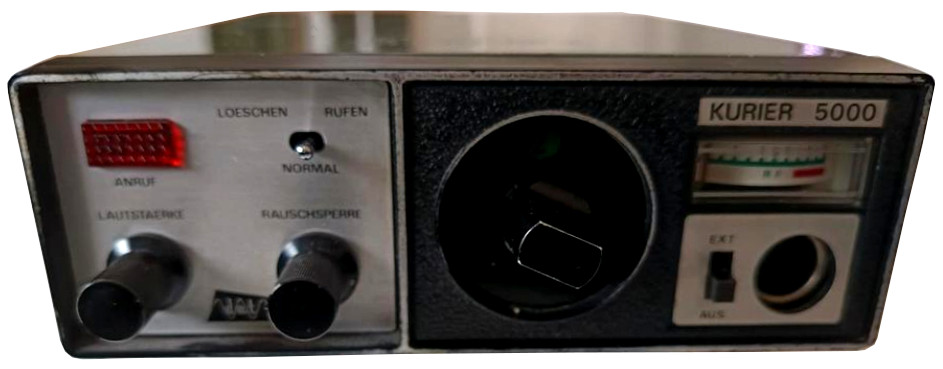
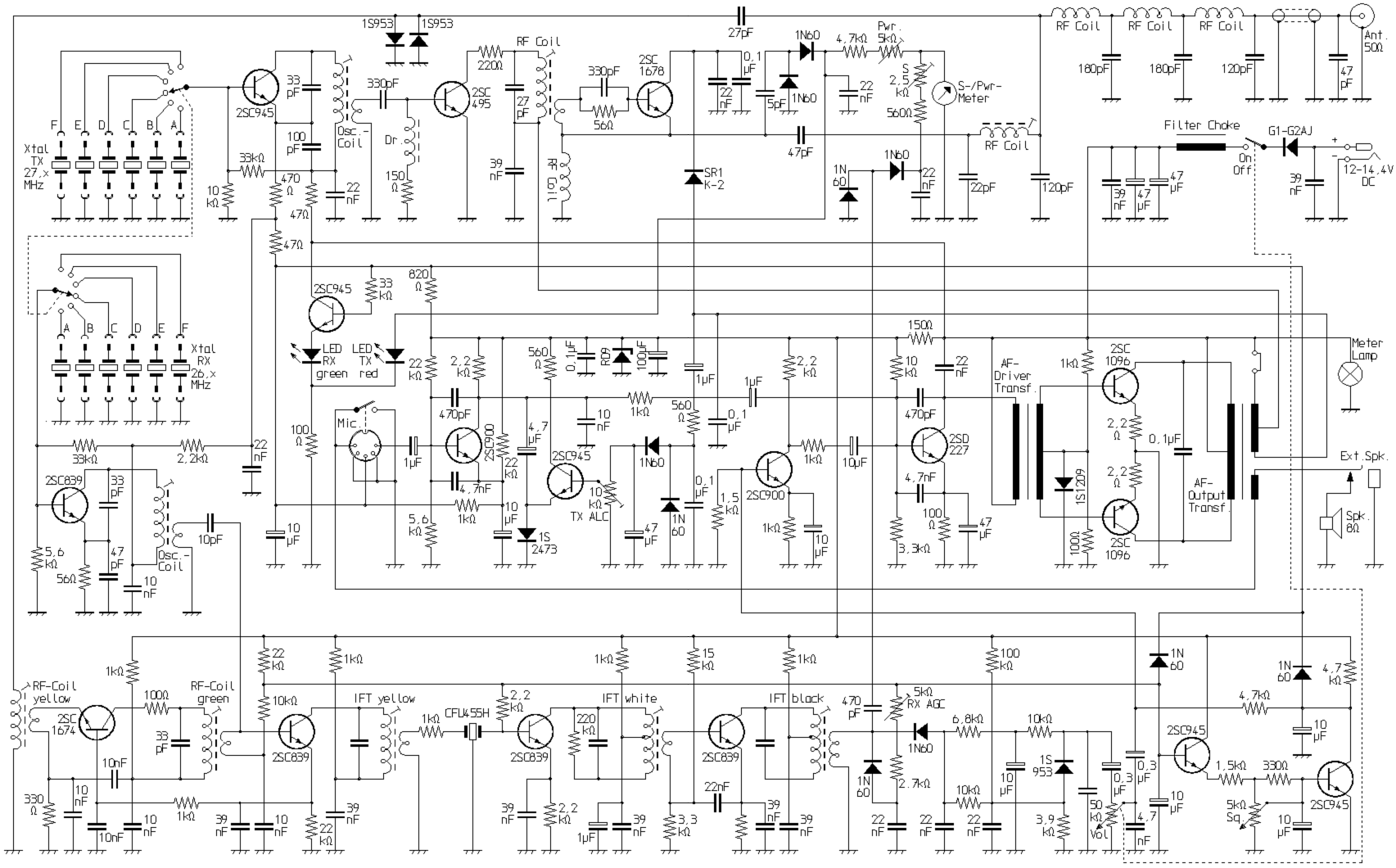
The DNT Kurier 5000 was one of the first vehicle radios for the "Jedermannfunk" (citizens' band) in Germany in the 27 MHz range introduced in 1975. For insiders, it was already an old acquaintance at that point, as it had been available as a 6-channel unit under the model name AF-5500 since 1967. Apart from the power supply present there, the circuit corresponded almost completely to that of the Meteor 5000 base station.
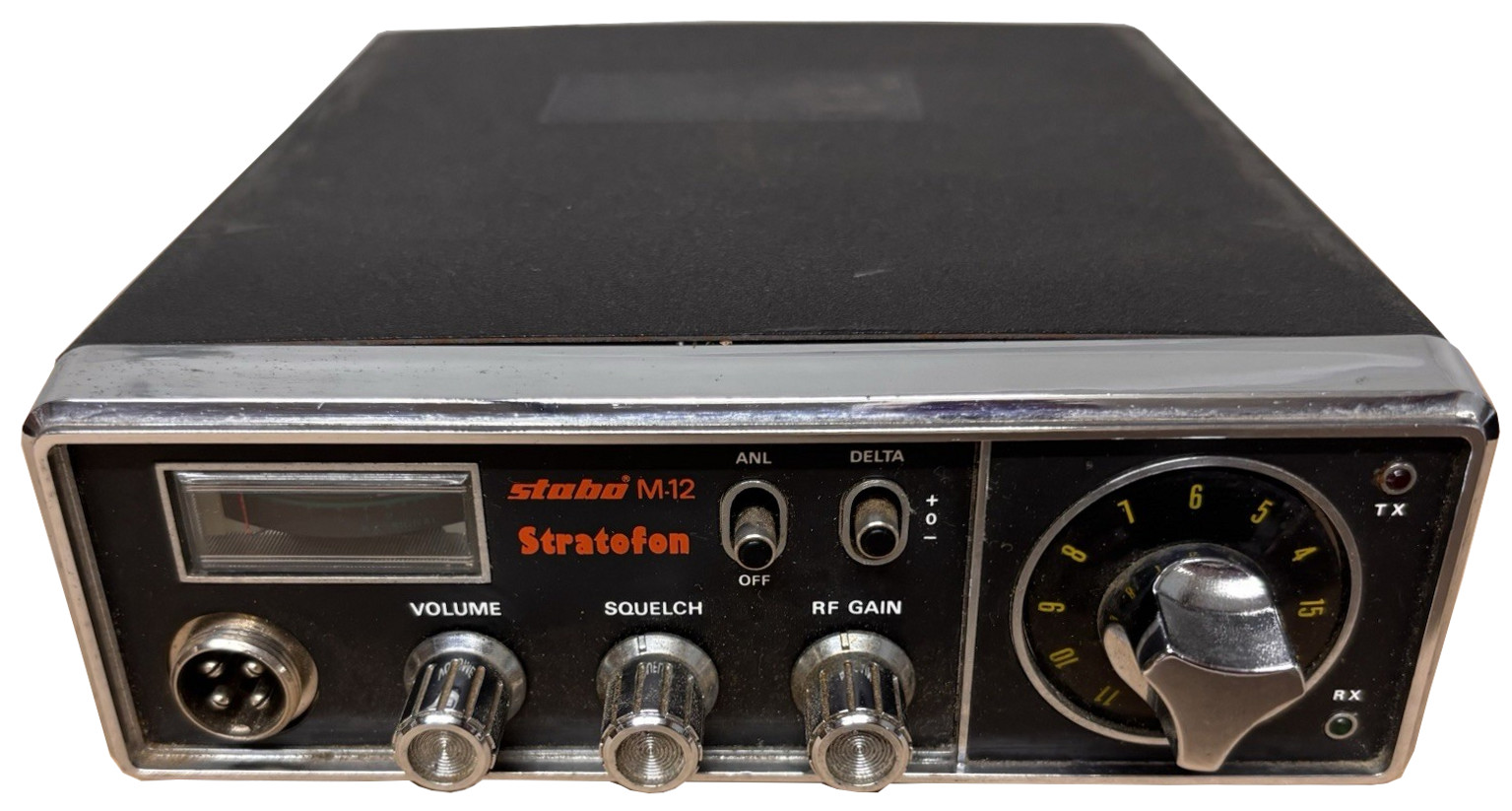
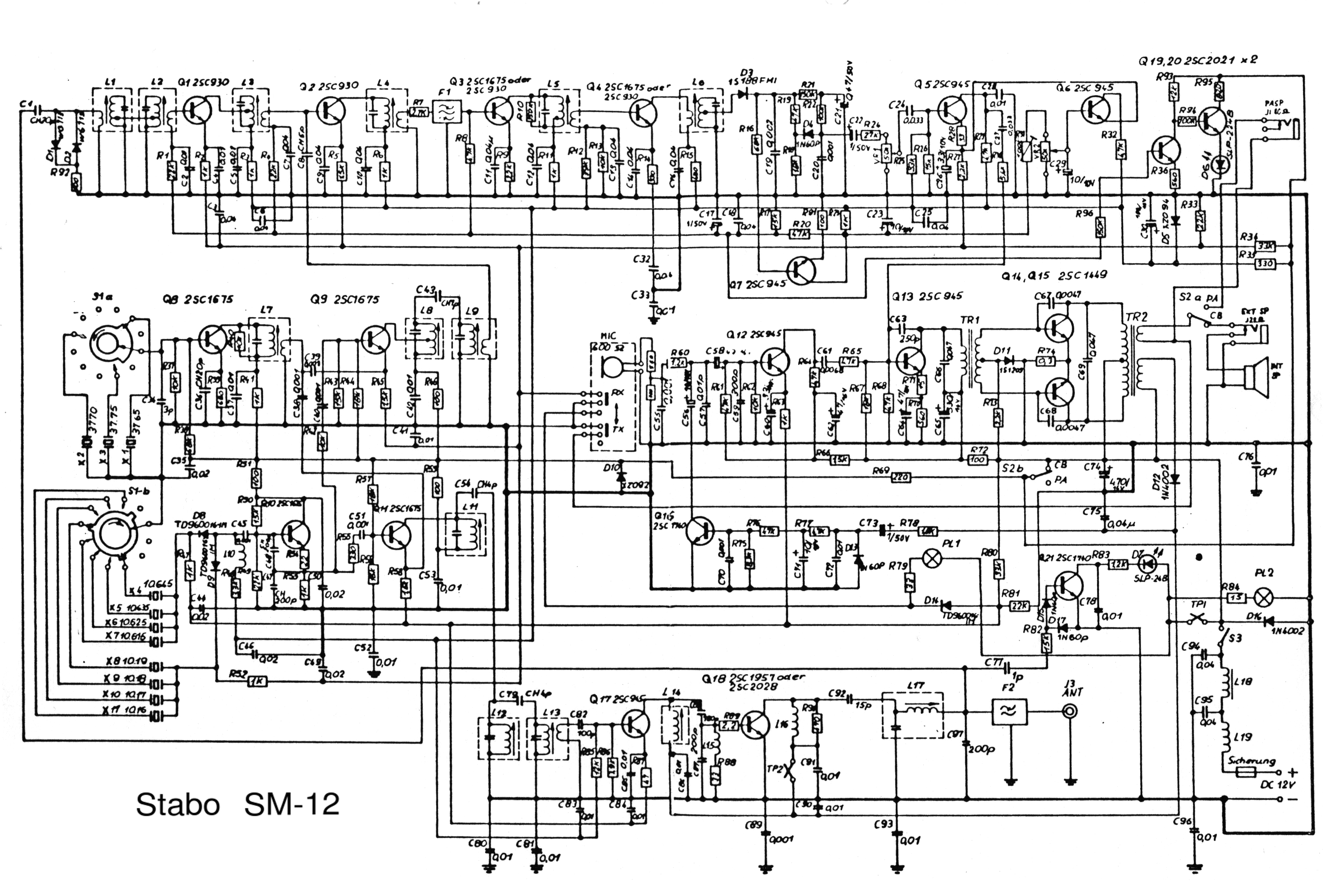
The Stabo Stratofon M-12 vehicle radio had a very similar circuit to the older Sommerkamp TS-750 but featured a more modern construction. The circuit, working with individual crystals and a single-conversion superheterodyne receiver, was therefore not among the most modern of its time, but it was very mature in the details. These well-functioning units quickly enjoyed great popularity, especially among truck drivers.
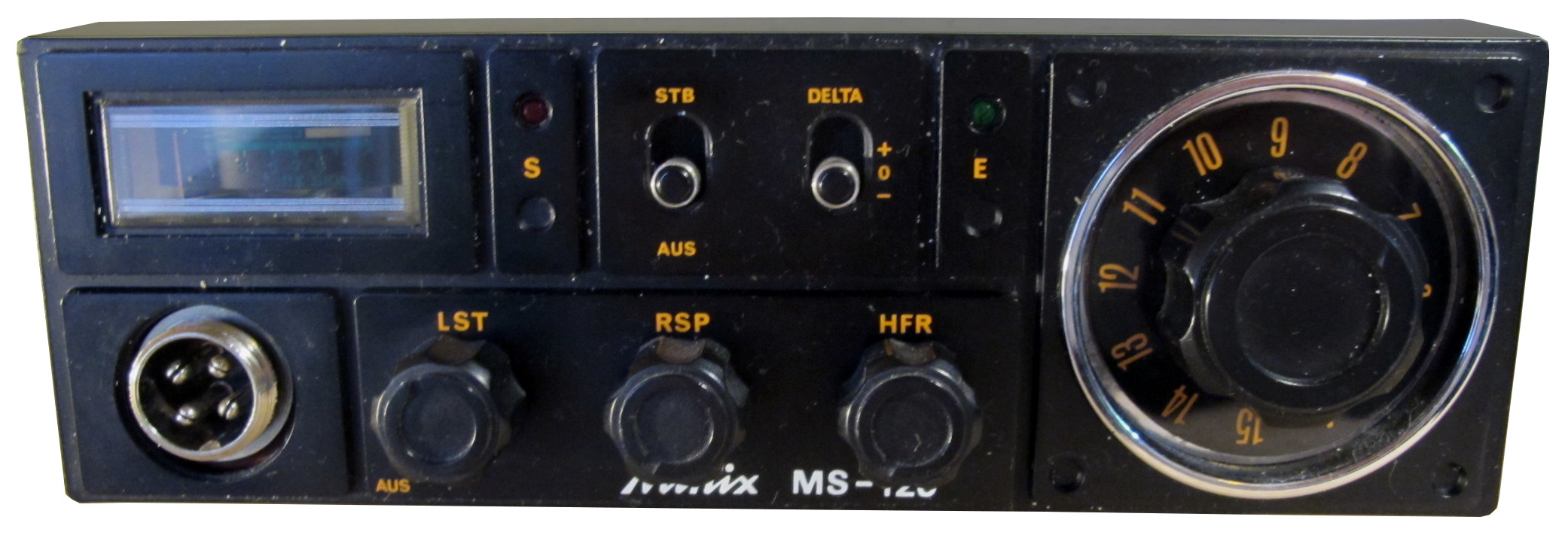
The Minix MS-120 from Richter & Co was also a 12-channel unit with individual crystals and a single-conversion superheterodyne receiver. The internal construction was almost identical to the Stabo Stratofon M12. Under the Lehnert brand, it was soon distributed inexpensively through retail chains and mail-order houses, thereby achieving much wider distribution.
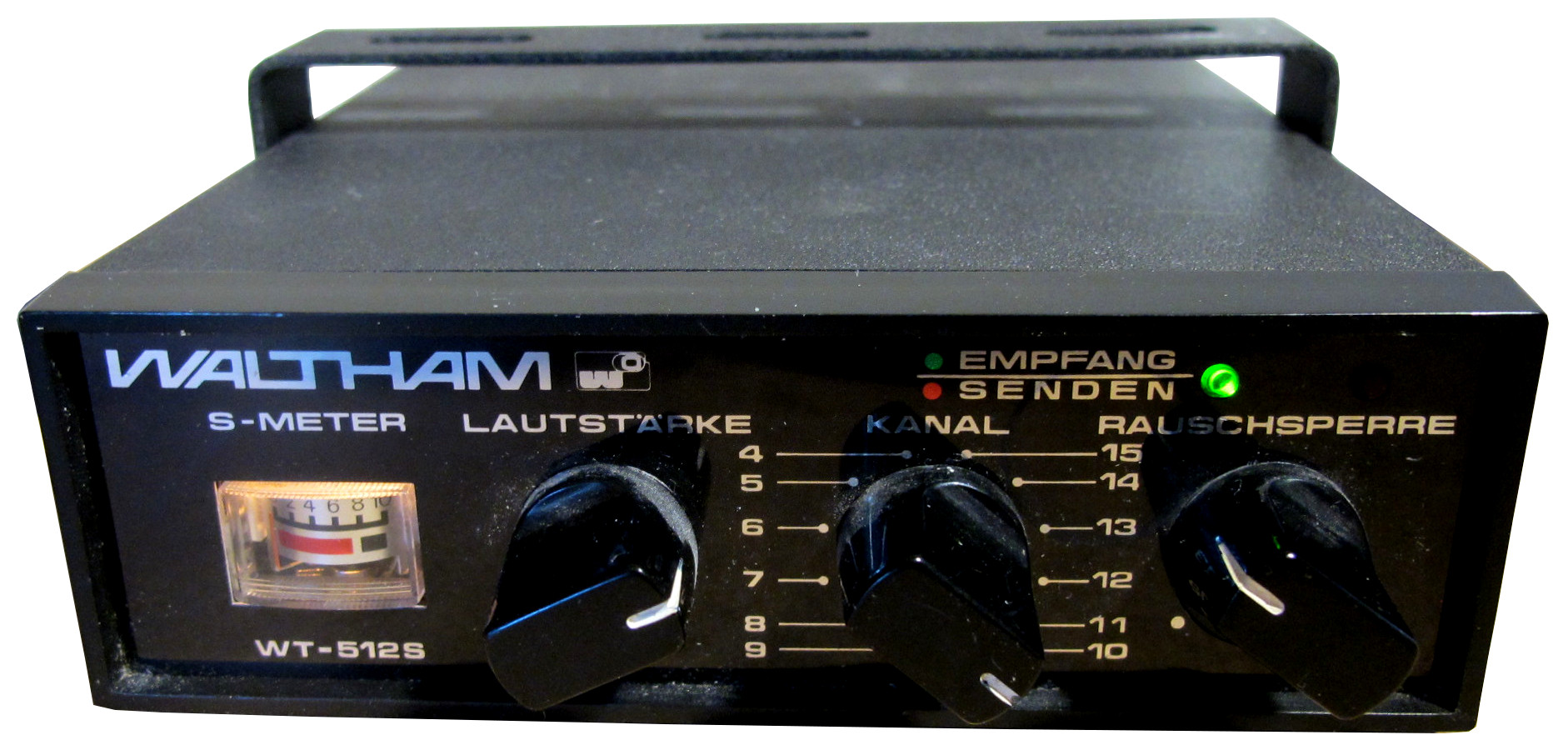
The Waltham WT-512 mini car radio was often rated much worse than the Stabo Stratofon M12. However, it had almost the same circuit, which was just more compactly built here. Only the delta-tune switch and the RF gain control were missing. Furthermore, the noise limiter could not be switched off here. The 6-channel version, WT-500, differed from this unit only by the channel selector and the crystal sockets for the additional 6 channels, which were not soldered onto the identical PCB. With a different design, the technically largely identical units Fieldmaster TC-2012 and Beston TS-3200 were also available.
Circuit diagrams of permitted vehicle radios with PR27-FTZ numbers
- 6-channel mobile radio Waltham WT-500
- 12-channel CB car radio Stabo SM-12 with mix-synthesis frequency generation
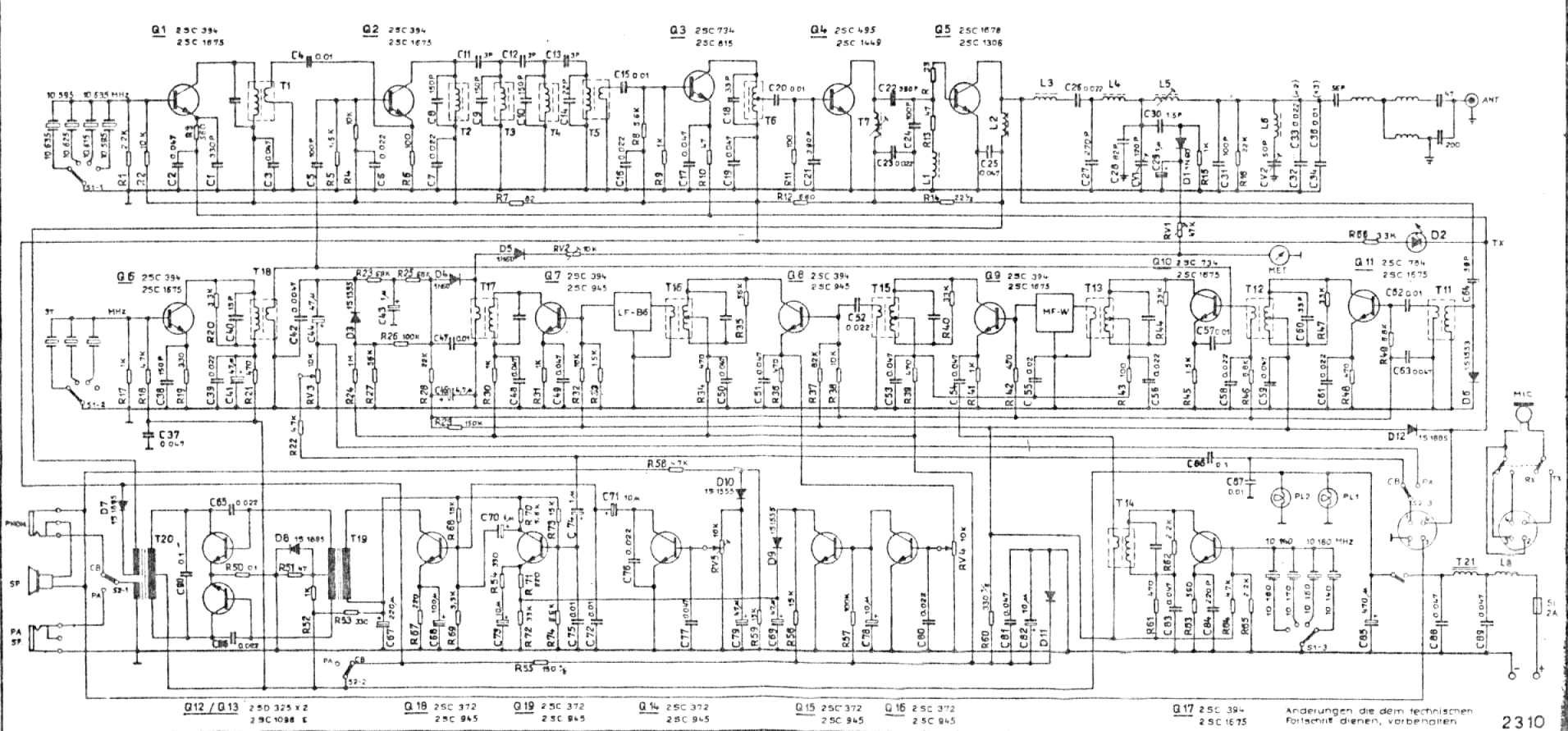
- 12-channel CB car radio DNT Commando 2310 with double-conversion receiver (mix-synthesis)
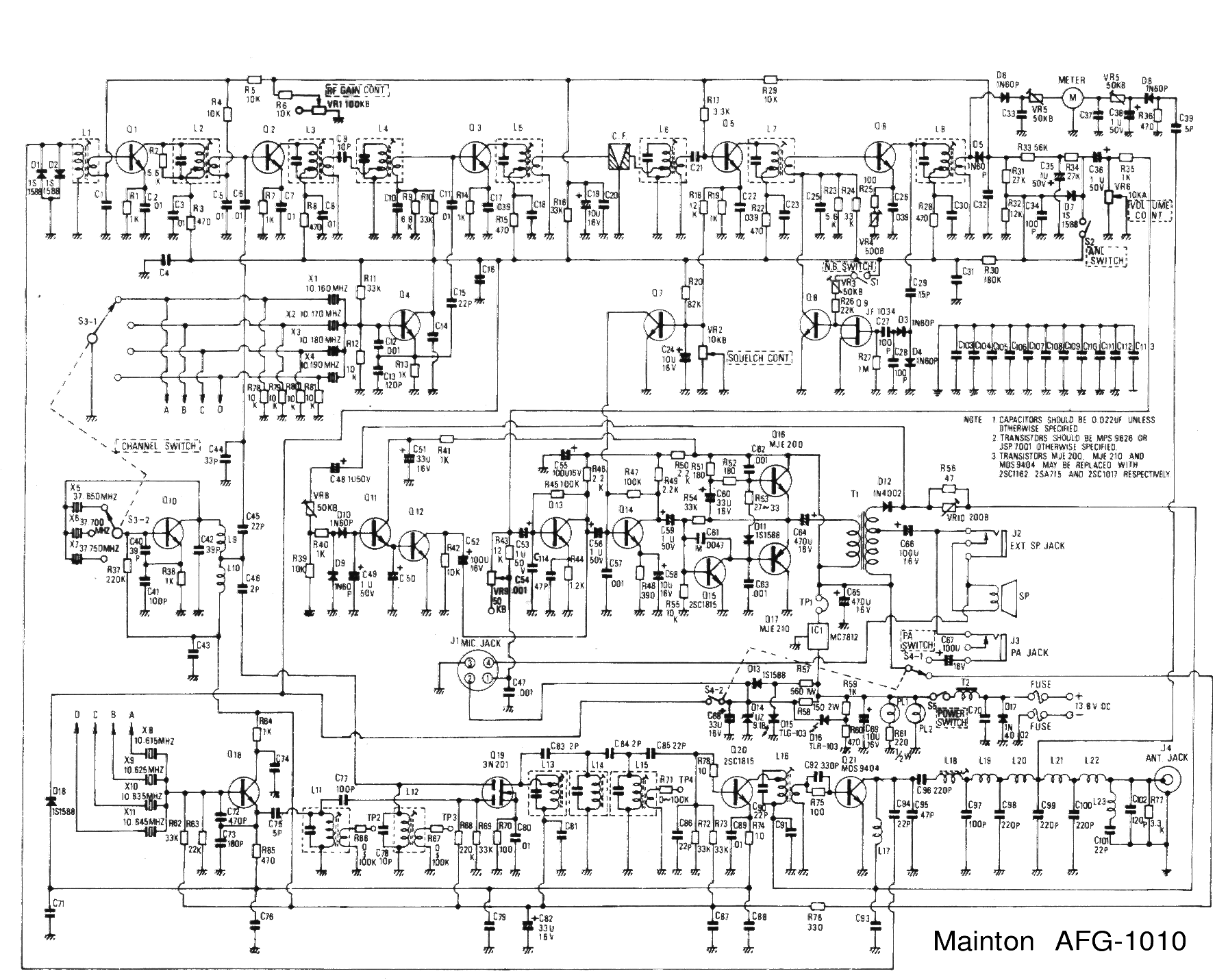
- 12-channel CB car radio Mainton AFG-1010 with double-conversion receiver (mix-synthesis)
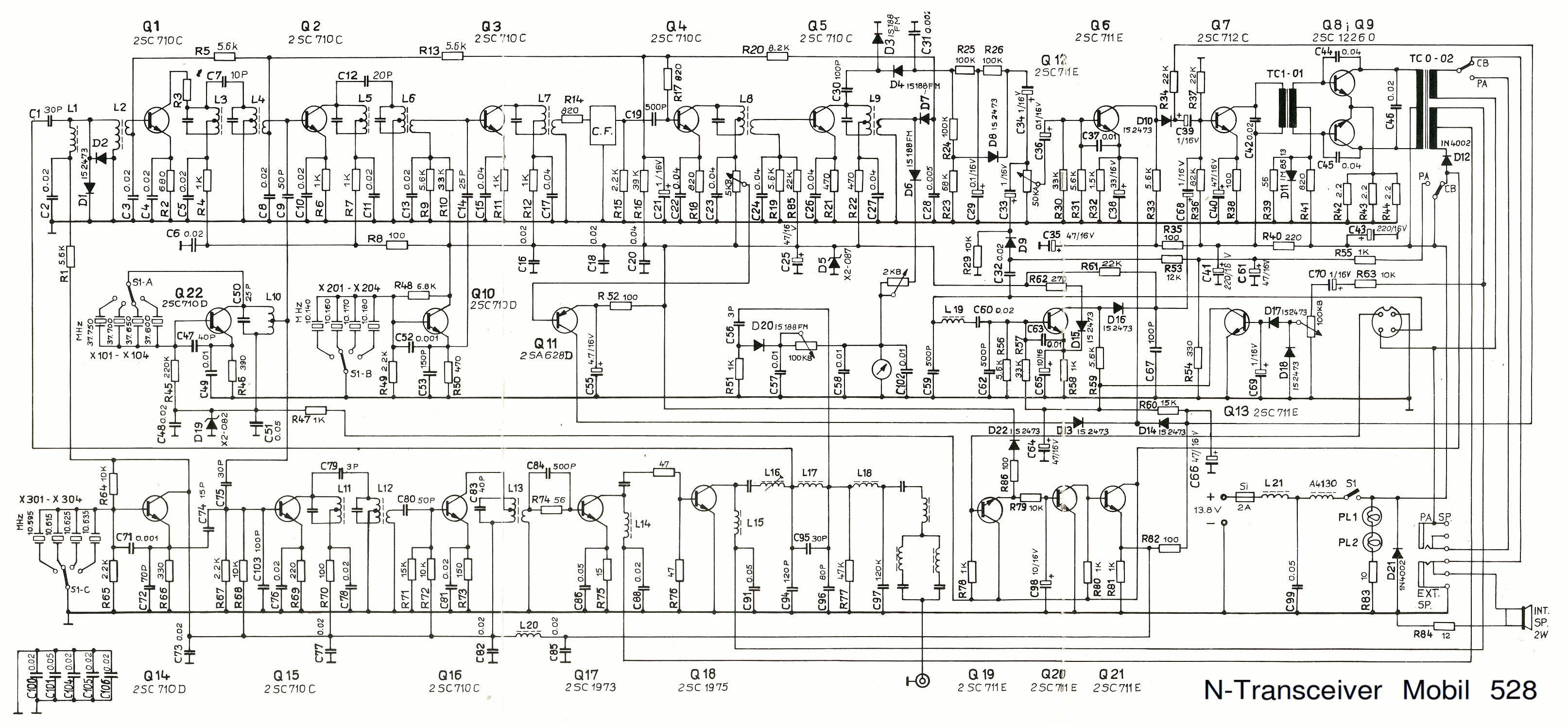
- 12-channel CB car radio N-Transceiver 528 with double-conversion receiver (mix-synthesis)
- 12-channel CB car radio Universum ASG 1572 with double-conversion receiver (mix-synthesis)
Portable Radios for on the Go: The Handheld Radios
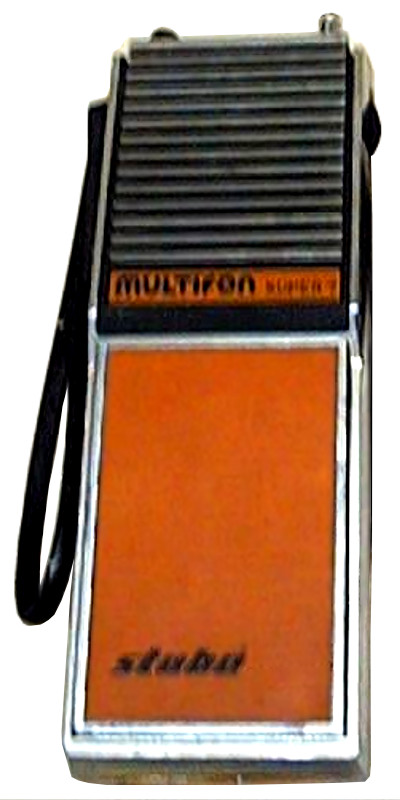
The Stabo Multifon Super 7 was offered by Stabo in pairs as a set. Likely intended only as a toy, it had a transmission power that was only a fraction of the permitted value. Despite the superheterodyne receiver, the circuit managed with only seven transistors thanks to a clever design. The units were equipped only with a combined on/off switch and volume control; a squelch was not present. Designed as a single-channel unit, the crystals were at least pluggable, so that one could switch to less occupied channels by swapping them. Later offered in the same look as the Multifon Super 8 model, the transmitter—originally consisting only of an oscillator—was supplemented with a power stage. With power still significantly lower than permitted, it could nevertheless be noticeably increased, and above all, the modulation quality was markedly improved. The great sales success of these Multifon handhelds ultimately led to the former toy manufacturer Hans Kolbe KG, along with the Stabo brand name, being converted into a radio equipment manufacturer.
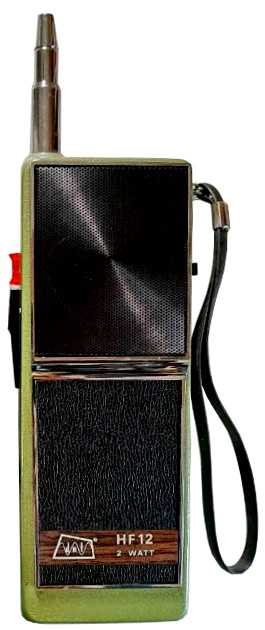
The DNT HF-12 was one of the first handheld radios with a PR27-FTZ number in Germany. Without significant changes, it corresponded to the HF-5 model with a K-FTZ number offered since 1973 and was probably the most widespread of those CB handhelds with the maximum permitted transmitter input of two watts in the early days. The units, equipped with two switchable channels, were mechanically very solidly built. Since the loudspeaker also served as a microphone, the modulation on most specimens was, however, tonally too dark. Furthermore, the included superheterodyne receiver had no ceramic filter and therefore did not offer good channel separation.
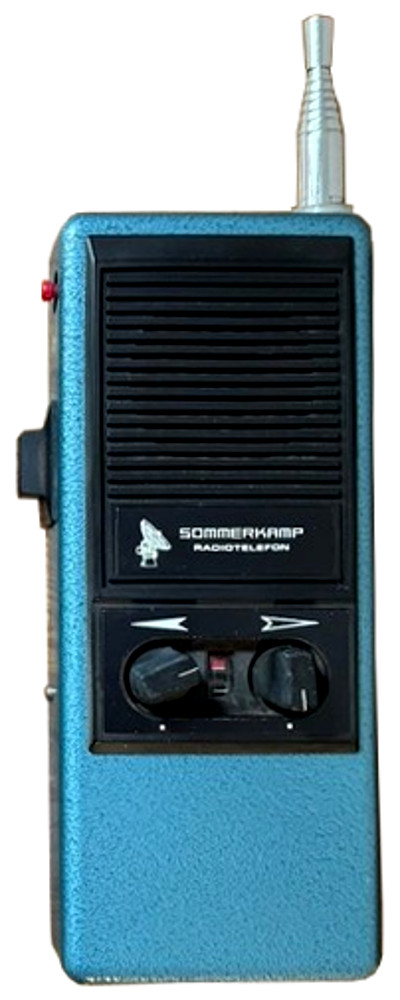
The Sommerkamp TS-510GTE was also an old acquaintance at the time of the introduction of "Jedermannfunk." With a K-FTZ number, it was already offered before 1970 without the "GTE" suffix, though in a somewhat more conservative design. These were actually units from the Japanese manufacturer Tokai, which were offered almost identically by Zodiac and Minix, among others. The devices were designed for three switchable channels and had better channel separation thanks to ceramic filters in the receiver. Due to a matching transformer, the modulation quality was quite satisfactory, although here too the loudspeaker served as a microphone during transmission.
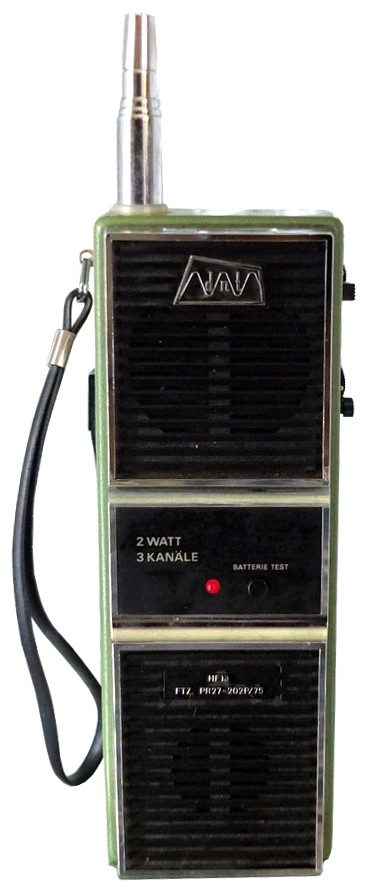
The DNT HF-13 was the top model of handheld radios from DNT, though it initially had only three switchable channels to be equipped with individual crystals for transmitter and receiver. Because a separate microphone capsule was used here for transmission instead of the loudspeaker, the modulation quality achieved with this device was very good. This was supported by a three-stage transmitter in which the driver stage was modulated in addition to the transmitter power stage.
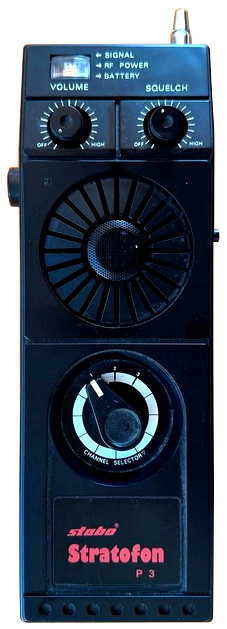
The Stabo Stratofon P3 picked up on the "military look" previously popular for portable radio receivers. The circuit of these three-channel units from the Japanese manufacturer Asahi offered nothing special: a two-stage transmitter and superheterodyne receiver, but at least with a ceramic filter in the IF amplifier. A special feature for a handheld radio at the time, however, was that the built-in moving-coil instrument served not only as a battery indicator but also showed signal strength during reception. With almost the same design, these units were also offered in other countries, albeit under different brand names. The subsequent Stratofon P6 model with 6 channels was technically identical.
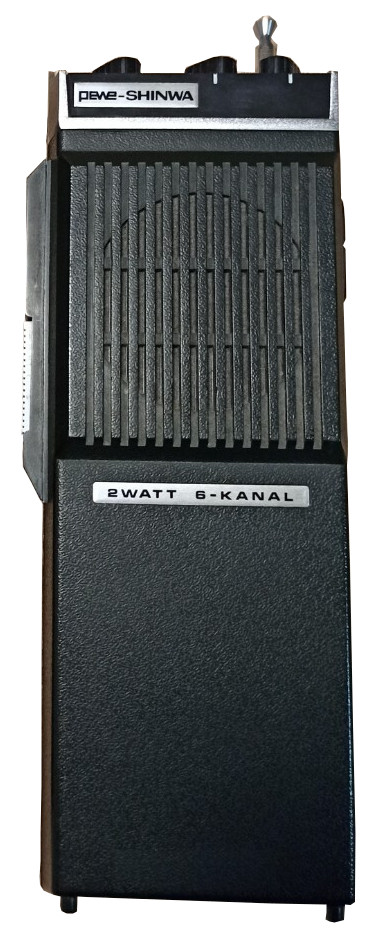
This Japanese 6-channel handheld radio was introduced in Germany by former Sommerkamp development engineer Peter Weber and triggered a great response in the trade press due to its professional design. The circuit concept offered little new with its single-conversion superheterodyne receiver. Forward-looking, however, was the battery compartment attached to the back, which could be detached and secured in seconds with a rotary knob. It was intended for operation with eight 1.5-volt AA batteries or nine 1.2-volt AA rechargeable batteries. For the former, a so-called "dummy cell" was included in the scope of delivery.
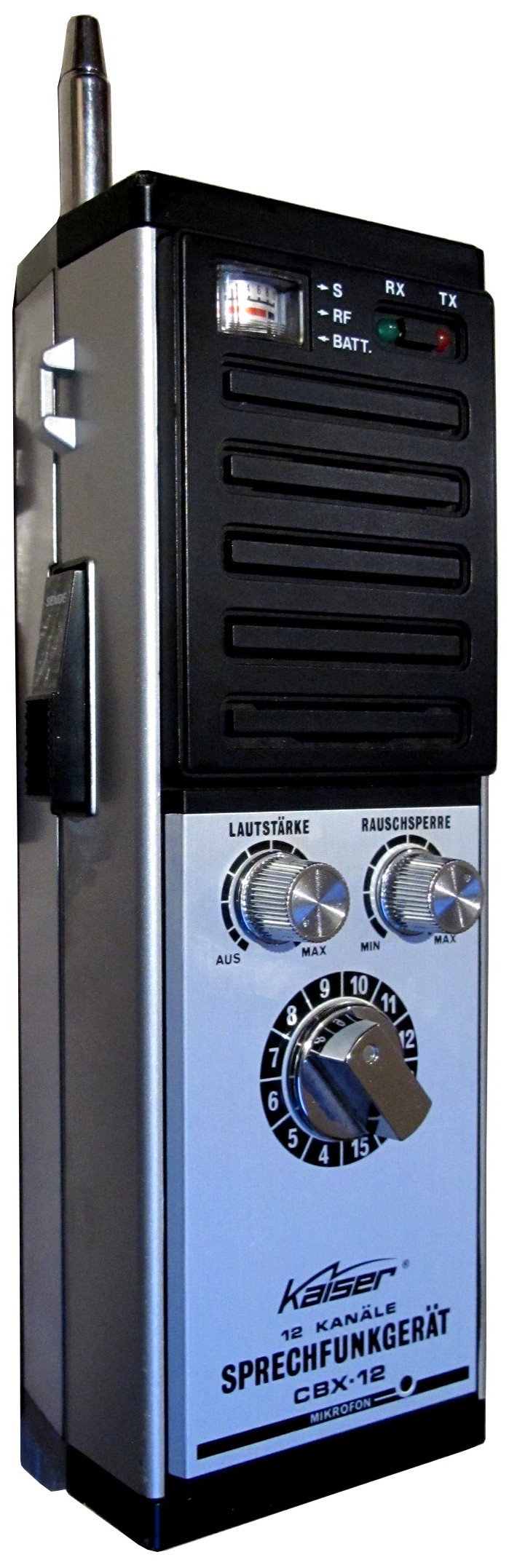
The Kaiser CBX-12 was one of the first handheld radios to have 12 switchable channels, enabling radio operation on all CB channels permitted in Germany at the time. It had a conventional circuit with a single-conversion superheterodyne receiver. With a fairly crowded layout, a rather large housing, and battery holders located in the back of the housing, space was created for the 24 crystals required in total, which were housed in plug-in holders. For this unit as well, alternative operation with rechargeable batteries or—with a dummy cell—operation with 1.5-volt dry batteries was intended.
Circuit diagrams of permitted handheld radios with PR27-FTZ numbers
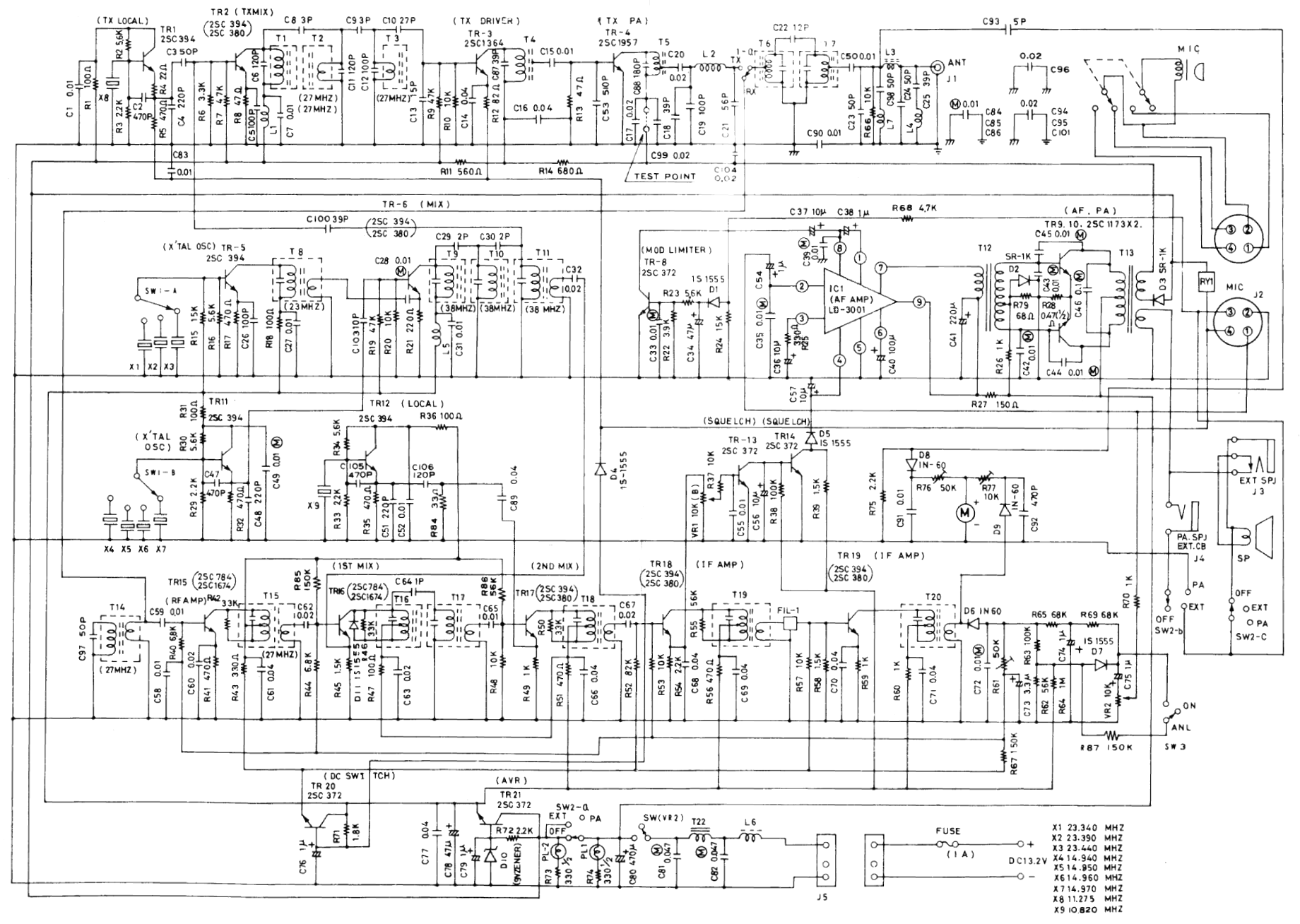
- 3-channel handheld radio Stabo Stratofon P3