Digital circuits using only discrete components
Exclusive or gate without any power supply
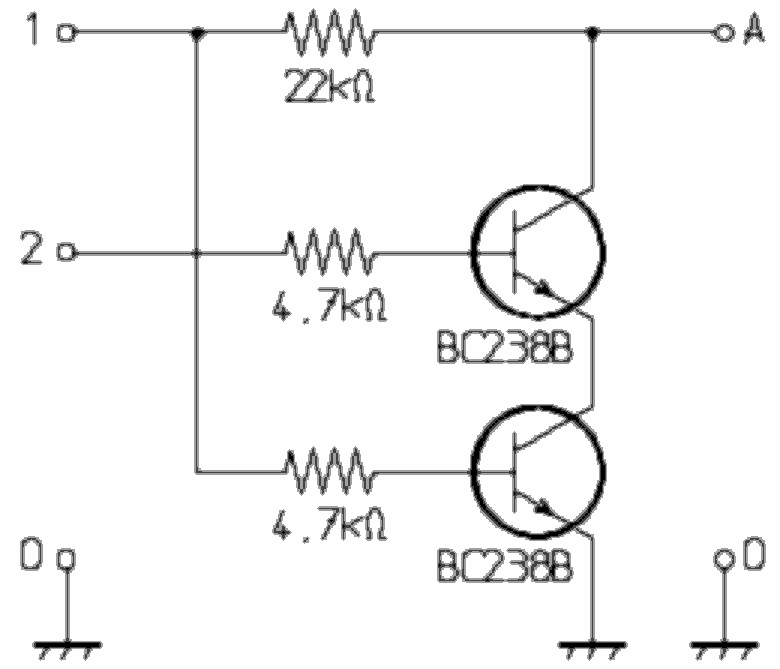
In electronics, are more frequently circuits required, in which a switching operation is triggered when a signal is present at one of the two input lines, but not when none or when there is one on both lines. A logic circuit that does just that, is called an exclusive OR gate, XOR for short.
The circuit shown does not require supply voltage. The output signal is obtained either via the 22kΩ resistor from input 1 or via the diode path of the upper transistor from input 2.
Electronic toggle switch
Often switches are needed in electronic devices to turn a single function on or off, or switch between two operating states, such as buttons for sound filters (e.g., loudness) in stereo amplifiers. In amateur radio, one often finds a whole series of such functions, e.g. the switch-on of a noise limiter or the possibility to switch between high and low transmission power. In self-construction devices, this usually uses small toggle or slide switch. As with modern commercially available devices but you can also use a self-assembly devices, electronic buttons, in which the individual functions can be switched on and off independently. After pressing the respective button once, the desired function is switched on or switched over. After pressing it again, the circuit returns to the original state. With the following circuit, which is required once per push-button, exactly this can be achieved.
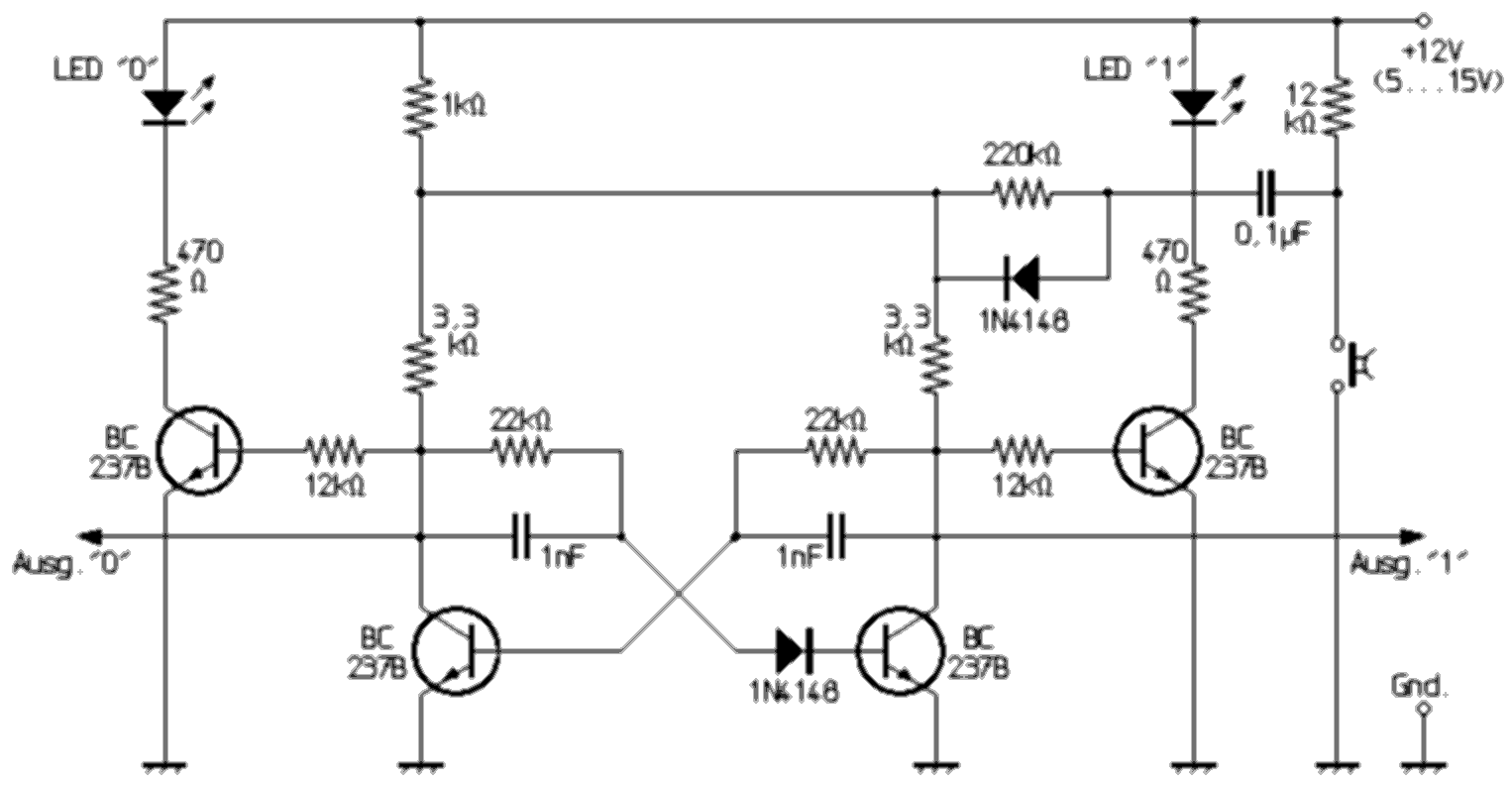
The core of the circuit is a toggle flip-flop, short named as T flip-flop. It is a circuit that used to be often used as a frequency divider or reducer, because pressing the button twice will cause a single on and off, four times will twice switching on and off. Through the diode in the one base line, always the transistor without this diode goes into the conducting state after being switched on. Thus, this electronic changeover switch has a defined switch-on state: after switching on, always LED 1 lights up. If the button is pressed, it goes out and LED 2 starts to light up. After pressing the push button again, the switch-on state is restored.
With regard to the control of external functions, the explanations given for the below presented pushbutton set with memory function apply analogously. If only one light-emitting diode is required to display the operating state, the respective control circuit for the other light-emitting diode consisting of 12kΩ resistor and 470Ω resistor and one transistor can be dispensed with.
EPush button set replacement circuit
Electronic devices often require the ability to switch between different operating modes. If, for example, an amateur radio transceiver is designed for various operating modes (eg FM, AM, SSB, CW) or frequency ranges, a switchover option is required. Similarly, one will find in a stereo amplifier with mostly a signal source switch (phono, CD, tuner, tape) and in a radio or world receiver with the switch for the band range (AM, SW, FM). In self-constructed devices for such purposes common a rotary switch is used, at wich operating axis an ordinary potentiometer knob can be mounted. Earlier also pushbutton sets were often used for this purpose, where after pressing a key, the previously pressed button jumped out again through a mechanism intended for this purpose. With many more modern commercially available devices, something like that is also simulated with electronics. Less well known, however, is the fact that this does not necessarily require special integrated circuits or even a microprocessor must be present in the device. As the circuit below shows, the effort is limited in tolerable extent even with individual components:
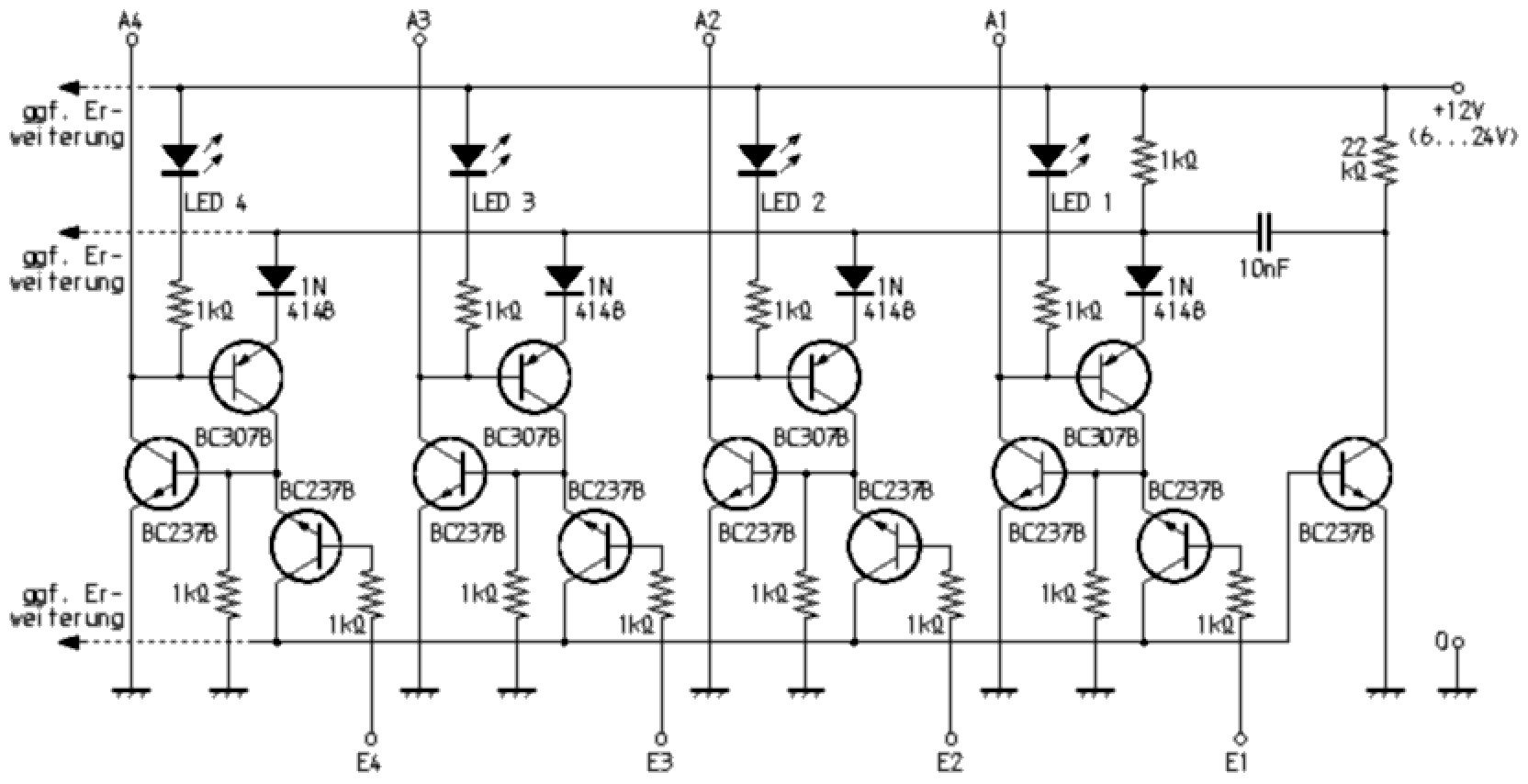
The inputs E1 to E4 are connected with the push-buttons. If by pressing one of these buttons at one input a positive pulse is generated, the corresponding LED illuminates and the previously lit extinguishes.
In order to control external functions with the circuit, miniature relays can be used, which are connected to the outputs A1-A4 and on the other side to plus. If the excitation coil values are suitable, the relays can also be inserted instead of the series resistors. In order to avoid harmful voltage peaks, in barrier direction poled diodes should be connected in parallel to the coils (cathode on plus), if not already present in the relays.
Of course, it is also possible to evaluate the voltage at the collectors of the transistors (outputs A1-A4). It should be noted that the active state is then always zero (logical "L"), i.e. a (higher) voltage is present in the passive state. To control switching diodes or FET analog switches, the signal must therefore be inverted if necessary.
The NPN and PNP transistors connected to each other at the collectors and bases form thyristor tetrodes in this manner. Consequently, instead of these transistor combinations, it is also possible to use corresponding special components (for example, BRY39), which, however, are harder to obtain today respectively comparatively expensive. These thyristor tetrodes are used in the presented circuit quasi as simple RS flip-flops, which are set by pressing a button. when thyristors are in the conductive state, it is called as ignited. The transistors arranged at the inputs serve only as diodes. They can each also be replaced by two individual diodes (for example 2x 1N4148). By these diodes, the extinguishing branch is decoupled from the set inputs. The rightmost transistor in the circuit, in combination with the 10nF capacitor, generates the erase pulses to reset still ignited thyristor equivalent circuits.
The realized with single components circuit has several advantages. By this the circuit can be easily adapted with other sizing and selection of other components to different requirements, such as with respect to the supply voltage and the desired output current. It is also possible to design the circuit for a negative supply voltage by replacing the NPN transistors with PNP transistors and PNP types with NPN designs. In addition, of course, then all the diodes must be installed the other way round. By omitting or adding further stages, the circuit can be expanded or reduced so that for example the creating of pushbutton sets with three, five, six or even more keys is possible.
Digital LED number display with diode decoding
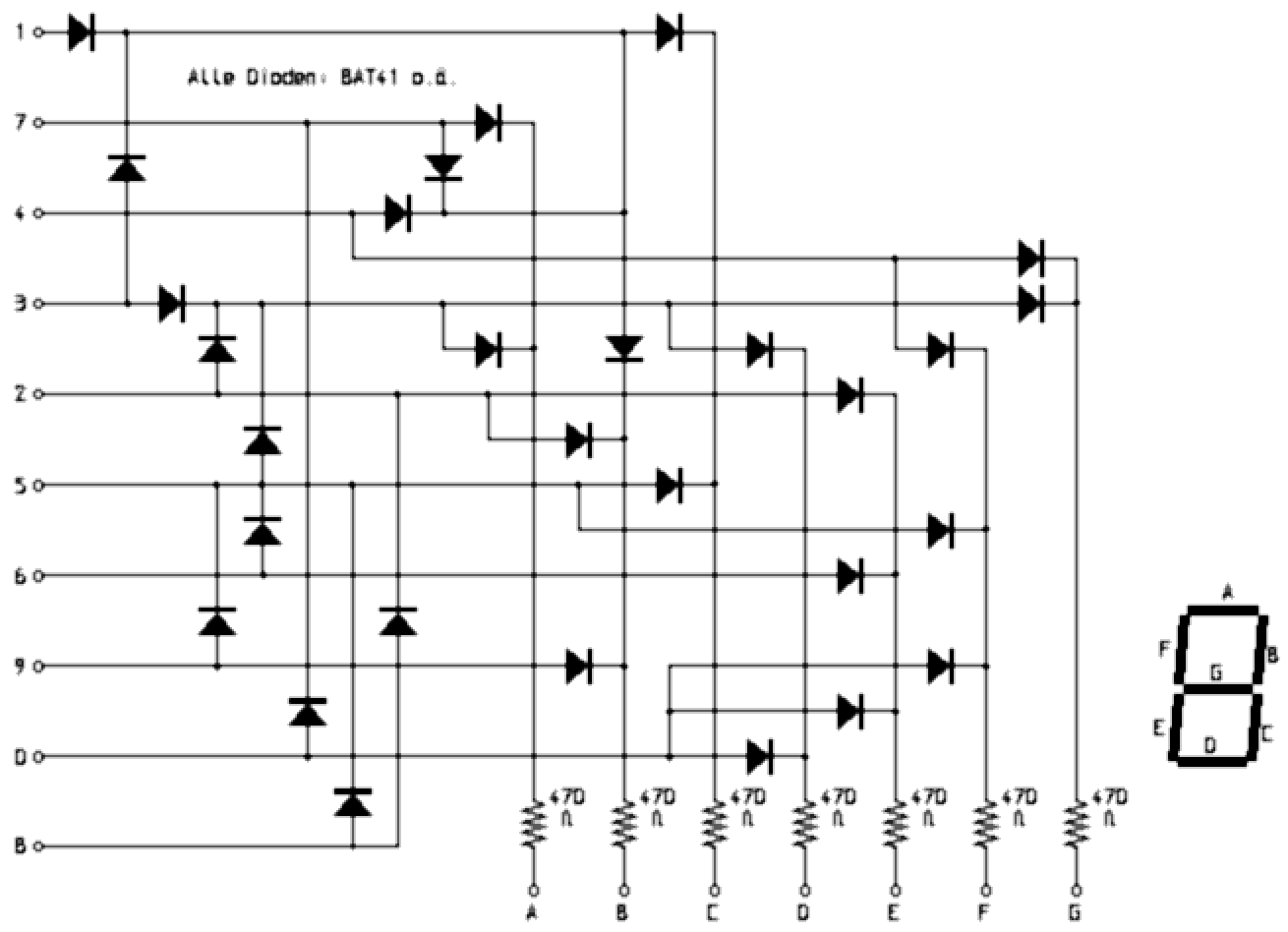
With this circuit, a seven-segment display can be controlled. The numbers 0,1,2,3,4,5,6,7,8,9 and 0 can be displayed. When using silicon diodes (e.g., 1N4148), the circuit should to be operate at least 12 volts. The indicator LEDs need matching resistors for voltage and display type.