Greater radio ranges with AM using HAPUG modulation
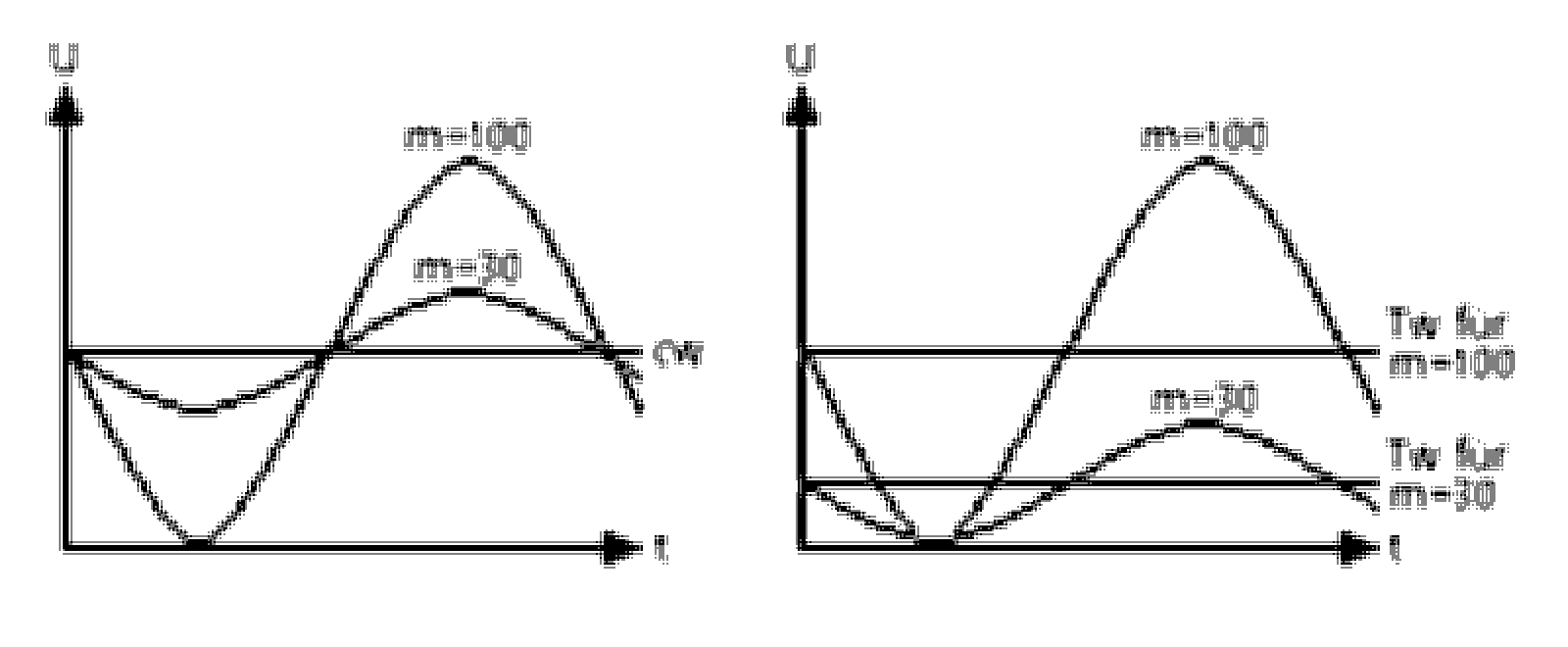
Carrier-controlled amplitude modulation (CCM), also known as HAPUG modulation after its inventors Harbich, Pungs, and Gehrt, aims to achieve a nearly constant and maximum modulation level. To accomplish this, the carrier value is adjusted to the current modulation strength. This improves the transmitter's energy efficiency, although it doesn't achieve the same results as single-sideband modulation. Furthermore, HAPUG modulation allows for significantly more penetrating modulation in two-way radio transmitters. With conventional amplitude modulation, the receiver reduces the gain almost as much for weaker modulation as for stronger modulation. The reception sounds quiet, but interference from other stations operating on the same channel is just as intense as with louder modulation.
|
In HAPUG modulation, the carrier value (Tw) is reduced during quiet or no modulation, causing the receiver to increase its gain. The receiver's control time constant should be adapted to HAPUG modulation. A control characteristic similar to that of single-sideband modulation is required. |
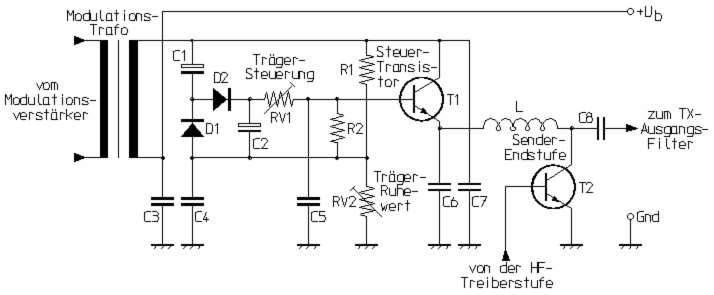
A receiver control that responds too slowly can lead to severe overload phenomena in the receiver, resulting in significant distortion. HAPUG modulation is associated with somewhat stronger distortion in general, but unlike in broadcast radio, this is quite acceptable for two-way communication. In return, HAPUG-modulated transmissions are received with a significantly higher overall volume and sound more compressed. The schematic diagram of a simple HAPUG modulator with a control transistor is shown in the figure.
A characteristic feature of HAPUG modulation is a rapid upward spike in the S-meter needle during modulation, typically by 2 to 4 S-values or more. HAPUG modulation was used by some commercial and military radio services in the 1970s. It was most commonly used by intelligence agencies for encrypted transmissions, which could then be received by standard shortwave radio receivers. For a time, HAPUG modulation competed with single-sideband modulation in the commercial sector. Amateur radio operators also experimented with this modulation technique. Furthermore, in Germany during the 1970s, modification proposals based on this technique circulated among CB radio operators. The aim was to increase transmitter efficiency. In Germany, regulations limited the maximum carrier power to 500 milliwatts. This limit could be maintained with HAPUG modulation if no modulation was applied, although with modulation, such modifications could increase the limit up to tenfold on the devices used at the time. The users' likely unfulfilled hope was that they would avoid detection during routine checks with such modified devices.