Audio amplifiers for radio receivers and two-way radios
Transistor PP amplifier for reception and modulation
For a long time push-pull type LF amplifiers with transformers mostly was been used in radio equipment. The output quality is limited by the characteristics of the transformers. When it comes to the transmission of voice signals in radio equipment, this is not necessarily a disadvantage. The quality is sufficient here in any case and the narrowed frequency range may even be advantageous for speech clarity. Another positive feature is the good efficiency, which can be particularly favorable in battery operation.
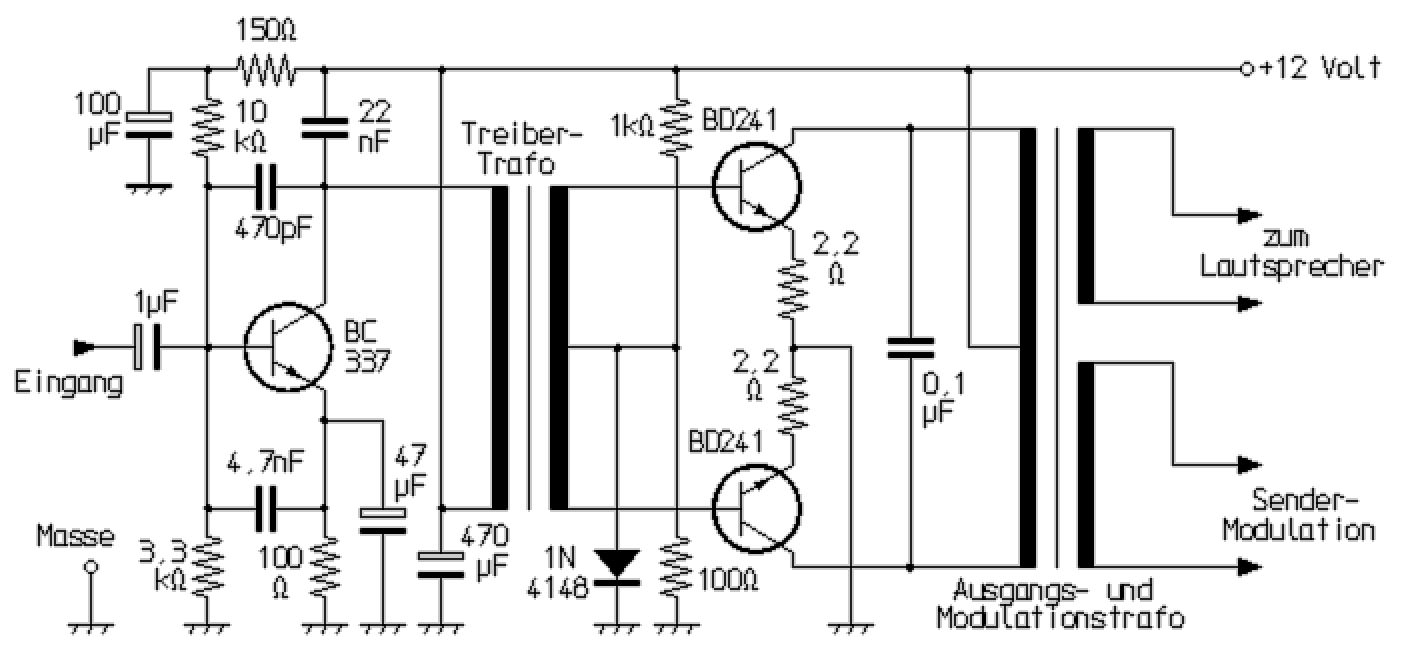
Therefore I have used the circuit shown often in a slightly modified form for self-built devices. Suitable transformers one can win by exploiting obsolete Japanese radios or two-way radios. If the output transformer provided with an additional modulation winding, one can use the circuit in self-built radios as a modulation amplifier, by suitable switching over for transmitting. For receiving operation, the circuit amplifies enough for loud speaker reception, if it is connected on the input side via the volume control directly to a standard AM diode demodulator. For other demodulators, e.g. for FM or SSB, interposing a pre-amp may be necessary for sufficient loud output.
SE amplifier for reception, suitable as a modulator
This amplifier, which was originally specified by Telefunken, is well suited for use in DIY radios with transistors or possibly also with tubes (operation via the heating circuit). Running as a single-ended amplifier, the slightly larger power consumption is disadvantageous. In motor vehicle operation, however, this is less important. Without the use of an IC, this disadvantage is opposed by a very simple replica. Sufficient cooling is required for the end transistor. Despite the germanium transistors used, the temperature stability of the quiescent current, which is a about 500 mA, is very good. This is due to the fact that it is stabilized by a negative feedback over all three stages.
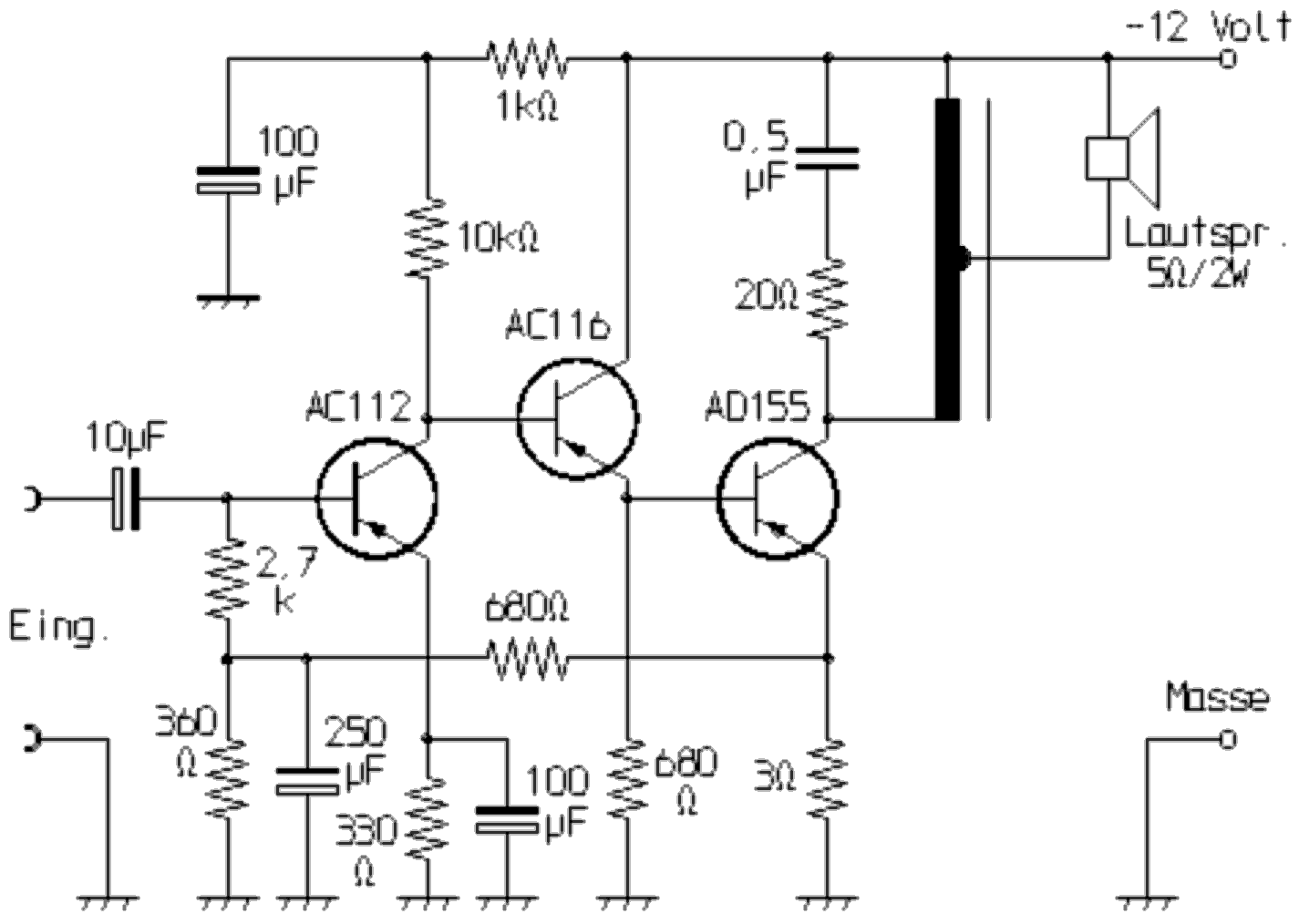
The transformer should have about 280 turns, tapped at about 150 turns, seen from minus. It is used copper enamel wire with 0.5mm diameter for winding. The core used is an EI-42 type with air gap, which can be obtained, for example, by unwinding a audio output transformer from a tube radio. In AM transceivers, the amplifier can also be used in the transmit mode as a modulation amplifier, if the output transformer has a suitable winding. This option is used in my 10m AM transmitter presented elsewhere. The amplifier used there is based on this circuit, but it has been redimensioned for silicon-NPN transistors.
If a tube transmitter is to be modulated, it is also possible to use an inversely connected output transformer from a tube radio or tape recorder, that means the actual primary winding must be inserted into the anode lead of the transmitter stage. The original output winding is then between the negative pole and the collector of the transistor AD155. Best results are achieved when the quiescent current of this amplifier reversely magnetizes the transformer, like the current of the unmodulated transmitter. In the case of unsatisfactory results, thus one first should try to reverse one of the two windings.
Transformerless push-pull amplifier for radio receivers
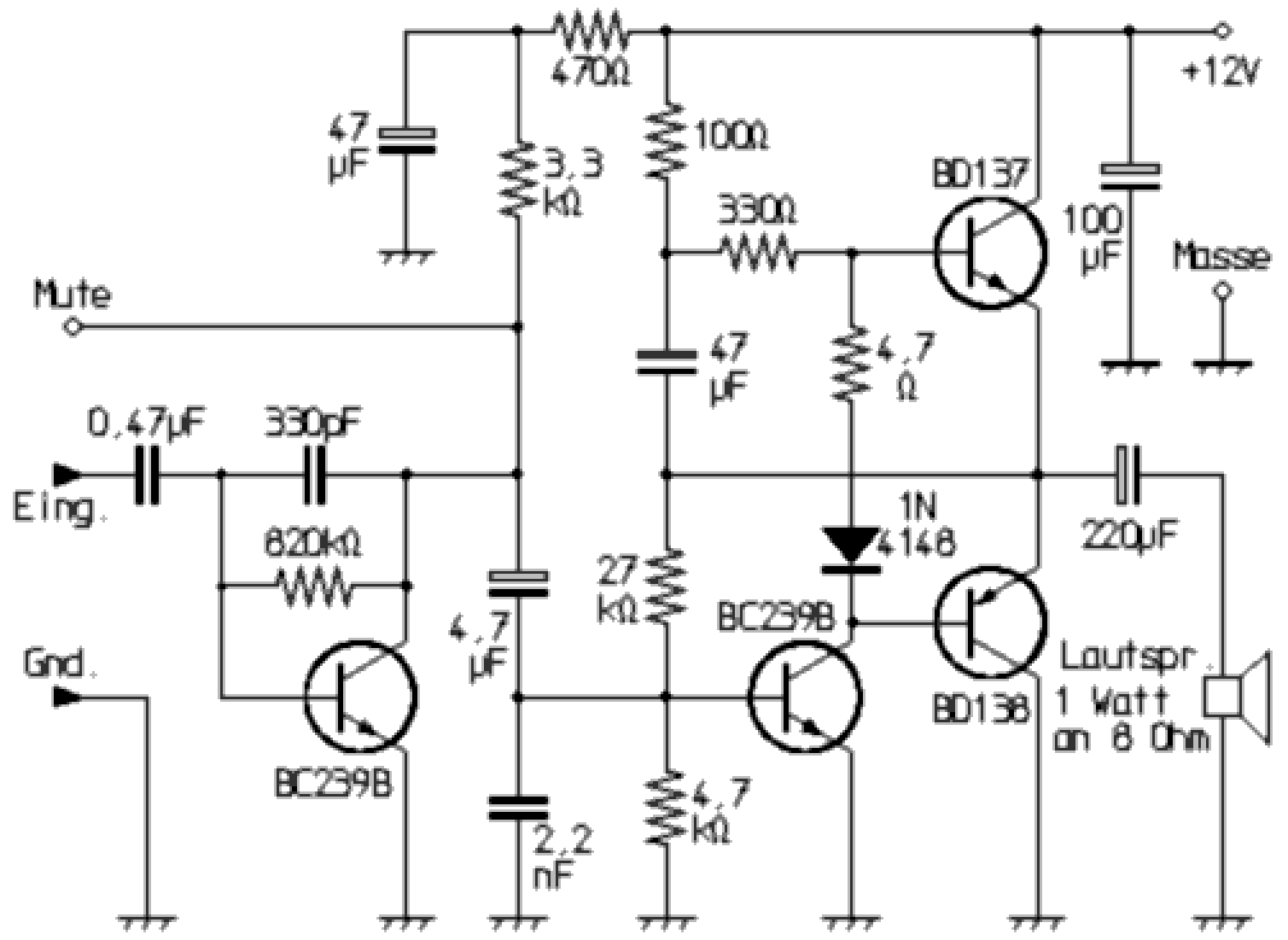
This universal speaker amplifier delivers a NF power of more than one watt to an 8 ohm speaker. The frequency response is designed for voice reproduction, so that the circuit is well suited for use in radios or radio receivers. With the mute connection, the audio output can be suppressed and thus a squelch can be realized.
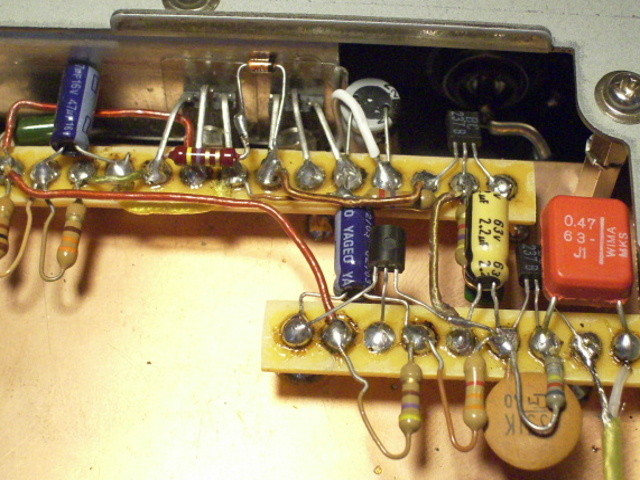
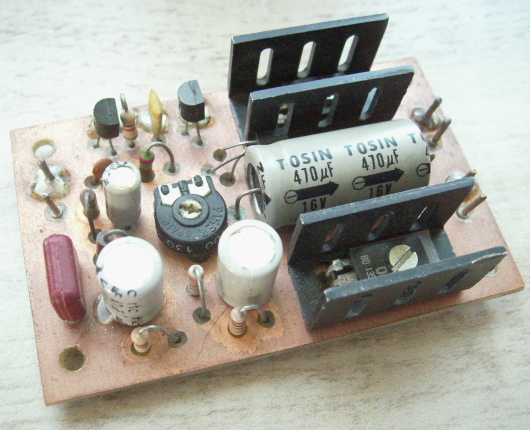
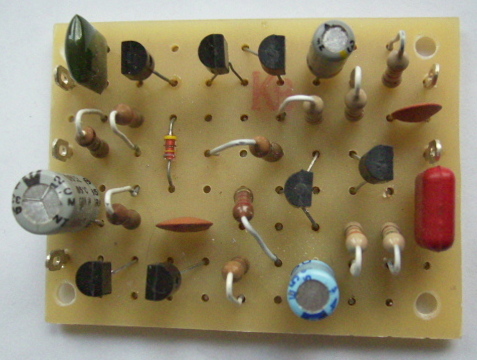
The structure of such an amplifier with manual wiring is shown on the left. It is part of a do-it-yourself radio. On the right the structure of an amplifier of this type in the form of a compact assembly.
Small audio amplifier without quiescent current
This transistor amplifier provides up to about 1 watt to an 8 ohm speaker. It is therefore also good for radio receivers. Although it shows a somewhat larger circuit complexity, it requires only inexpensive standard components. So the construction costs are not higher, as with other amplifiers of this power class. It is just only a little more work to build the circuit. But in addition to the excellent sound quality it has even more advantages. The amplifier operates namely without bias through the end transistors. Thus, a thermal run-up is safely avoided, so that at this power heatsinks for the final transistors are not essential. Also eliminates any otherwise necessary adjustment of the quiescent current. The bias-less functioning is especially possible owing to the high open-loop gain. It is achieved by the differential amplifier and the following driver, which acts to a constant current source, wich is formed by a current mirror circuit. Thus, a very effective negative feedback is possible, which largely eliminates the crossover distortions of the final transistors.
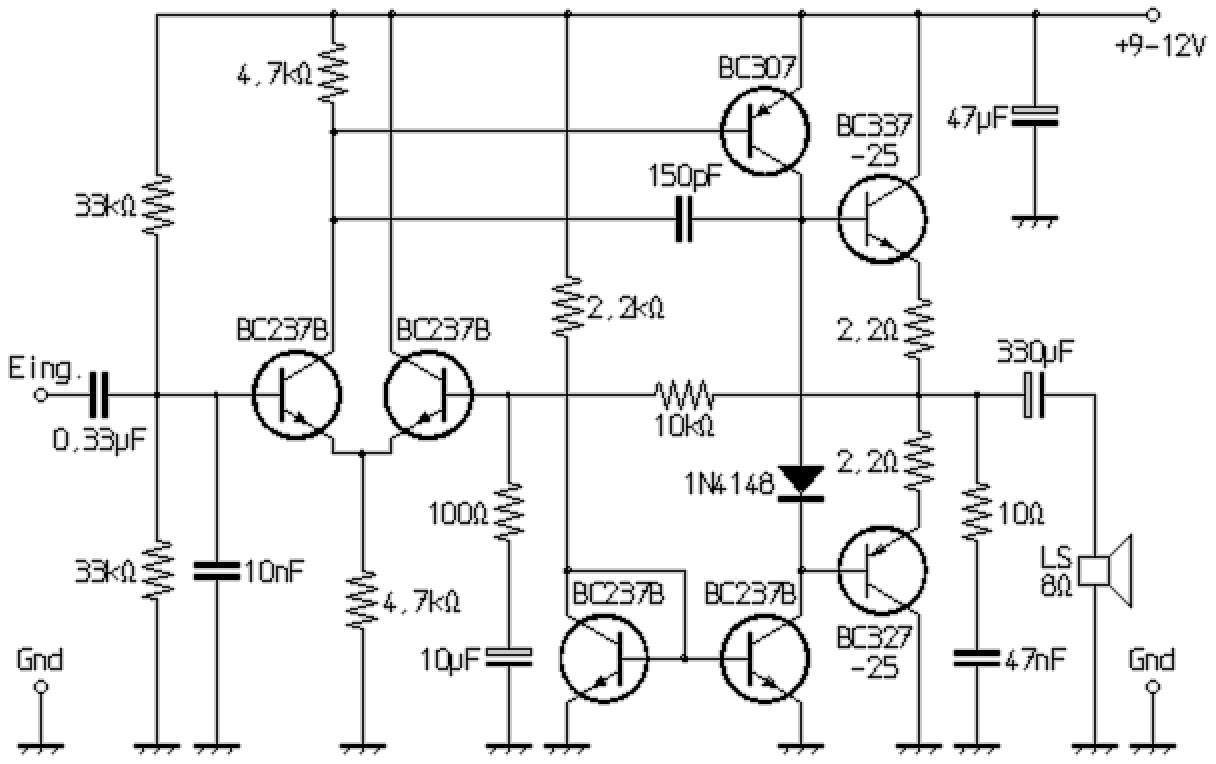
The voltage gain is given by negative feedback, namely the ratio of the 10kΩ resistor to the 100Ω resistor in series with the 10μF capacitor. It is therefore 40dB at the given dimensioning. If a smaller amplification factor is required, the value of the 100Ω resistor should be increased accordingly. On the other direction, an increase in the amplification factor is limited. As the resistance value more decreases, the distortion increases rapidly and possibly resulting in a tendency to oscillate. However, any damage to the circuit is not to be feared by such experiments, even if the 100Ω resistor is replaced by a wire jumper.
The center voltage at the circuit output, so at the point where the two 2.2Ω resistors are connected together, is set by the two 33kΩ resistors to half the supply voltage. This is always, even with fluctuations in the supply voltage, gives a maximal head room. While with simpler circuits due to component tolerances the center voltage and also the gain can vary more or less so that either adjustable elements or closely tolerated components are necessary, one here do not need to worry about something like this.
Similar to amplifiers with ICs, the circuit is ready for use immediately after assembly, under the assumption that everything is properly connected. Adjustable resistors for balancing and heat sink usually cost more space, as the few components additionally required here. So the circuit tends to be more space-efficient, as is the simpler circuits of this power class.
Audio amplifier with the TA7368 for radio equipment
For self-made radio sets and receiver circuits, circuits with the LM386 IC are very popular. This somewhat more modern circuit of a receiver audio part, which works with the Japanese IC TA7368, is a suitable alternative. It works in a wide operating voltage range from 2 to 10 volts. The amplifier can be set up in a very small space thanks to the low external wiring effort and since the IC is in the SIL housing (single-in-line).
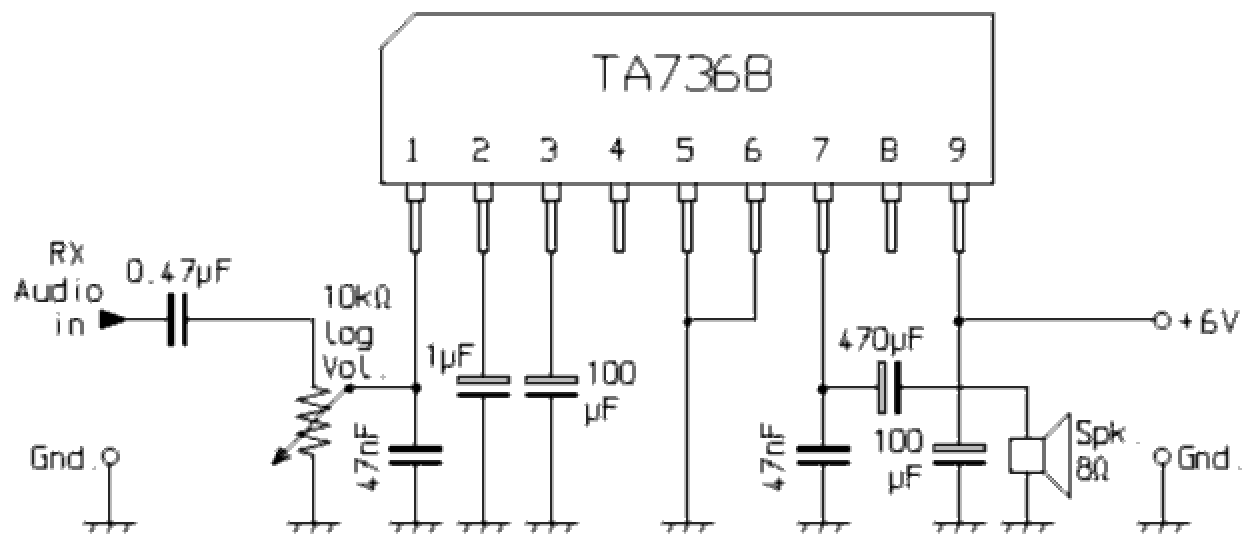
With an operating voltage of 6 volts, an output power of 720 mW is achieved with a 4Ω speaker; with an 8Ω loudspeaker it is still 450 mW. With 40dB (= 100-fold) a high voltage gain is achieved, so that the amplifier can be connected directly to modulators with a low audio output level without additional pre-stages.
AF amplifier and modulator using the TDA2003
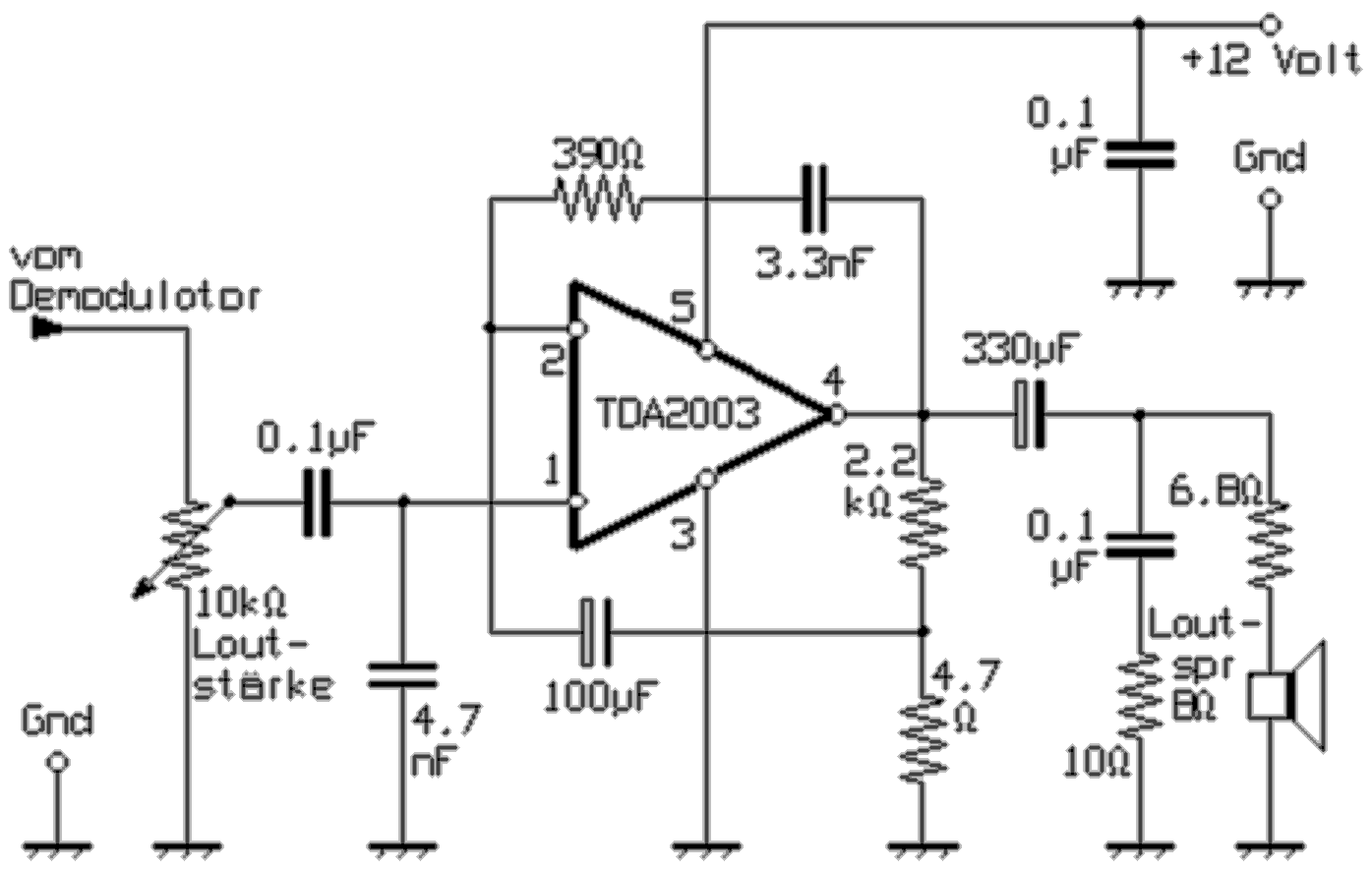
The TDA2003 is suitable as an audio part for radio receivers and stereos. The reachable output power is 10 watts. It achieves a good reproduction quality. One finds the TDA2003 but also as an audio component in transceivers. In the arrangement shown, the power is limited to about 1 watt. In addition, the value of the electrolytic capacitor at the output reduces the frequency range downwards. For good intelligible voice reception, the lower frequency components do not have to be transfered.
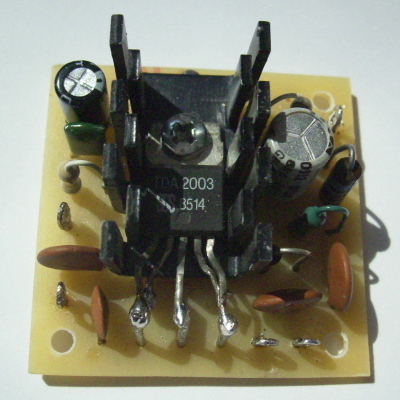
Too efficiently transfer of the highs, on the other hand, allows noise to come to the fore in reception. For this reason, and in context to the reduced lower frequency components, to achieve a balanced sound for voice radio applications the connected demodulator should be provided with a low-pass filter. The advantage of the TDA2003 is the small housing and the extremely simple connection scheme with only five pins.